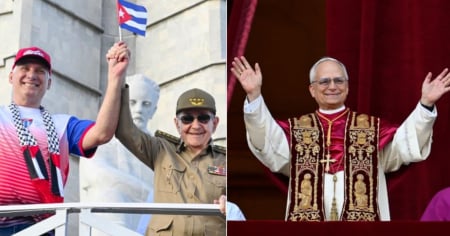
In a historic moment for the Catholic Church, the American cardinal Robert Francis Prevost was elected this Wednesday as the new pontiff, taking the name of Leo XIV.
His election makes him the first pope born in the United States and, thanks to his dual nationality, also the first of Peruvian nationality, marking a significant milestone in the history of the largest religious institution in the world.
Prevost, at 69 years old, succeeds Pope Francis and represents a moderate continuity of the path initiated by his predecessor. With a background characterized by his closeness to Latin America, his international profile, and his commitment to a more inclusive Church, his election has been met with attention and hope on multiple fronts.
Prevost: Life Between Continents and Cultures
Robert Francis Prevost was born on September 14, 1955, in Chicago, the son of a French father and a mother of Spanish descent. He joined the Order of Saint Augustine in 1977 and was ordained a priest in 1982.
His pastoral life has been divided between the United States, Rome, and especially Peru, a country where he lived for more than 30 years and where he became a naturalized citizen.
Prevost served a long mission in the Andean country, where he was the bishop of Chiclayo, apostolic administrator of Callao, and a prominent member of the Peruvian Episcopal Conference.
Known for his academic background—Doctor in Canon Law and polyglot—and his experience as a trainer and general prior of his order, he has held multiple significant positions in the Vatican since 2019.
From the trusted man of Pope Francis... to the throne of Peter:
Pope Francis entrusted Prevost by appointing him in 2023 as the prefect of the Dicastery for Bishops and president of the Pontifical Commission for Latin America, two positions of significant importance in the governance of the Church. In 2023, he was also made a cardinal by Francis, who saw in him a continuation of his pastoral vision focused on the poorest and most marginalized.
A pope with a moderate and dialogical profile:
León XIV has been described by Italian media as "the least American of Americans," alluding to his conciliatory style and extensive experience in multicultural contexts. His election seems to send a message of unity at a time of tensions within the Church, both internally and globally.
In his first message from the balcony of St. Peter's, the new pope spoke in Italian and Spanish, recalling his years of service in Peru. He called for peace, reconciliation, and unity, and paid tribute to the legacy of Pope Francis.
Lights and shadows:
Despite his solid reputation, Prevost has been mentioned in the context of allegations of covering up abuses during his episcopate in Peru—claims that were denied by the diocese of Chiclayo and never led to legal proceedings. This background has sparked mixed reactions, although it did not hinder his election.
The Future Under León XIV:
With his election, the Catholic Church embarks on a new phase under the leadership of a pope who embodies the cultural diversity of America and global pastoral experience. The figure of León XIV promises to continue the reformist path of his predecessor, with particular attention to the Latin American Church, the training of the clergy, and the role of social justice in ecclesial life.
The Catholic world is now looking towards Rome with anticipation for this new chapter of the papacy.
Frequently Asked Questions about Pope Leo XIV
Who is Robert Francis Prevost, the new Pope Leo XIV?
Robert Francis Prevost, now Pope Leo XIV, is the first pontiff born in the United States and also holds Peruvian nationality. Born in Chicago in 1955, he has spent much of his life in Peru, where he became a naturalized citizen. As a member of the Order of Saint Augustine, he has had a distinguished career in the Church, including his role as prefect of the Dicastery for Bishops.
What does the election of Leo XIV represent for the Catholic Church?
The election of León XIV marks a new stage for the Catholic Church, highlighting the cultural diversity of America and the global pastoral experience. His moderate and dialogical profile promises to continue the reformist path of his predecessor, Pope Francis, with special attention to the Latin American Church and social justice.
Why is the nationality of León XIV significant?
León XIV is the first Pope of American and Peruvian nationality. This is significant because it highlights the international nature of his papacy and his connection to Latin America, a region with a large Catholic population. Furthermore, his election could influence diplomatic relations between the Vatican and the United States.
What challenges does León XIV face in his new role as Pope?
León XIV faces significant contemporary challenges, such as the internal crisis of credibility within the Church, the impact of migration, human rights, and the environment. Additionally, he will need to focus on the education of the clergy and the role of social justice in ecclesial life, continuing the reforms initiated by Pope Francis.
How was the election of León XIV received by the international community?
The election of León XIV has been met with enthusiasm by the international community. His inclusive profile and experience in Latin America have generated positive expectations. World leaders, including the President of the United States, Donald Trump, have expressed their desire to collaborate with the new Pope, highlighting the significance of his election for international relations.
Filed under: