
Related videos:
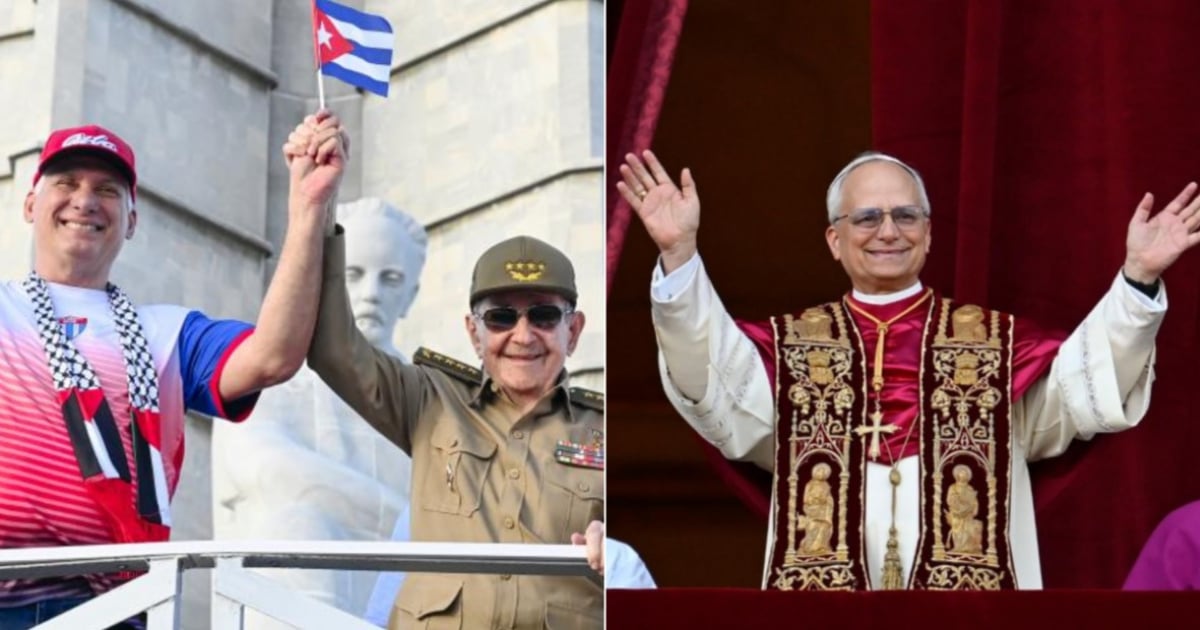
The leader of the Communist Party of Cuba, Raúl Castro, and the ruling Miguel Díaz-Canel sent congratulatory messages to the new Pope Leon XIV, elected this Thursday as the Supreme Pontiff of the Catholic Church, expressing their desire to promote peace, dialogue, and strengthen relations with the Holy See.
In an official note released this Friday by the Ministry of Foreign Affairs (MINREX), Raúl Castro greeted the new Pope with diplomatic words and highlighted the role of the Pontificate in favor of global stability:
"Your Holiness: I extend my warm congratulations on the occasion of your election as Supreme Pontiff. I trust that your Pontificate will make an essential contribution to peace and dialogue. Cuba will continue to strengthen the positive relations with the Holy See. Please accept the assurance of my highest consideration and esteem," concluded the message signed by Castro.
For his part, Díaz-Canel, who is currently in Russia on an official visit, shared his message through his account on X (formerly Twitter), where he also expressed his support for dialogue with the Church:
"We congratulate His Holiness Pope Leo XIV on his recent election. We share the desire to promote dialogue and peace. We will continue working to strengthen the relations between #Cuba and the Holy See, which celebrates its 90th anniversary this year," he wrote.
Cuba and the Holy See: a relationship marked by historic visits
The election of León XIV marks a new chapter in the relationship between the Vatican and Cuba, which has been defined by significant moments since the late 20th century.
Pope John Paul II was the first pope to visit the island, from January 21 to 25, 1998. His historic visit included a meeting with Fidel Castro and the message he left etched in the collective memory: “Let Cuba open to the world and the world open to Cuba.” That visit represented a turning point in the relationship between the Catholic Church and the Cuban regime.
In March 2012, then-Pope Benedict XVI visited the island, where he met with Raúl Castro as well as Fidel Castro, who had already stepped down from power. During his stay, he celebrated large masses in Santiago de Cuba and Havana, and advocated for a more open society, albeit in a diplomatic tone.
In September 2015, Pope Francis made an official visit to Cuba as part of his tour that also included the United States. During his stay, Francis also privately visited Fidel Castro at his residence, when the dictator was already seriously ill and had been out of public life for years. The meeting was described by the Vatican as "cordial and familial."
The message from the Cuban authorities to Pope Leon XIV comes amid a deep political, economic, and social crisis on the island, with increasing reports of human rights violations and repression. Nevertheless, Havana insists on projecting an image of continuity in relations with the Vatican, which this year celebrates 90 years of bilateral relations with Cuba.
Filed under: