
Related videos:
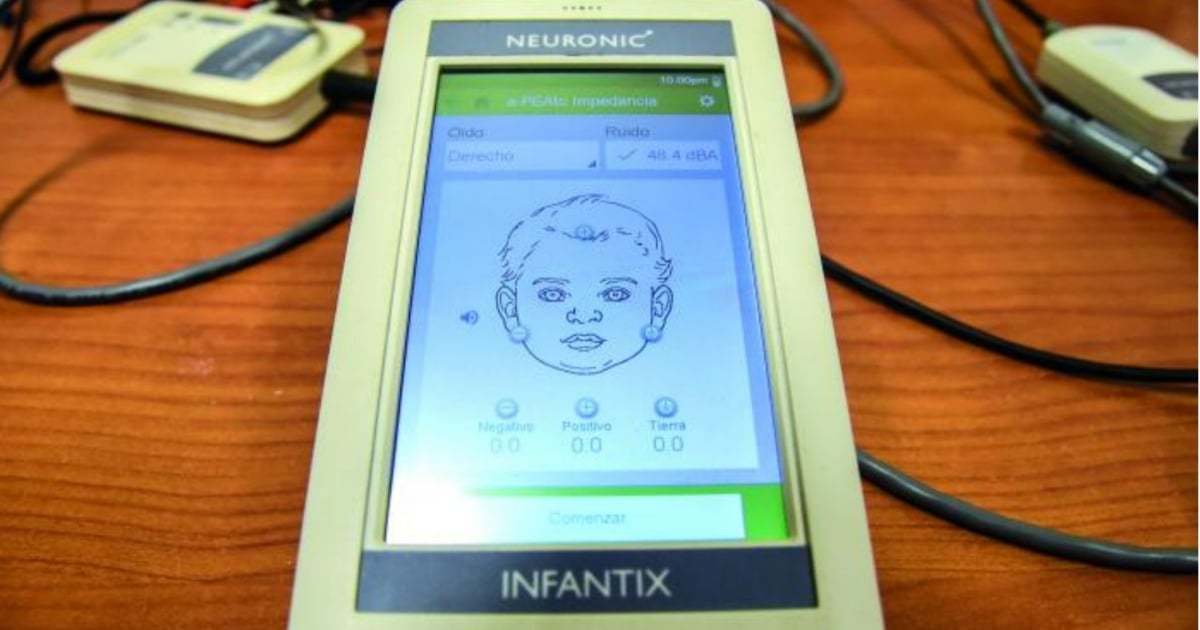
El Infantix, a medical device developed in Cuba used for detecting hearing disorders in newborns, has received health registration for its use in Colombia, as reported on social media by the business group BioCubaFarma.
According to Granma, Infatix is a neonatal screening system that records and analyzes “automated brainstem auditory evoked potentials and otoacoustic emissions.”
It also "incorporates an innovative methodology for simultaneous stimulation through air and bone pathways, which allows for the differentiation between transient and permanent conductive losses due to neural damage."
Developed at the Center for Neurosciences of Cuba (CNeuro), this equipment contributes to the “determination of disabilities almost from the birth of children.”
In 2024, 22 units of Infantix were produced, a few months ago, an article from Cubadebate stated.
Ten had been admitted to Cuban hospitals, the article specified, while another ten were introduced through a project with MediCuba Suiza.
Additionally, as part of the project called Adelante 2 for its introduction to the international market, the Infantix had arrived at the Neurodevelopment Unit of the National Autonomous University of Mexico in Querétaro, and at the Children and Women's Hospital in that same country.
Export of pharmaceutical products to Brazil
Recently, BioCubaFarma signed a biotechnology and pharmaceutical cooperation agreement with the municipality of Maricá, in the state of Rio de Janeiro, Brazil, which will allow for the joint production of Cuban medications in the South American country.
According to the official Cuban News Agency, the agreement was finalized during a meeting held in Havana between Cuban authorities and a Brazilian delegation led by the Maricá Mayor's Office and its Institute of Technology and Innovation, aiming to strengthen ties in the biopharmaceutical sector and open new export routes for the medical technology developed on the island.
Frequently Asked Questions about the Export of Cuban Medical Equipment and Pharmaceutical Products
What is Infantix and what is it used for?
The Infantix is a medical device developed in Cuba for the detection of hearing disorders in newborns. This neonatal screening system records and analyzes automatic auditory brainstem responses and otoacoustic emissions, allowing it to differentiate between transient conductive hearing loss and permanent hearing loss due to neural damage.
In which countries has Infantix been introduced?
The Infantix has been introduced in Cuban hospitals and through international projects in Mexico and Colombia. In Mexico, the equipment arrived at the Neurodevelopment Unit of the National Autonomous University of Mexico in Querétaro and at the Children's and Women's Hospital. In Colombia, it received health registration for its use, allowing for its exportation to that country.
What agreement did BioCubaFarma sign with Brazil?
BioCubaFarma signed a biotechnology and pharmaceutical cooperation agreement with the municipality of Maricá in Brazil. This agreement will allow for the joint production of Cuban medicines in Brazil, including Heberprot-P and various vaccines, through a mixed company that will integrate Cuban technology with Brazilian industrial infrastructure.
Why does the Cuban regime prioritize the export of medical equipment and pharmaceutical products?
The Cuban regime prioritizes the export of medical equipment and pharmaceuticals to generate foreign currency amid an economic crisis. Despite the chronic shortage of medications and the precarious state of the local health system, the government seeks to open new export routes and establish international agreements to sustain its economy, leaving the Cuban population without guaranteed access to the medications that are being exported.
Filed under: