
Related videos:
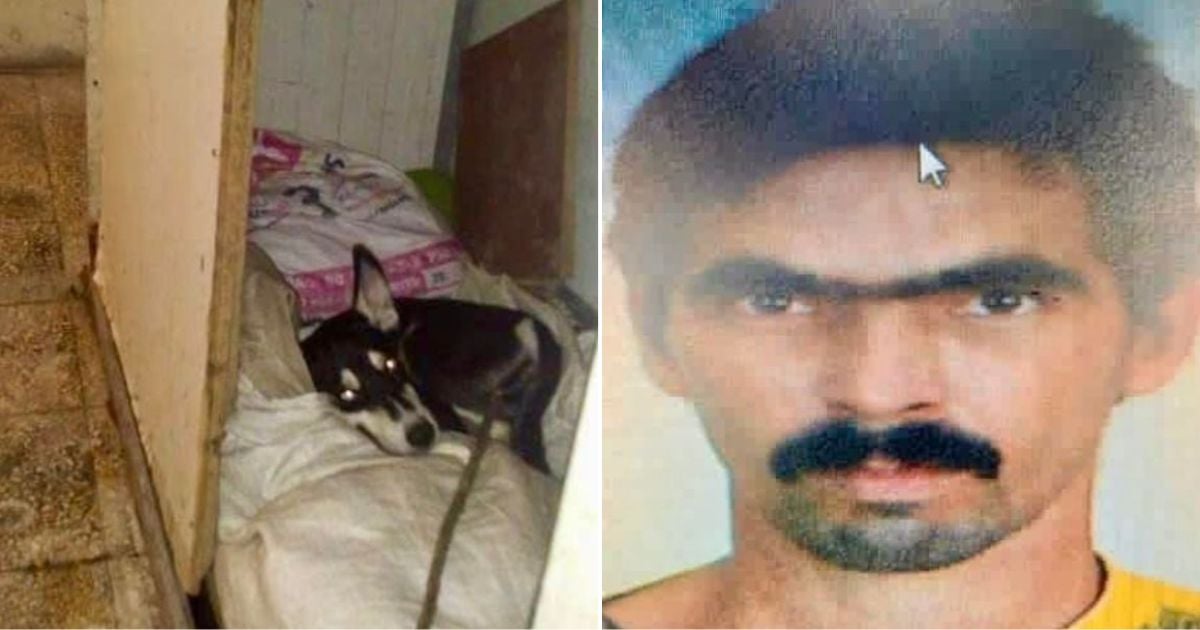
The official profile Las Cosas de Fernanda, a regular spokesperson for the regime on social media, published a lengthy "clarification" on social media to attempt to justify the release of Yordanis Torres Mendoza, the man accused by multiple internet users and activists in Cienfuegos of sexual abuse and mistreatment of animals.
According to the publication on Facebook, Torres was released because he suffers from passive schizophrenia, a psychiatric diagnosis that, according to the profile, prevents authorities from taking legal action against him, as he is considered a “sick” person who is “unaware of his actions.”
Furthermore, the post emphasizes that the police did not receive a formal complaint at the Cienfuegos station, which prevents legal action, and that, in Cuba, zoophilia is not classified as a criminal offense, but rather as an infraction that, in the best-case scenario, is sanctioned with fines according to the Animal Welfare Law, without criminal implications.
The publication questions the reaction of animal defenders, whom it labels as "extremely indignant with aggressive projections," and calls for moderation, appealing to the image of justice as a figure that is "serene, balanced, and blindfolded."
According to the post, "if we do not apply reason to our thoughts, we will be as wild as the act for which we seek justice."
The text also includes a list of countries where, according to the profile, there are legal gaps regarding zoophilia, to argue that it is a complex and controversial topic even at an international level.
However, it avoids pointing out that in Cuba, the lack of specific criminal regulations for these cases represents a structural failure of the legal system, and not a "technical detail" comparable to other realities.
The publication concludes with a phrase that generated profound outrage among activists:
“Poor little animals!... but also, poor Yordanis!” appealing to a false equivalence between the victims and the alleged abuser, while thanking the police for their “impartiality,” after they detained Torres, and only a few hours later, released him, despite activists claiming that compelling evidence was presented.
The reaction was swift. Various animal protection groups and social media users condemned the stance of the pro-government profile for downplaying the seriousness of the reported events and for blaming the citizens for demanding justice.
Among the numerous comments generated by the publication of Las Cosas de Fernanda, one of the most striking was from the user Rache Rache, who harshly questioned the attempts at justification regarding the case.
"People say all sorts of nonsense just to create content," he stated, pointing out that the profile's stance demonstrates not only a shocking lack of empathy but also a serious disconnection from the most basic ethical principles.
In their view, only in Cuba can it happen that doctors and police do not regard kidnapping, rape, torture, and the killing of animals as major offenses, actions that are recognized as serious crimes in other parts of the world.
Rache also reported the danger that Torres poses to the community, stating that the man roams around with sharp weapons, terrorizing neighbors who already live under the constant exposure to the smell of dead animals and the anguished cries of his victims.
"Such a being cannot roam freely in the streets," he warned, emphasizing that the threat is no longer limited to animals, but now poses a real risk to the children in the neighborhood.
Citizen outrage, far from being "extremism," reflects a legitimate concern about institutional neglect in a case that impacts both human and animal safety and dignity.
Another voice that joined the outrage was that of Irina Diéguez Toledo, who acknowledged that the accused might suffer from a mental illness but strongly questioned the lack of real medical and social attention regarding his case.
"Do you receive medication? Do you have specialized medical follow-up?" she wondered, while recalling that this is not the first time the animal rights community has faced a similar situation, where an aggressor is released without any real protective measures for the community or the animals.
Diéguez also mentioned a video in which a black puppy is taken away from Torres, at which moment he seems to clearly distinguish between right and wrong, something that, in the user's opinion, demonstrates a certain degree of awareness of his actions.
From Havana, Irina reported that she had spoken with animal rights activists in Cienfuegos and confirmed that many people are afraid to report due to the aggressive nature of the man, who has been seen carrying a knife.
He questioned the usefulness of the current Animal Welfare Decree Law, which he described as "flawed," with "ridiculously low fines," and recalled that for years there have been calls for its modification and the inclusion of animal cruelty in the Penal Code.
"I cannot feel pity for a sick person who mistreats, violates, and murders animals with complete impunity," she stated, adding that if he is indeed a psychiatric patient, then he should receive treatment and even be admitted to a facility, for his own well-being and that of society as a whole.
His message concluded with a direct warning: “They are provoking us. And if they do not respect us, we will take to the streets, because they have no voice.”
From the account Cubana Animalista, several claims made in the official publication were also refuted.
Contrary to what Las Cosas de Fernanda claims, this user stated that a formal complaint was indeed filed against Torres, and that they even spoke with his mother and brother, who refused to take any responsibility for him.
He also indicated that the man has previously been admitted to psychiatric hospitals but has been released time and again, despite the risks he poses.
"It is a life that has ended dozens of lives and continues to advance, threatening people," he warned emphatically.
The activist clarified that the animal rights movement does not seek lynchings or acts of revenge, but rather an institutional and humanitarian solution that protects both animals and the community itself.
"We're not talking about 'bugs' or 'insects'; we're talking about lives that feel, suffer, and cry," she emphasized.
The demand is clear: that serious and definitive actions be taken, including their admission to a psychiatric center with continuous care, and no more excuses or negligence.
For the protective society, impunity is not an option, and animal suffering can no longer be minimized or ignored.
Frequently Asked Questions about the animal abuse case in Cienfuegos
Why was Yordanis Torres Mendoza, accused of animal abuse in Cienfuegos, released?
Yordanis Torres Mendoza was released because, according to the authorities, he suffers from passive schizophrenia, which, they claim, renders him unaware of his actions and, therefore, he cannot be prosecuted criminally. Additionally, it was argued that no formal complaint was filed at the police station in Cienfuegos. However, activists insist that formal complaints were indeed made.
Is zoophilia classified as a crime in Cuba?
In Cuba, bestiality is not classified as a criminal offense. It is considered an infraction that can be punished with fines according to the Animal Welfare Law, but it does not carry criminal implications. This absence of specific criminal regulations is viewed by many as a structural flaw in the Cuban legal system.
What measures are activists taking to protect animals in Cuba?
Activists in Cuba are making formal complaints and using social media to raise awareness about cases of animal cruelty. They are demanding reforms to the Animal Welfare Law and the inclusion of animal abuse in the Penal Code. They have also expressed their willingness to mobilize to pressure the authorities to take more effective actions.
What risks does Yordanis Torres Mendoza pose to the community of Cienfuegos?
Yordanis Torres Mendoza is seen as a risk to the community due to his violent behavior and the fact that he wanders around with knives. Activists and neighbors have expressed concern for the safety of children and other vulnerable community members, given the accused's history of abuse and violence.
Filed under: