
Related videos:
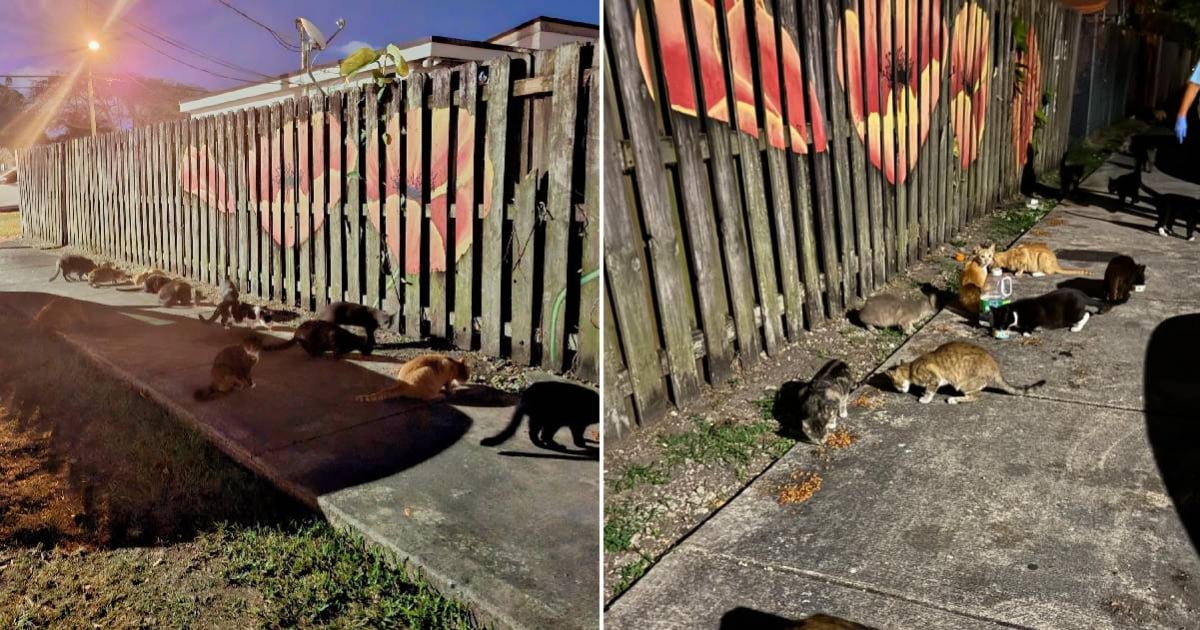
Animal rights activists, volunteer caregivers, and numerous residents of Miami-Dade have strongly protested against a proposed ordinance —Item 4B on the agenda for May 20— that seeks to prohibit the intentional feeding of cats, dogs, and wild birds such as peacocks on public or commercial properties in the county.
The ordinance, championed by Commissioner Raquel Regalado, cites public health reasons: it claims that uncontrolled animal colonies lead to diseases, waste, and an unhealthy environment.
However, for those who dedicate their days —and often their lives— to caring for these animals, the measure is inhumane, unjust, and counterproductive.
In a letter sent to the commissioners, activists expressed their strong opposition:
"The shelters in Miami-Dade are already overwhelmed. If this ordinance is approved, what is the plan for the countless animals that rely on these feedings to survive? Euthanasia or slow death by starvation?" they question.
They emphasize that the caretakers are not the problem, but part of the solution: “They are residents, mostly educated and compassionate individuals, who help Miami-Dade without recognition, without funding, and without support. Criminalizing their efforts is not only ineffective, but it is also cruel.”
The human dimension behind the conflict has taken center stage. Many caregivers claim that they buy food with their own salaries, pay for veterinary consultations, provide water during heat waves, and continue to feed animals regardless of whether it rains, thunders, or hurricanes occur.
Some have been taking care of the same colony for over 15 years, they know each cat, they cry when one goes missing or dies, and even when hospitalized, they make sure someone else feeds them.
"We eat every day, we drink water every day. They have that right too," they say. "The summer heat is approaching. Are we going to let them die from hunger or dehydration?" activists question.
Additionally, veterinarians consulted by CiberCuba have stated that cats from managed colonies tend to be healthier than those living in overcrowded shelters, where stress and diseases spread more easily.
A caregiver based in Southwest Miami asserts that communities around the world have shown that TNR (trap-neuter-return) programs are effective:
"TNR programs and coordinated compassionate approaches really work. Banning feeding does not solve the problem; it only makes it more visible and inhumane. This is supported by data."
The ordinance imposes civil penalties on those who feed animals in prohibited areas, similar to a traffic fine. However, for many, this represents the criminalization of compassion.
"Are we ready to see this happen in our community as if we were a third world country with no resources or compassion?" activists denounce.
“I ask you and the other commissioners to reconsider this ordinance. Let us work together towards a more humane and effective solution that reflects the values of this county and respects the people and animals that inhabit it,” they emphasize, and urge residents to write to district10@miamidade.gov (change the district from 1 to 13) to oppose the measure.
The vote will take place on Monday, May 20. Animal rights advocates emphasize that what is at stake is not just an urban regulation, but —according to many— the ethical soul of Miami-Dade.
Frequently Asked Questions about the proposed law that prohibits feeding stray animals in Miami-Dade
What does the proposed ordinance in Miami-Dade regarding stray animals seek to achieve?
The ordinance seeks to prohibit the intentional feeding of cats, dogs, and wild birds on public or commercial properties in the county, citing public health reasons. Commissioner Raquel Regalado is advocating for this measure, arguing that uncontrolled animal colonies create diseases and an unhealthy environment.
Why are activists opposing the Miami-Dade ordinance?
Activists believe that the measure is inhumane, unjust, and counterproductive. They argue that volunteer caregivers are part of the solution to the problem of stray animals, not the cause. Furthermore, they point out that shelters are already overwhelmed and that banning feeding will only increase the suffering of the animals.
What are the consequences of not feeding stray animals?
If stray animals are no longer fed, they could die from hunger or dehydration. Veterinarians point out that cats in managed colonies tend to be healthier than those living in shelters, where stress and disease are more common. Furthermore, the ban would not solve the problem of stray animals; rather, it would make it more visible and inhumane.
What alternatives do activists propose for controlling stray animals?
Activists suggest implementing trap-neuter-return (TNR) programs, which have proven effective in other communities. They propose compassionate and coordinated approaches that genuinely work and are supported by data backing their efficacy.
Filed under: