
Related videos:
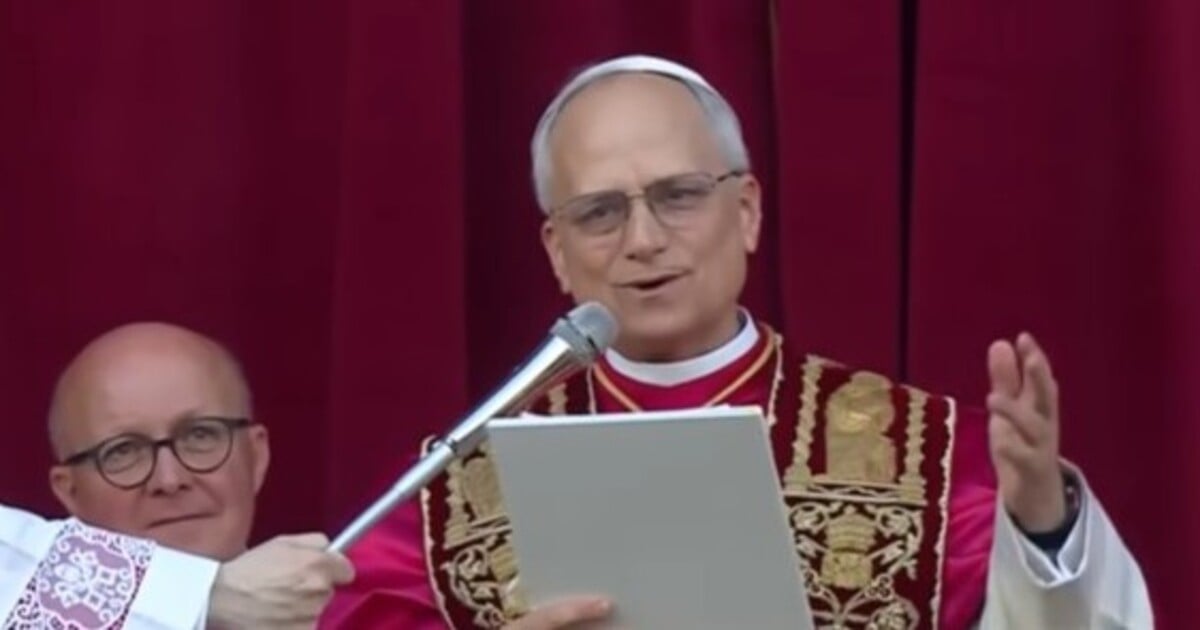
A genealogical research has revealed an unexpected fact: Pope Leo XIV, born in the United States, has Cuban roots.
The information, published by the Spanish newspaper El Mundo, reveals that one of his direct ancestors was born in Havana in the 18th century, confirming an unexpected connection between the new leader of the Vatican and the history of the Island.
The Pontiff, whose birth name is Robert Francis Prevost, was born in Chicago and spent a significant part of his religious life in Peru.
However, according to recent findings, his maternal lineage connects him to a young Havana resident from the 18th century, Manuel José Ramos, who was born in Havana in 1760 and emigrated to New Orleans while still a minor, which at that time was a Spanish territory (1763 to 1803).
His family was part of the social fabric of Havana when it was considered a key city in the routes of the Spanish Empire. His parents, Vicente Ignacio Ramos and María Bastos, were also born there around 1730.
Many years later, another figure appears that strengthens the connection of León XIV with the Caribbean island: his great-great-grandfather, Jacques Martínez (or Martino, according to some versions). Jacques was born in Cuba, where he lived and married Marguerite Cadeneth, who was also Cuban.
Thus confirms the death certificate of his son, named James Jacques Martínez. This man, the maternal great-grandfather of the Pope, married Marie Rosa Ramos. The couple, much like their ancestor a century ago, settled in New Orleans.
Current connection of the Pope with Cuba
The Pope's connection to Cuba is not merely a matter of blood. Before being elected Pope, Prevost traveled to the Island several times, where he celebrated Mass, met with the faithful, and gathered with Cuban bishops to discuss pastoral challenges.
The first recorded visit of Prevost was in 2008, when he was still the General Prior of the Augustinians. During that time, he was in Chambas, Ciego de Ávila, where he connected closely with humble communities. The image of a future Pope sitting at the table of a modest home, eating "white rice and picadillo," left a deep impression on those who met him.
That year he also visited Holguín. As recalled by the bishop of that city, Emilio Aranguren, "undoubtedly, the now Pope Leo XIV left a mark of simplicity, closeness, and joy in seeing how his brothers were evangelizing and serving the love of God in the midst of such a needy reality."
His connection to Cuba also had an institutional effect: thanks to his efforts, the friars of the Order of Saint Augustine, who were expelled by the communist government in 1961, were able to return to the Island after more than four decades of absence.
This was made possible thanks to a prior meeting between Prevost and Monsignor Aranguren—during which the late Cardinal of Havana Jaime Ortega was also present—in Rome in 2006. There, “a relationship was established that facilitated the return of the friars of the Order of Saint Augustine (OSA) to Cuba after more than 40 years of absence."
During his last visit, a little-known photo shows the Pope in Havana alongside the young Christian activist Harold Cepero Escalante, who passed away in 2012 along with the renowned Cuban opposition leader Oswaldo Payá.
The image, which circulated on the Internet, was described by a user as a moment of strong symbolism: "Two men, two Christians with a clear understanding of the importance of the Church’s Social Doctrine: the new Pope and beside him, Harold Cepero Escalante, who died in a 'strange' accident alongside Osvaldo Payá Sardiñas."
León XIV is undoubtedly a Pope with a unique history.
American by birth, with Cuban roots, European education, and Latin American experience, his figure embodies the cultural and spiritual intersections that define today's world.
Their unexpected connection with Cuba adds another layer to their profile and creates new expectations regarding their perspective on the region.
Frequently asked questions about Pope Leo XIV and his connection to Cuba
What is the connection between Pope Leo XIV and Cuba?
Pope Leo XIV has Cuban roots through his maternal lineage. One of his ancestors, Manuel José Ramos, was born in Havana in 1760. Furthermore, Leo XIV has visited Cuba several times before becoming Pope, where he celebrated Mass and met with Cuban bishops, strengthening his connection to the Island.
How has León XIV contributed to the return of the Augustinians to Cuba?
Thanks to the efforts of León XIV, the friars of the Order of Saint Augustine were able to return to Cuba after more than four decades of absence, having been expelled by the communist government in 1961. His relationship with the Cuban Church facilitated this significant return for the religious community on the Island.
What is the impact of your connection with the Cuban activist Harold Cepero?
Pope Leo XIV was photographed with Harold Cepero, a Cuban activist who died under suspicious circumstances. This event highlights a symbolic connection and support for the fight for human rights in Cuba, given that Cepero was a prominent figure in the peaceful political activism on the Island.
What is León XIV's stance regarding Cuba and its government?
Leo XIV has demonstrated a critical stance towards the Cuban regime, evidenced by his relationship with activists such as Harold Cepero. Furthermore, his election as Pope has been welcomed by Cuban authorities seeking to strengthen relations with the Vatican, in the context of a political and social crisis on the Island.
Filed under: