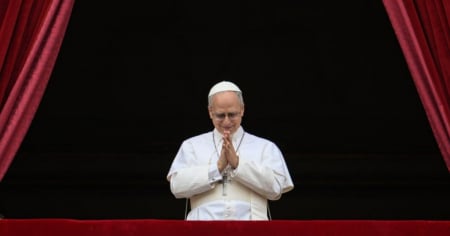
Monsignor Emilio Aranguren Echeverría, the current Bishop of Holguín, reminisced about the "mark of simplicity" left by the visit to Cuba in 2008 of then General Prior of the Augustinians, Robert Francis Prevost, now Pope Leo XIV.
Aranguren Echeverría told Vatican News that Prevost negotiated the return of the Augustinians to Cuba after they were expelled by Fidel Castro in 1961.
The current bishop of Holguín, accompanied by the late Cardinal Jaime Ortega, Archbishop of Havana, visited Prevost in Rome in 2005, where they requested the return of the Augustinians to Cuba.
The return of the order took place a year later, first in Ciego de Ávila, then in Puerto Padre (Holguín), and finally in Havana, the bishop explains.
Prevost then arrived in 2008 to visit the Cuban Augustinians in the diocese of Holguín, specifically at the parish of Puerto Padre.
Since the rectory adjacent to the parish of Puerto Padre was under repair, Robert Francis Prevost was accommodated in a family home during the three days of his stay, Aranguren recounts.
"Today, the joy of Mr. Manuel Miguel (who welcomed him into his home), known by everyone as Manolín, is overwhelming, and he proudly shows everyone a simple diploma that Father Prevost gave him for his hospitality and the support he provided to the friars of the community," it recounts.
From Puerto Padre, the then prior of the Augustinians moved to Holguín to meet with Aranguren and gain firsthand knowledge of the realities of eastern Cuba.
"Undoubtedly, today León XIV left a mark of simplicity, closeness, and joy in seeing how his brothers were evangelizing and serving the love of God amidst such a needy reality," he said.
The Pope and Cuba
Robert Francis Prevost, 69, was elected last week as the 267th Pope of the Catholic Church. A member of the Order of Saint Augustine, he is the first American Pope and also holds Peruvian citizenship, having lived for years in that country.
The former cardinal Prevost has had a direct connection with Cuba, a country he visited several times before his appointment as Supreme Pontiff.
Recently, a photo of him surfaced on social media in Havana alongside the late dissident Harold Cepero Escalante in front of the Cathedral of Havana, capturing a moment of Christian fellowship that takes on a new significance today.
Cepero Escalante, a member of the Christian Liberation Movement, died at the age of 32 in Granma while riding in a car with Oswaldo Payá. The event was classified as an "accident" by the government, but family members, friends, and a report from the Human Rights Foundation in 2015 attribute it to a deliberate action by the regime.
Precisely, after the election of the new Pope, Raúl Castro and Miguel Díaz-Canel sent congratulatory messages, aiming to project an image of harmony and continuity in relations with the Vatican.
Frequently asked questions about Pope Leo XIV's visit to Cuba and its impact
Who is Pope Leo XIV and what has been his relationship with Cuba?
Pope Leo XIV, formerly Robert Francis Prevost, is the first American Pope and also holds Peruvian citizenship. Before being elected as the 267th Pontiff of the Catholic Church, he had a direct connection with Cuba, visiting the island on several occasions. As the Prior General of the Augustinians, he contributed to the return of this order to Cuba after it was expelled by the regime in 1961. His relationship with Cuba includes significant meetings with representatives of the Church and with the late activist Harold Cepero.
How was the return of the Augustinians to Cuba realized?
The return of the Augustinians to Cuba was made possible through the efforts of Robert Francis Prevost, who in 2005, as the General Prior of the Augustinians, was visited in Rome by Monsignor Emilio Aranguren and Cardinal Jaime Ortega. The order's return materialized a year later, starting in Ciego de Ávila, then in Puerto Padre (Holguín), and finally in Havana.
What impact did Robert Francis Prevost's visit to Cuba have before he became Pope?
Robert Francis Prevost left a "mark of simplicity" during his visit to Cuba in 2008, according to Monsignor Emilio Aranguren, Bishop of Holguín. His warmth and joy in witnessing the Augustinians evangelizing in Cuba made a lasting impression among the Cuban faithful. Furthermore, his visit strengthened the presence of the Order of Saint Augustine on the island.
What was the Cuban government's reaction to the election of Pope Leo XIV?
After the election of Pope Leo XIV, Raúl Castro and Miguel Díaz-Canel sent messages of congratulations, expressing interest in strengthening relations with the Vatican. These messages aim to project an image of harmony and diplomatic continuity, despite the political and social crisis facing the island.
Filed under: