
Related videos:
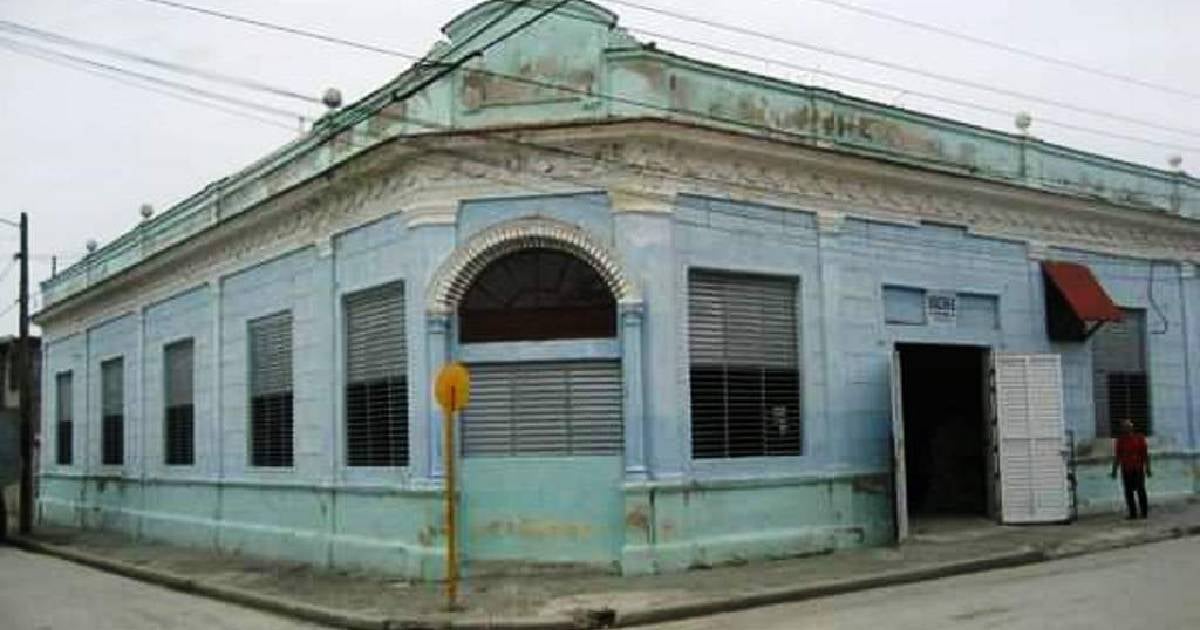
The El Arte Printing House, located in the city of Manzanillo, was a beacon of Eastern culture during the 20th century, but it is now a dismal space, immersed in the silence of halted machines and the dust of forgetfulness, as institutional neglect threatens to permanently erase one of the richest chapters in Cuban publishing history.
Founded by the typographer Juan Francisco Sariol Carrión (1888-1968), who arrived in Manzanillo in 1911, it was much more than just a simple workshop. From there, the magazine Orto was created, a publication that lasted for 45 years, from the first issue on January 7, 1912, to the last one in December 1957.
"As an art project and social commitment, driving the renewing movement of 1913, strongly anti-imperialist and rejecting U.S. interference in Cuban affairs, it found there a valuable record that survived the political and technological changes of the 20th century, when many traditional workshops were absorbed by other interests and more modern printing systems," stated the newspaper La Demajagua.
He recalled that essential voices of Cuban intellectuality passed through its pages, including Juan Marinello, Félix Pita Rodríguez, Nicolás Guillén, Manuel Navarro Luna, José Manuel Poveda, Ángel Augier, Carlos Rafael Rodríguez, Regino Eladio Boti, Carlos Enríquez, Emilio Ballagas, and Juan Francisco Sariol, among others.
The project "with a strong Martian vocation, also became the symbol for spreading progressive ideas and supporting generations of writers and poets, including those of the Literary Group of Manzanillo, established on September 4, 1921," the newspaper noted.
However, this significant legacy seems to go unnoticed today; “those details lie dormant in indifference, slipping down the gentle slope of routine, apathy, and neglect.” The publishing heritage barely survives in specific historical archives, cultural entities, collections of old newspapers, or with some exceptional collectors.
The Art is located at the central corner of Calixto García and Villuendas, in the so-called Gulf city of Guacanayabo. The old building, owned by the Dione Crafts and Industry Company, is languishing amid neglect and abandonment. The same machines that once printed ideas are now at risk of being recycled, dismantled, or worse yet, forgotten.
In times when Cuban authorities speak so much about identity and memory, it is alarming that a site of such valuable heritage receives neither attention nor maintenance.
“Erecting a memorial on that site in honor of Orto would be a way to reclaim the historical spirituality of those protagonists who found there much more than a weekly magazine,” suggested La Demajagua, in a sensible proposal that, however, runs the risk of ending up, like so many others, as an echo without support.
Meanwhile, Art, a symbol of the Martian vocation, cultural resistance, and free thought, perishes in the shadow of oblivion. Perhaps no one remembers that history was also written there.
This site joins the long list of iconic places in Cuba that have been left to disappear by a regime unable to maintain them. It lies dormant amidst the indifference of the authorities and the apathy of a routine that has already normalized neglect, in the midst of the current economic crisis.
In Las Tunas, the deteriorating building housing the duplicate Civil Registry archive remains closed due to health regulations, due to serious unsanitary conditions, resulting in essential procedures being halted, amid the apathy of the authorities.
The Máximo Gómez Airport in Ciego de Ávila, built with more than 100 million pesos, is today an abandoned structure with no flights or purpose. More than two decades of governmental neglect have buried public investment under the weight of indifference and absurdity.
The former Casino Español de La Habana, located in Playa municipality; the once iconic Teatro Musical de La Habana; and the Hotel Venus in Santiago de Cuba, are just a few examples of cultural and architectural gems that have fallen victim to government neglect and abandonment.
At the same time, vandalism, indiscipline, and the apathy of a portion of the citizenry also contribute to the deplorable and dirty state of public decoration.
Frequently Asked Questions about the El Arte Printing House and the Abandonment of Cultural Heritage in Cuba
What is the El Arte printing house in Manzanillo and why is it important?
The printing house El Arte, founded by Juan Francisco Sariol Carrión, was a notable cultural center in Manzanillo, Cuba. The significance of El Arte lies in its role as the home of the magazine Orto, a key platform for the dissemination of progressive and literary ideas in 20th-century Cuba. Its pages featured emblematic figures of Cuban intellectualism, turning it into a symbol of cultural resistance and free thought.
What is the current status of the El Arte printing press?
The El Arte print shop is in a state of neglect and deterioration, with its machines halted and the building at risk of being dismantled or recycled. The lack of attention from the authorities threatens to erase this valuable Cuban cultural heritage.
What measures are being proposed to preserve the legacy of the El Arte printing house?
A proposal is to erect a memorial in honor of the magazine Orto at the site of the printer, to reclaim the historical spirit of its protagonists. However, these proposals run the risk of lacking support and effective implementation.
What other examples of heritage abandonment exist in Cuba?
Additionally, the printing house El Arte, other iconic sites in Cuba face a similar neglect, such as the Máximo Gómez airport in Ciego de Ávila, the Civil Registry archive in Las Tunas, and the old Casino Español in Havana. These cases reflect governmental indifference and the lack of maintenance of important cultural and architectural heritage.
Filed under: