
Related videos:
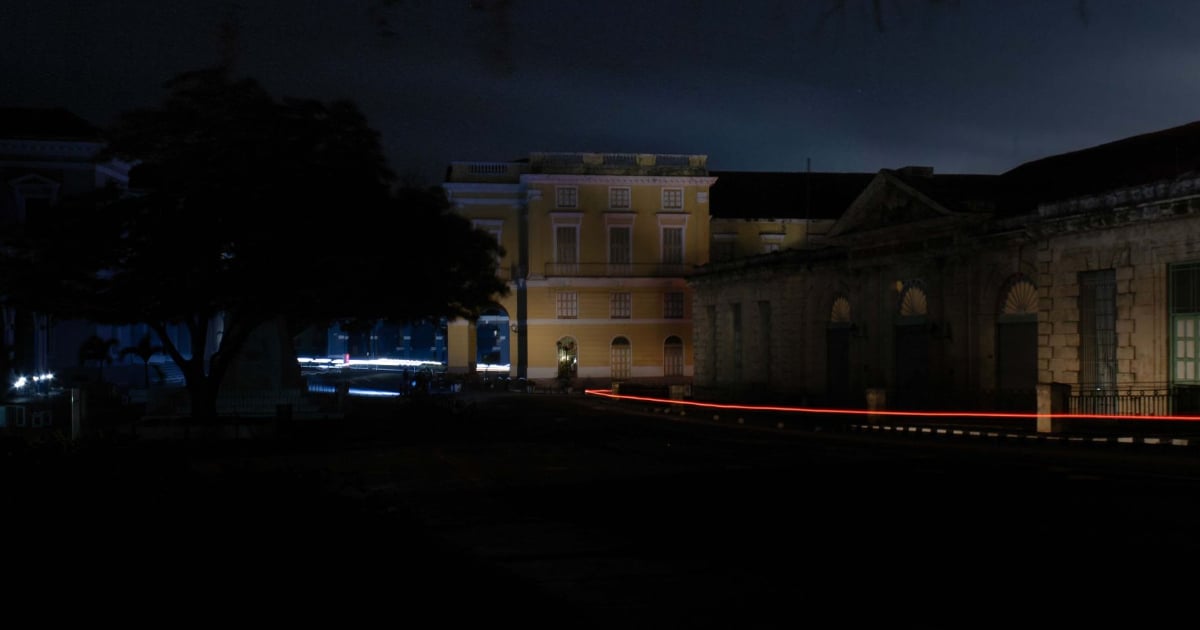
The Electric Union of Cuba (UNE) reported its forecast for this Friday, confirming that the country remains mired in one of the worst energy crises in its recent history, with blackouts affecting millions of people across the national territory.
According to the official note published by the state entity, Thursday ended with a maximum impact of 1,547 megawatts (MW) at 10:00 PM, right at the peak demand time.
During the early hours of this Friday, the blackouts continued relentlessly, and the projections for the rest of the day offer no relief.
At 7:00 am, the availability of the National Electric System (SEN) was only 1,950 MW, while demand exceeded 3,060 MW, resulting in a deficit of 1,200 MW.
It is estimated that during the noon hours, the impact will be around 1,150 MW.
The situation is worsened by multiple breakdowns, extended maintenance, and an alarming shortage of fuel.
The UNE reported a malfunction in Unit 2 of the Felton Thermoelectric Power Plant, as well as maintenance on five key thermal units at the Santa Cruz, Cienfuegos, Nuevitas, and Renté plants.
This is in addition to 289 MW out of service due to thermal limitations and 626 MW lost due to a lack of diesel and oil in distributed generation, which includes 62 completely halted plants.
For the evening rush hour, the forecast is equally bleak.
Despite the projected start of Unit 5 of the Nuevitas CTE with 70 MW, a availability of 2,020 MW is expected against a demand of 3,480 MW, which would imply a deficit of 1,460 MW.
If these conditions persist, the estimated impact will be 1,530 MW, a figure that reflects the energy collapse currently affecting the island.
Meanwhile, the Cuban government continues to offer no structural solutions.
Despite the recent installation of 12 new photovoltaic solar parks that produced 1,263 MWh, this contribution remains marginal compared to a demand that far exceeds the installed capacity.
The Electric Company of Havana also published its of power cuts in the capital, which will affect all municipalities in blocks starting from 10:00 am until midnight.
The distribution is as follows:
Block #5: from 10:00 am to 2:00 pm
Block #2: from 11:00 am to 3:00 pm
Block #1: from 3:00 pm to 7:00 pm
Block #4: from 7:00 PM to 11:00 PM
Block #3: from 8:00 PM to 12:00 AM
The people, for their part, suffer the direct consequences: whole days without electricity, lack of access to water, no refrigeration for food, and an increasingly precarious quality of life.
The ineffectiveness of infrastructure, corruption, and the diversion of resources towards political propaganda instead of investing in the national electric system have left the country in an unsustainable situation.
Meanwhile, the authorities insist on blaming the U.S. embargo, ignoring decades of disinvestment, erratic decisions, and a lack of political will to address the root of the problem.
Frequently Asked Questions about the Energy Crisis in Cuba
What is the main cause of the electric deficit in Cuba?
The electricity deficit in Cuba is due to a combination of breakdowns in thermoelectric plants, prolonged maintenance, and a troubling shortage of fuel. The lack of investment in infrastructure, corruption, and erratic political decisions have worsened the situation, leaving the country with an electrical capacity far below the national demand.
How do power outages affect daily life in Cuba?
Prolonged power outages severely affect the quality of life in Cuba. The population faces entire days without electricity, impacting access to water, food refrigeration, and the operation of basic services. This situation creates an atmosphere of despair and uncertainty among citizens.
What measures has the Cuban government taken to address the energy crisis?
The Cuban government has installed new photovoltaic solar parks, but their contribution is minimal compared to the country's high electricity demand. So far, no effective structural solutions have been provided to address the root of the problem, and the U.S. embargo is still being blamed, without acknowledging divestment and internal failures.
Which regions of Cuba are the most affected by blackouts?
The central-eastern regions of Cuba are the most affected by power outages. Electricity cuts are frequent and prolonged, significantly impacting daily life and economic activity in these areas. Havana also experiences scheduled blackouts, affecting different time blocks and areas of the city.
Filed under: