
Related videos:
The ecological project Manantial, designed to clean up the Santa Fe River and revitalize the Santa Rita beach in the Isle of Youth, has been stuck in bureaucratic limbo for eight years, a victim of poor management by the Municipal Delegation of Hydraulic Resources regarding the donation of 200,000 dollars made by a French electric workers' association.
Far from progressing, the untreated wastewater continues to flow into the tributary, endangering not only a fragile ecosystem but also a potential source of income for the region and for Cuba.
The institutional inaction contrasts with the commitment and patience of the donors, led by Pierre-Marie Gosselin, representative of the French association Energie Solidaire avec l'Île de la Jeunesse, who does not hide his disappointment: French funders "demand results, not explanations," published the official newspaper Victoria.
"I do not wish to halt this collaboration project, even if the Cuban side fails to fulfill its part of the agreement," Gosselin warned, highlighting that the continuity depends more on foreign moral commitment than on the willingness of Cuban authorities.
It also meant "positive signs" in the new delegation of Hydraulic Resources of the special municipality, which "has respected the agreed project and did not incur expenses in foreign currency without consulting us, as happened with the previous leadership."
He pointed out that, in a recent reconciliation meeting, "for the first time new ideas and other possible solutions were discussed, which suggests a potential change in strategy."
He also announced that they will be "in Havana, as the conclusion of this visit, discussing with the highest authorities," alongside representatives from the Ministry of Foreign Trade and Foreign Investment (Mincex) and the National Institute of Hydraulic Resources.
The pending management with authorities in Havana seeks to obtain 20 tons of fuel necessary for carrying out earth-moving and conditioning work, essential for ensuring that the wastewater from the community receives appropriate treatment. “And we understand that, at this moment, it’s not so simple. It would involve very drastic adjustments in other areas,” he pointed out.
"If we are unable to obtain the fuel, the current project cannot proceed. New ideas or alternative solutions will then come into play. Any of them seems good to me if it contributes to cleaning up the river," Gosselin stated.
According to the local newspaper, the donation was specifically meant for repairing or reconstructing the oxidation lagoons in the neighborhoods of Camilo Cienfuegos and Cochabamba, whose wastewater flows directly into the Santa Fe River without any treatment.
Although the local Hydraulic Resources Company claimed that the lack of fuel was "the reason for the agreed non-compliance. But there was fuel before, and it was not executed. It has also not sought an alternative solution... when the truth is there may be one," he stated.
The newspaper referred to the search for alternatives such as the use of so-called effective microorganisms (EM), bacteria that purify contaminated water and that, according to local specialists, could be produced locally using available resources, do not require fuel, and have been successful in treating bad odors, wastewater, and pig waste.
Jorge Luis Quesada, director of the UEB for Hydraulic Utilization, stated that a realistic and gradual strategy is necessary: first, to prevent the ongoing pollutant discharge into the Santa Fe River, and then to move forward reliably, ensuring that the actions endure over time.
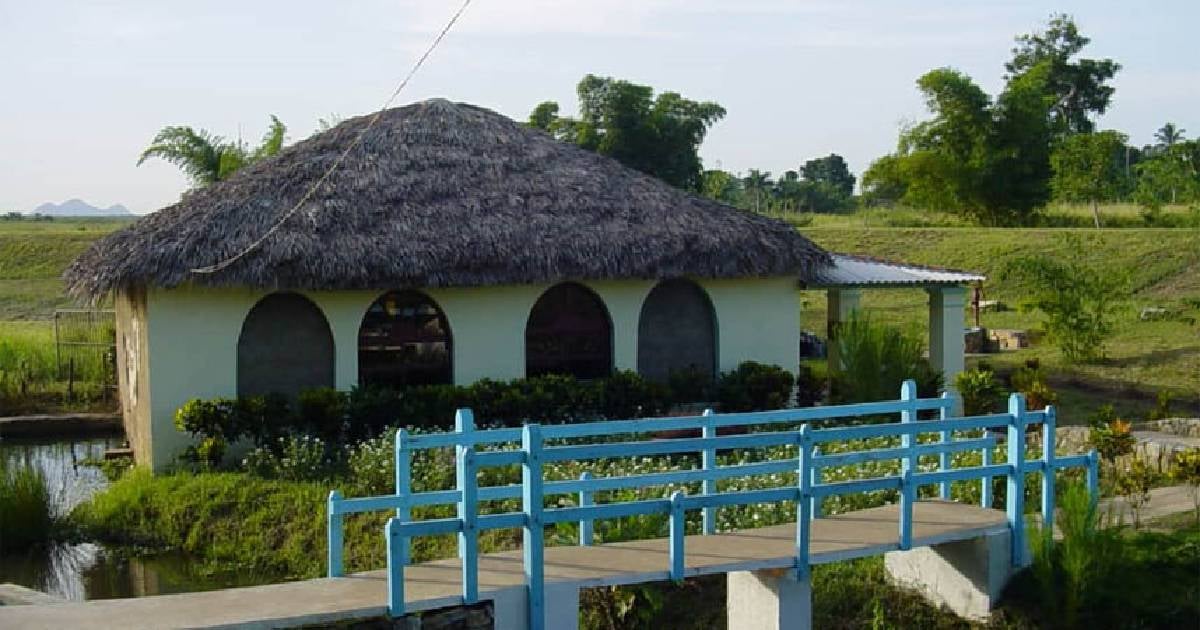
Meanwhile, the Santa Rita spa remains closed and unfit for the care of domestic patients and health tourism. And what’s worse: “If the sewage discharges are not cut off, the healing waters may soon become so contaminated that their future use will be impossible. We will have killed the goose before it lays its first golden egg in the current phase!” warned the newspaper Victoria, in a tragically accurate metaphor.
Located in the southern part of the western region of Cuba, the second island of the national archipelago boasts various tourist attractions, including its four National Monuments: El Barco Pinero, El Presidio Modelo, La Finca Museo El Abra, and the caves of Punta del Este, known as the Sistine Chapel of Caribbean Rock Art.
Unlike the rest of the country, the Island of Youth has its own electric generation, which has allowed it to remain unaffected by the energy crisis and the prolonged blackouts that impact the rest of the Cuban population.
Thanks to this autonomy, the electricity supply has remained stable for its 86,000 residents, a significant privilege for sustaining both tourism activities and local services, including bars and hotels.
According to specialists, the Isle of Youth has a unique wealth in its mineral and table waters, whose diversity and quality, ranging from the radioactive waters of Santa Rita to the lowest mineralization in the hemisphere found in the F-34 spring, represent an untapped potential that could supply luxury tourism, replace imports, and generate export income.
In 1956, Santa Fe was considered the third tourist center of Cuba due to its healing waters and high influx of visitors. Since Hurricane Ivan's passage (2004) and the lack of official certification, the Santa Rita spa remains closed, while its waters – capable of replacing many medications – continue to flow unused amid a health and economic crisis that demands urgent solutions.
More than 30 years ago, in 1992, a study by the National Institute of Hydraulic Resources proposed an effective sanitation plan for the Santa Fe River, where wastewater was treated and the springs remained useful. The cost of the proposed sanitation at that time was 245,356 pesos.
The case of the Santa Fe River is a microcosm of the issues plaguing Cuban state management: promises unfulfilled, resources squandered, and key sectors—environmental and tourism—subordinated to inertia.
Frequently Asked Questions about the Manantial Ecological Project on the Isle of Youth
Why has the ecological project Manantial been stagnant for eight years?
The Manantial project has stalled due to bureaucratic inertia and poor management of Hydraulic Resources, despite receiving a donation of 200,000 dollars from a French association. This lack of action has hindered the cleanup of the Santa Fe river and the revitalization of the Santa Rita beach, impacting both the ecosystem and the economic opportunities in the region.
What are the implications of the lack of wastewater treatment in the Santa Fe River?
The continuous discharge of untreated wastewater threatens a fragile ecosystem and contaminates the springs of the Santa Rita beach resort, which could lead to the irreversible loss of its healing properties and a decline in the region's tourism and economic potential.
What alternative solutions have been proposed for the Manantial project?
The use of efficient microorganisms (EM) has been proposed as an alternative solution for purifying contaminated water. These microorganisms can be produced with resources available in the area, do not require fuel, and have proven effective in treating unpleasant odors and pig waste, providing a viable option in the face of a shortage of traditional resources.
What is the economic impact of inaction in the Santa Rita beach resort?
Inaction has shut down and rendered the Santa Rita spa unusable for health tourism and patient care, wasting a valuable resource that could generate significant income, replace imports, and attract tourists at a critical time for the Cuban economy that requires urgent solutions.
Filed under: