
Related videos:
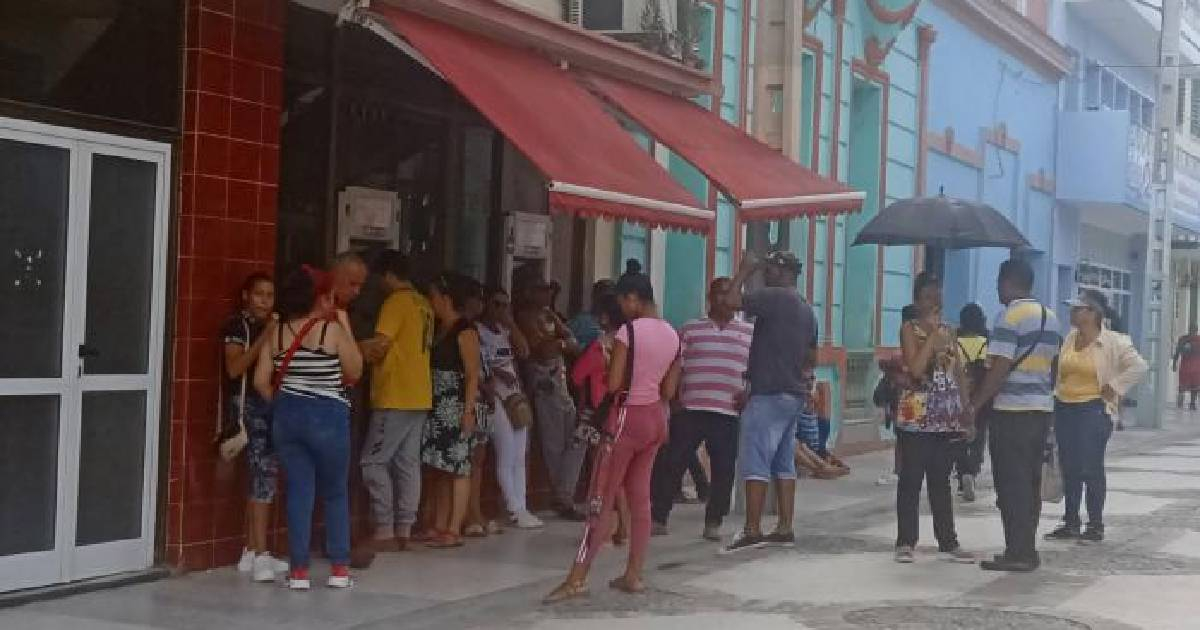
The illegal sale of appointments has become a lucrative informal business in Bayamo, where citizens impose fees and conditions to access ATMs, gas stations, currency stores, and bus reservations, while authorities seem to be oblivious.
“If you don't pay me, I'll remove you from the list,” was the threat issued by one of those vendors, in a scene characterized by shouting and vulgarities in the line at the ATM located on Paseo de General García, in the capital of the Granma province, reported journalist Yoenis Pompa Silva in an article published this Tuesday in the state-run La Demajagua.
The text laments that these "shift professionals" have become a part of the everyday life of the average Cuban, who must comply with their rules or resign themselves to wasting the day in an endless line.
At the same time, it confirms that the resale of places in line, tolerated in practice, has become normalized as another means of survival, fueled by scarcity, cash shortages, and the ineffectiveness of digital payment channels.
It is inconceivable how the ticket sellers carry out their misdeeds in front of those who enforce the law, and nothing happens, commented a woman present in the same line. Her testimony reflects the widespread frustration and the growing loss of trust in the authorities and institutional control.
The root of the problem, the author of the article points out, lies in the disparity between supply and demand, as well as in the mandatory use of cash, even in state or private establishments where digital payment should be an option.
"By the way, there are some state and private commercial service centers where the QR code serves as a decorative object, and where physical cash is mandatory; at these places, payments frequently involve transfers to personal accounts rather than to tax accounts," criticized the reporter.
He emphasized that, although this activity is not classified as a criminal offense, it constitutes a punishable administrative violation. Offenders can be sanctioned before the Popular Tribunal for disobedience or illegal economic activity, he noted.
While citizen reporting and the so-called “popular control” are important, the reporter emphasized that they are insufficient without a “systematic control that is generated from the legal apparatus with all its structure, to put an end to those who ‘bleed the wallet’, playing the best pointer.”
The scarcity and rationing of products in Cuba is a recurring problem that affects the lives of residents on the island, forcing them to stand in long lines to obtain everything from bread, potatoes, liquefied gas, eggs, to any other essential product, even if they are sold in foreign currency and at prices far beyond the reach of most families.
The failed monetary reorganization, rampant inflation, and the unsuccessful banking efforts turn lines at banks or ATMs into a torment for those who spend hours waiting for their turn to withdraw a meager amount of cash.
Many elderly people sleep in doorways and on sidewalks in an attempt to collect their pensions, a scene of extreme vulnerability that reflects the state’s neglect towards the most fragile sectors of society.
Additionally, citizens may spend to various destinations in the country amid the crisis of transportation and fuel.
Frequently Asked Questions About Ticket Reselling and the Economic Crisis in Bayamo
What is the resale of appointments in Bayamo?
The resale of slots in Bayamo is an informal business where individuals charge other citizens for a place in line to access basic services such as ATMs, foreign currency stores, and transportation terminals. This practice has become normalized due to scarcity and a lack of institutional control.
Why don't the authorities regulate the sale of appointments?
Although the sale of appointments is not classified as a criminal offense, it is considered a punishable administrative violation. However, the inaction of the authorities reflects a lack of systematic control and an apparent disinterest in resolving this issue that affects the population.
How does the cash crisis impact the daily lives of Cubans?
The cash crisis in Cuba complicates access to basic products and services, forcing citizens to endure long waits at banks and ATMs. This situation is exacerbated by the shortage of digital payment channels, which increases the reliance on physical cash.
What role does banking play in the Cuban economic crisis?
Bancarization, promoted by the Cuban government to reduce cash usage, has failed in its implementation due to technical, economic, and cultural obstacles. Businesses that do not accept electronic payments and distrust in digital platforms have limited its success.
Filed under: