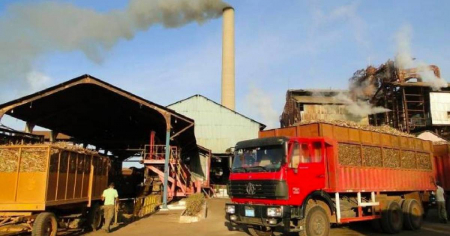
With a production of only 26% of the planned sugar, the province of Granma is facing one of the worst sugar campaigns in recent times, marked by organizational chaos, a lack of resources, and a long list of unresolved issues.
This was acknowledged by the Council of Government in a recent session, where they described "the alarming situation of the sugar sector" in the territory, reported the official newspaper La Demajagua.
The report submitted by Aresqui Hernández Ramírez, coordinator of Programs and Objectives of the provincial government, revealed that to date only 5,262 tons have been produced out of the more than 19,000 planned, a figure that speaks for itself. The causes of the decline: lack of fuel, industrial breakdowns, and negligence in land preparation.
The low figures are compounded by million-dollar losses, such as the 149.3 million pesos lost in fires on uncultivated fields, land overrun by woody plants, and delays in payments to workers of cooperatives and companies in the sector.
Granma also carries the burden of 26,000 idle hectares, placing it 12th nationally in terms of efficiency in so-called various crops, the source elaborated.
During the session, the direct impact of this debacle on the economy and the daily lives of the population was acknowledged. Governor Yanetsy Terry Gutiérrez claimed that it is "a sector deeply affected by material restrictions and by the effects of the American blockade."
He said that “although we have almost exhausted the harvest period, the country's decision from the highest levels and from ourselves is to not stop and continue grinding until it is no longer possible.” However, the speech does not disguise the reality: the sector is on the brink of collapse.
As the only immediate solution, it was announced that the municipal bureaus will analyze such indicators "to correct the course of the harvest and confront the serious situation in the sector."
With hurricane season just around the corner (from June 1 to November 30), authorities have also ordered an increase in vigilance and the restructuring of the Temporary Group in preparation for possible contingencies.
A recent report from the Reuters agency indicated that for the first time since the 19th century, the annual sugar production in Cuba will fall below 200,000 metric tons, according to recent estimates based on official reports and sources from the sector.
Although the decline has been ongoing for several years, the number represents a new historical low in an industry that for decades was the economic backbone of the country and a symbol of its national identity.
In recent weeks, several official media outlets have briefly reported alarming statistics regarding political authorities’ visits to sugar mills: several key mills have produced less than 15% of their plan, while others are barely surviving amid blackouts, outdated machinery, and scarce sugarcane.
In December 2023, the government acknowledged that it is “shameful” for the country, traditionally one of the leading sugar producers in Latin America, to have been forced to import this product.
Frequently Asked Questions about the Sugar Crisis in Cuba
What is the current situation of the sugar harvest in Granma?
The sugar harvest in Granma has only reached 26% of the planned target, representing one of the poorest campaigns in recent years. This low performance is due to multiple issues, including a lack of fuel, industrial breakdowns, and negligence in land preparation.
What are the main causes of the failure of the sugar harvest in Cuba?
The causes of the failure of the Cuban sugar harvest include shortage of key inputs, industrial bankruptcies, fuel deficits, and poor management. Additionally, the energy crisis has impacted machinery repairs, and adverse weather conditions have worsened the situation.
How does the sugar crisis affect the Cuban economy?
The sugar crisis has a significant impact on the Cuban economy, as sugar was one of the economic pillars of the country for decades. The decline in production affects not only exports but also the rum industry and other sectors that rely on sugar.
What measures are being taken to address the sugar crisis in Granma?
To address the sugar crisis in Granma, the authorities have decided to analyze indicators and adjust the course of the harvest. Additionally, surveillance has been strengthened in anticipation of possible climatic contingencies, although these measures do not guarantee an immediate solution to the structural problems in the sector.
Filed under: