
Related videos:
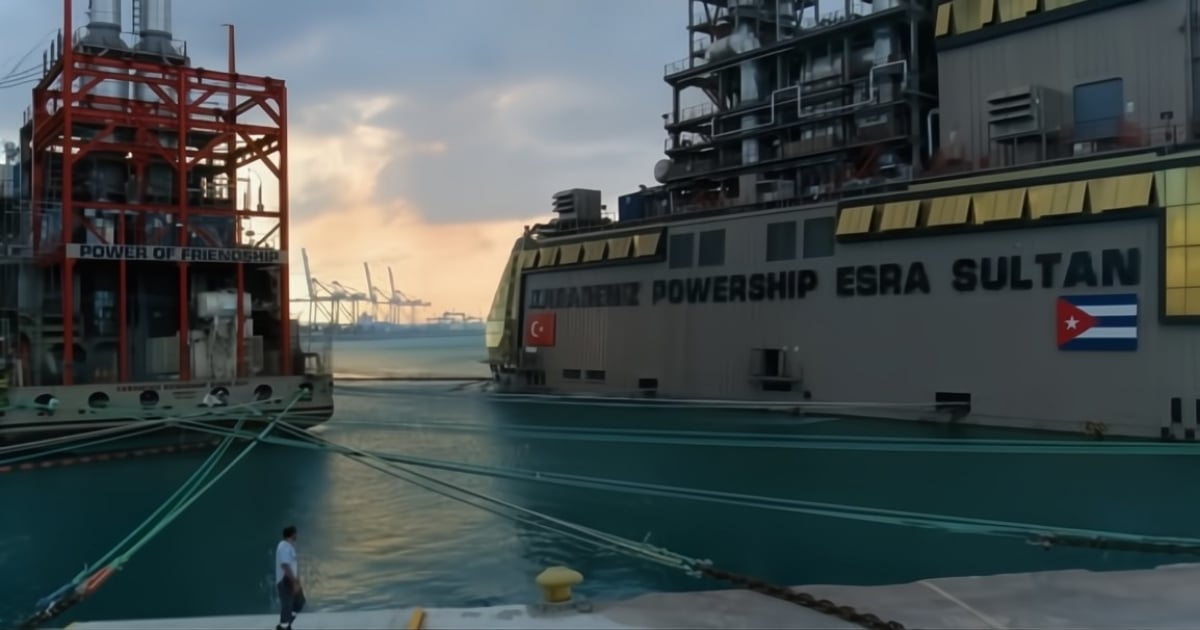
The Cuban Electric Union (UNE) denied this Thursday the alleged withdrawal of the Turkish floating power plant Suheyla Sultan installed in the bay of Havana.
In a statement published on its official channels, the state entity described as “false” the claim regarding an alleged departure from the country of one of the electricity-generating barges owned by the Turkish company Karadeniz Holding.
"The information about the withdrawal of the Turkish Patana in Havana is false. The arrival of the ship is part of the company and it is arriving at its logistics base in the capital," the UNE assured.
According to the clarification, the vessel that was recently spotted and sparked the rumors is not leaving the island; rather, it is part of internal operational movements of the company.
The official journalist Bernardo Espinosa also joined in the denial and emphasized on social media that the ship sighted belongs to the support fleet of Karadeniz and that it "arrived at its logistics base in Havana."
The independent media outlet 14ymedio had reported that one of the barges may be leaving the country, amid growing uncertainty regarding the stability of the national electric system and Cuba's energy contracts with foreign partners. CiberCuba could not confirm this information.
The fleet of Turkish barges has become a key component for electricity generation in Cuba, especially following the deterioration of the country's thermal power plants.
The Cuban government has resorted to this type of agreement as a temporary solution to address the energy deficit and the prolonged blackouts affecting the population.
Frequently asked questions about the energy crisis and floating power plants in Cuba
Why is the Turkish floating power plant important in Havana?
The Turkish floating power plant is crucial for electricity generation in Cuba, as the country faces a significant energy deficit due to the deterioration of its thermoelectric plants. These floating plants help to alleviate the prolonged blackouts that affect the Cuban population.
Is a Turkish floating power plant withdrawing from Cuba?
The Electric Union of Cuba has denied rumors about the withdrawal of a Turkish floating power plant in Havana. The movement of the spotted ship corresponds to logistical operations of the company Karadeniz Powership and does not imply the removal of the facilities.
What are the challenges of floating power plants in Cuba?
Floating power plants face fuel supply issues and operational risks, such as fires, which complicate their operation. Moreover, the lack of transparency in contracts generates uncertainty regarding their real cost and the financial implications for the country.
Why are there constant blackouts in Cuba?
The blackouts in Cuba are the result of a significant deficit in electricity generation capacity, caused by the deterioration of thermoelectric plants, lack of fuel, and maintenance issues within the national electrical system.
What measures has the Cuban government taken in response to the energy crisis?
The Cuban government has resorted to temporary solutions, such as the installation of floating power plants, but has not implemented effective long-term measures to resolve the energy crisis, which continues to generate frustration and discontent among the population.
Filed under: