
Related videos:
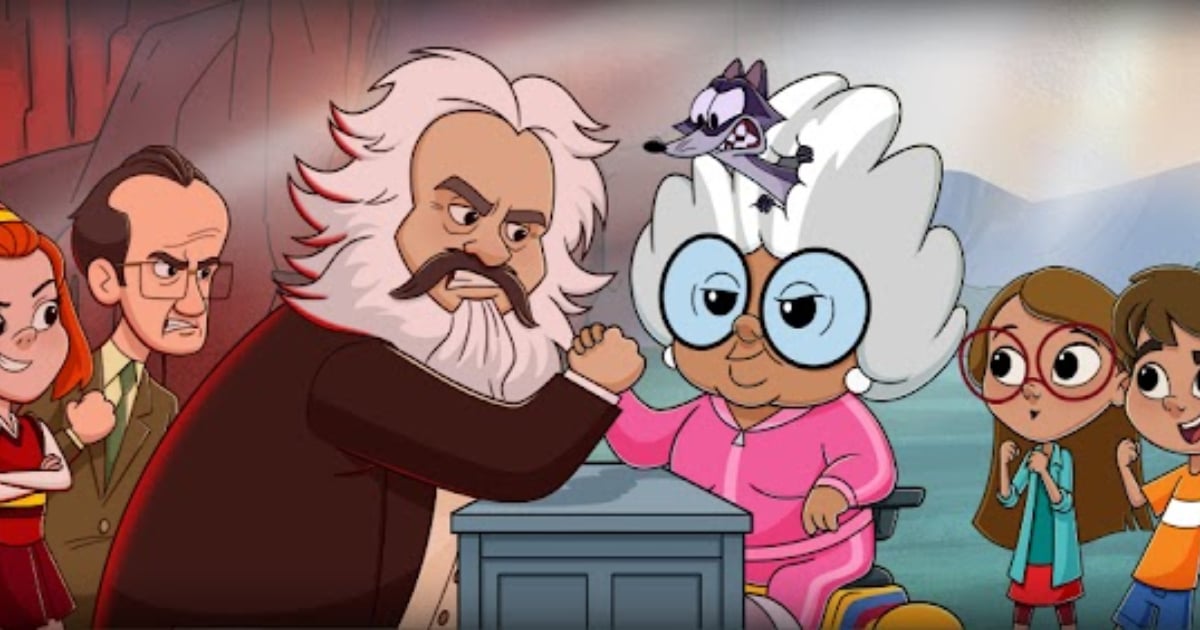
A Cuban exiled grandmother is the protagonist of one of the most controversial episodes of the animated series Tuttle Twins, recently added to the programming of the Argentine state children's channel PakaPaka, under the management of President Javier Milei.
The episode, titled How Did the Crisis Reach Cuba?, openly denounces socialism as a failed model, using a satirical approach infused with libertarian ideology.
In this chapter, the protagonists travel to Havana in 1940, where the grandmother reminisces about her childhood. “There is the little house where my parents raised me, the park where I played, the dump where Derek was born...”.
However, nostalgia gives way to criticism when the story advances to the present and shows a Cuba immersed in crisis. “The Cuban government, when they adopted communist policies such as paying everyone equally regardless of ability...”.
During the journey, the characters ironically highlight the flaws of the Cuban model. In one scene, one of the characters explains that in Cuba, doctors earn less than taxi drivers, yet both remain in poverty.
The grandmother —who serves as an emotional and political guide— reaffirms the libertarian message by recounting that her family left the country due to a lack of incentives and the frustration of skilled professionals. “Every year, hundreds of Cuban doctors leave their families to work in other countries... many of those who stay end up as janitors or hotel maids because they earn more”, says another character.
The series presents an explicit defense of meritocracy and the market. “Being fair does not mean that everyone should be paid the same... if someone has skills that are in higher demand, it makes sense that they should be paid more”.
In other episodes, the philosopher Karl Marx appears as a caricatured villain who asks for money for autographs and is ridiculed by the protagonists. Concepts such as collectivism, central planning, and subsidies are also satirized, while the role of economists like Milton Friedman is exalted.
The humorous tone and friendly aesthetic contrast with the ideological weight of the content. In one of the most symbolic scenes of the Cuban episode, the soldiers confiscate the grandmother's wheelchair and declare: “Your wheelchair is now the property of Cuba”.
Controversy in Argentina over the channel's ideological shift
The inclusion of Tuttle Twins— a series produced by Angel Studios and based on the books by conservative activist Connor Boyack— in the lineup of PakaPaka, a channel historically focused on education in human rights, diversity, and historical memory, has sparked intense controversy.
Educators, pedagogues, and former executives of the channel accuse the government of child indoctrination, stating that the content seeks to instill an extreme and polarizing political viewpoint from childhood.
In contrast, the ruling party defends the initiative as a way to "restore common sense" and to teach children "the ideas of a free society."
According to the creators themselves, the goal of Tuttle Twins is to teach children and families "the ideas of a free society". In each episode, messages in favor of capitalism and against collectivism are disseminated.
Educational entertainment or political propaganda?
The Cuban grandmother, with her story of exile and her explicit rejection of socialism, embodies the narrative vehicle of a clear political agenda that is dedicated to denouncing leftist models in Latin America and promoting the values of classical liberal thought.
Phrases like "being a communist is terrible" or "salary equality destroys innovation" are presented as pedagogical truths through humor, nostalgia, and colorful animation. All of this has opened the debate on the boundaries between education, entertainment, and propaganda in public media.
Frequently Asked Questions about the animated series Tuttle Twins and the critique of socialism in Cuba
What is the focus of the Tuttle Twins episode about the crisis in Cuba?
The episode denounces socialism as a failed model and employs a satirical approach infused with libertarian ideology. Through a journey to Havana in 1940, the chapter critiques the current situation in Cuba, highlighting the negative impact of communist policies on the Cuban economy and society.
Why has the inclusion of Tuttle Twins in PakaPaka sparked controversy in Argentina?
The controversy arises because the PakaPaka channel has historically been linked to education in human rights and diversity, and the inclusion of Tuttle Twins is perceived as an ideological shift aimed at instilling a polarizing political viewpoint in children. Educators and pedagogues criticize the content for being a vehicle of political indoctrination.
What is the role of the Cuban grandmother in the episode of Tuttle Twins?
The Cuban grandmother serves as an emotional and political guide, reaffirming the libertarian message by recounting how her family left Cuba due to a lack of incentives and the frustration of skilled professionals. Her personal story is used to criticize the Cuban economic and social model.
How is Karl Marx depicted in the Tuttle Twins series?
Karl Marx is portrayed as a cartoonish villain who asks for money for autographs and is mocked by the protagonists. The series satirizes concepts such as collectivism and central planning, while glorifying the role of economists like Milton Friedman.
Filed under: