
Related videos:
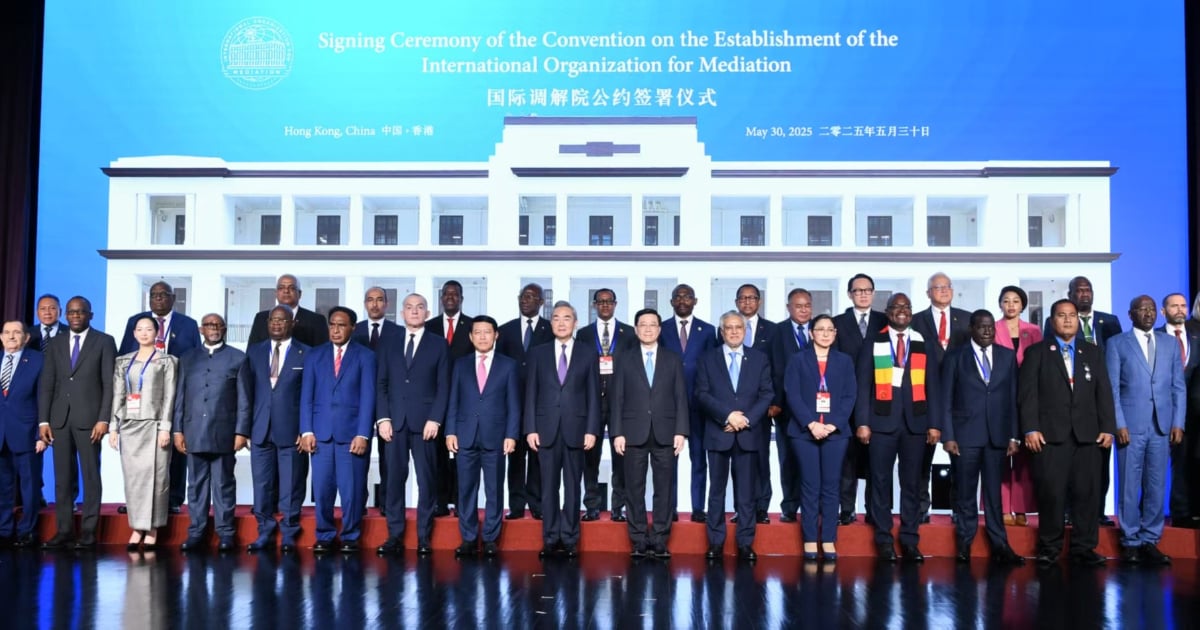
China took an important step in its global diplomatic strategy this Friday by formally establishing a new international dispute resolution body based on mediation, which was joined by more than 30 countries, including Cuba, as founding members.
During a ceremony held in Hong Kong, representatives from nations such as Pakistan, Indonesia, Belarus, and Cuba signed the Convention for the Establishment of the International Mediation Organization (IOMed), a project led by Beijing that aims to provide an alternative to traditional international arbitration mechanisms, reported the agency AP.
China's Foreign Minister, Wang Yi, led the event and emphasized that the organization's aim is to "promote the amicable resolution of international disputes" and to encourage more harmonious global relations, moving away from a confrontational logic.
"The creation of this organization helps to overcome the zero-sum mentality of 'I win, you lose,'" Wang stated.
"China has historically advocated for resolving differences through mutual understanding and dialogue, and now we want to share our wisdom to facilitate peaceful solutions among nations," he reiterated.
The new institution will be based in Hong Kong and is presented as a tool to strengthen China's diplomatic influence, especially among countries in the Global South, in a context of rising geopolitical tensions driven, in part, by the trade wars initiated by the Donald Trump administration in the United States.
For the Cuban regime— which is increasingly losing influence on the global stage— joining the organization represents an opportunity to strengthen its ties with China and other emerging nations, while also positioning itself in an international arena where mediation mechanisms are gaining ground against unilateral impositions.
Analysts believe that this step reinforces China's image as a player proposing multilateral alternatives to models dominated by the West, particularly at a time when many developing economies are seeking more equitable platforms to resolve international disputes.
Frequently Asked Questions about Cuba's Membership in the International Mediation Organization
What is the International Mediation Organization (IOMed) and what is its objective?
The International Mediation Organization (IOMed) is a new international body established for dispute resolution through mediation. Led by China, it aims to offer an alternative to traditional international arbitration mechanisms, promoting the peaceful resolution of disputes and more harmonious global relations.
Why is it important for Cuba to join IOMed?
For Cuba, joining the IOMed represents an opportunity to deepen its ties with China and other emerging nations. This allows it to project itself on the international stage, particularly in a context where mediation mechanisms gain ground against unilateral impositions. Furthermore, it strengthens its strategic alignment with China, seen as a key ally against U.S. policies.
How does Cuba's participation in IOMed fit into its current foreign policy?
Cuba's participation in the IOMed aligns with its strategy to strengthen relations with authoritarian regimes and counter Western influence. Cuban diplomacy has aimed to consolidate its ties with countries like China and Russia, promoting the narrative of the US "blockade" and aligning itself with powers that challenge the Western world order.
What role does China play in the creation of IOMed and what is its interest in including Cuba?
China leads the establishment of the IOMed as part of its strategy to strengthen its diplomatic influence in the global south. Including Cuba and other emerging nations bolsters its position as an alternative to models dominated by the West, promoting a more equitable international order and moving away from confrontational logic. For Cuba, this represents a strategic link and a potential source of support amidst its internal crises.
Filed under: