
Related videos:
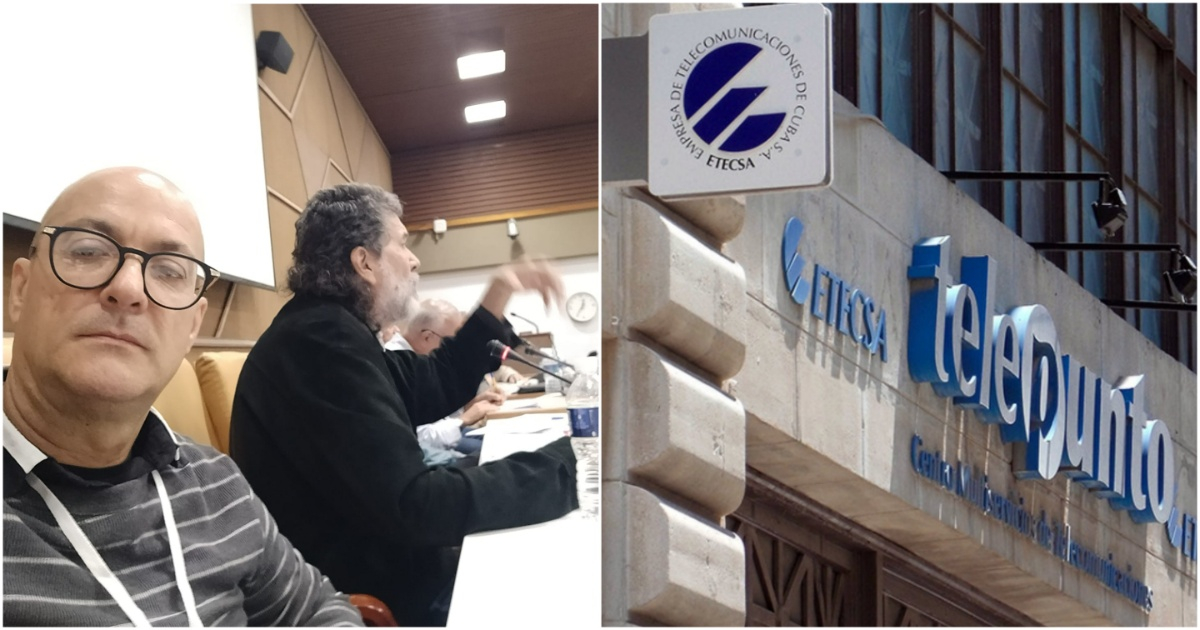
Ernesto Limia, vice president of the UNEAC Writers' Association, joined the government's criticisms of the dollarization of the state monopoly ETECSA, stating that "these are not times for rate hikes."
“These are not times for fee hikes, and I don't believe that ETECSA's management is the only one responsible. I understand that a leader makes decisions based on the variables presented for their approval, and no one can know everything; however, it was foreseeable that this measure would generate public backlash, and if there is no other solution, it falls on the superior chief who approved it to explain,” wrote Limia on Facebook.
In a lengthy text filled with digressions, the former member of the Central Committee of the Communist Party of Cuba, and as journalist José Raúl Gallego described him, "one of the main sword-wielders and ideological spokespersons" of the PCC, urged leaders to "untangle the mess."
“In revolutionary Cuba, every economic decision must, by definition, be political (...) in this case, it is up to Comrade Manuel Marrero to take charge and 'untangle the mess.' This is a practice deeply rooted in the Cuban political tradition that began with Martí and was upheld by Fidel and Raúl. This people will settle for nothing less...” he said.
For the apparatchik, this tariff hike by ETECSA is not isolated: "For several years now, various state entities have compensated with prices for the effects of the combination of Yankee harassment and ineptitude," he said, following the regime's tendency to blame the embargo.
"I know that ETECSA's management is experimenting with a formula to attract foreign currency, an essential factor for development and its sustainability; however, the road to hell is paved with good intentions, and as a result, university students and their teachers, doctors, journalists, and intellectuals have suffered," he added.
Rate hike and discontent within the ranks of the government
On Friday, ETECSA announced a new set of measures that severely restricts the use of Cuban pesos (CUP) for mobile top-ups and instead promotes data packages priced in U.S. dollars.
Beyond the immediate perplexity and outrage caused by the announcement, it was surprising to see the reaction the new measures elicited in the Cuban digital ecosystem, especially on the regime's official portal Cubadebate, where the news sparked a wave of comments expressing fury that overflowed the usual boundaries of criticism on the island.
The decision to limit top-ups in CUP to a maximum of 360 pesos per month and to offer data plans in foreign currencies was perceived by many as the formalization of the dollarization of mobile service in Cuba.
The announcement, accompanied by technocratic language and promises of technical "improvements," was met with a public reaction rarely seen from official voices or state media. Within hours, over 1,300 comments flooded the official page of Cubadebate. This time, the tone was not one of resigned approval, but of unfiltered outrage.
A reader summarized it with bitter irony: "Let's be serious. This is not an offer; this is armed robbery. Another attack on those who already have so little."
Other usual spokespersons for the regime, such as musician Israel Rojas, have also come out to criticize the measure.
Frequently Asked Questions about the ETECSA Rate Increase in Cuba
Why has ETECSA implemented a rate hike and what does it imply?
ETECSA has implemented a rate hike to attract more foreign currency, limiting top-ups in Cuban pesos (CUP) to 360 per month and promoting data plans in US dollars (USD). This measure aims to generate revenue in foreign currency amid the economic crisis facing Cuba, but has sparked widespread rejection as it is seen as exclusive and harmful to those without access to foreign currency.
How has the Cuban population reacted to ETECSA's price hike?
The Cuban population has reacted with indignation and rejection to ETECSA's rate hike. Citizens have expressed their frustration on social media, criticizing the measure for increasing inequality and limiting access to an essential service like the Internet, especially for those who do not receive remittances or have access to dollars.
What justifications has ETECSA provided for the increase in rates?
ETECSA justifies the increase in rates as necessary to sustain and develop the network. It claims that these measures will allow for the gathering of more financial resources to improve telecommunications services in Cuba. However, many Cubans find these justifications insufficient and view the measure as a mockery, given the poor quality of service and the exorbitant prices that have been consistent for years.
What impact does the dollarization of services like the Internet have in Cuba?
The dollarization of services such as the Internet in Cuba deepens the economic divide, turning access to connectivity into a privilege for those with access to foreign currency. This excludes a large portion of the population that only has income in Cuban pesos, limiting their access to information, education, and job opportunities in a context where connectivity is essential.
Filed under: