
Related videos:
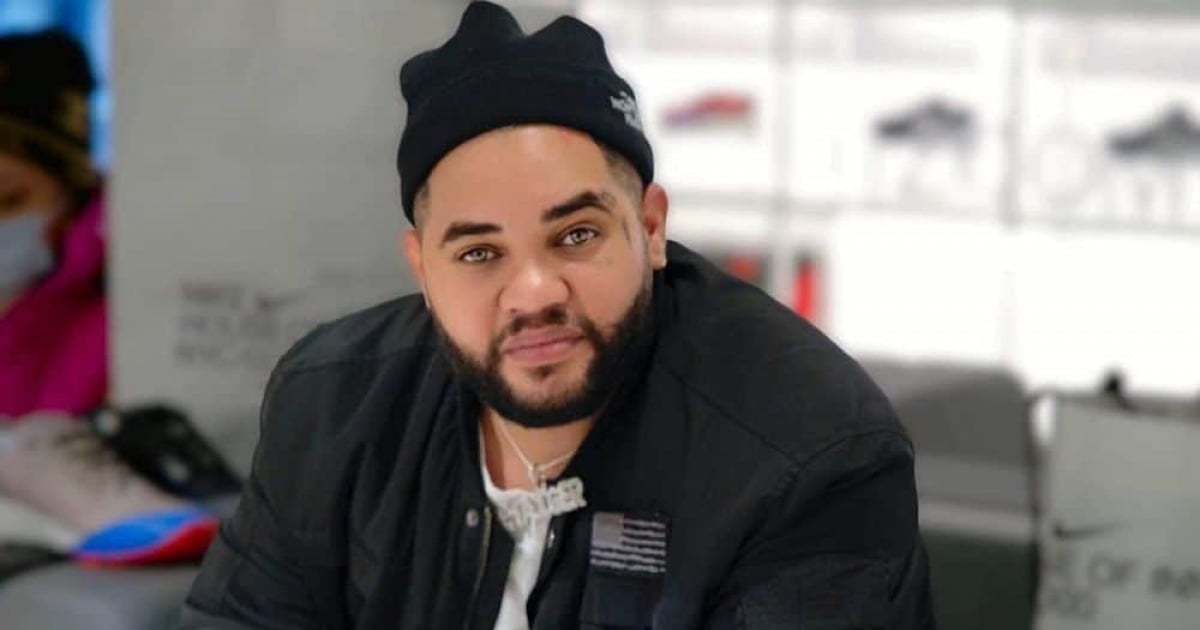
The recent unveiling of a mural in Miami featuring the image of musician José Manuel Carvajal, known as El Taiger, has sparked a wave of reactions within the Cuban exile community.
The mural was painted on the façade of a new merchandise shipping agency to Cuba, EVS Cargo, located at 37th Avenue and 7th Street in the northwest of the city.
In the mural, the image of the deceased reggaeton artist is accompanied by the phrase “Forbidden to forget”, which obviously alludes to the singer's murder.
However, it is an expression loaded with political and emotional significance for many Cuban exiles, which has sparked controversy.
For some, this phrase is closely associated with memories of traumatic events linked to the Cuban regime, such as the shooting down of the Brothers to the Rescue planes in 1996 or the massacre of the tugboat 13 de Marzo.
The explanation from the business owner
The owner of the establishment explained in statements to Univisión that his intention was neither political nor provocative.
According to him, the mural was intended as a personal tribute to the singer, murdered in October 2024 in Hialeah.
“I wrote 'forbidden to forget' there without thinking at all about exile or those things, because I truly had no idea about that," he explained.
"Now, I am aware that the phrase is not patented by the Cuban exile,” he added.
"We have nothing to do with politics, we do not get involved in politics," he concluded, a statement that has not been well received by many.
Critiques from Exile
“It’s a phrase used by exiles to not forget the excesses of the dictatorship,” said Diana Fernández in statements to the mentioned media, who indicated that for many, El Taiger is not that special person that some believe.
"I am very sorry for those who consider him a 'hero,' but for us, he is not a 'hero'; he never behaved like someone who represented the community," he said, emphasizing that El Taiger even mocked the exiles and "supported the dictatorship."
"I think and I ask the business owner to place his hand on his heart, and to reflect on the pain of those of us who live here," he concluded.
Unauthorized use of the image
Another element that adds tension to the case is that the business owner did not contact those managing the artist's estate beforehand to obtain permission for the use of their image.
For now, no legal actions have been announced, but Univision anticipated a possible contact between both parties to reach an agreement.
Conflicting opinions on social media: Freedom of expression vs. respect for exile
The discussion has generated a strong echo on social media, where dozens of users have expressed highly polarized opinions: some defend freedom of speech and argue that exile does not own the language, let alone a phrase; others claim that the mural is a disrespect to the exile community.
“Forbidden to forget is for those who have been in this country for years, who protest for political prisoners”; “Exile and him were never together”;
“That mural is a disrespect to the memory of the true exile”; “The agencies say they do not speak about politics, but they use phrases from political fighters”; “That business is part of the mismanagement of Cuba”; “Promotion of a criminal, sentimentalism directly comparable to bread with steak”;
“I'm sorry, but he does not represent the community, he supported the dictatorship”; were some opinions in that regard.
“True exile does not allow its history to be trivialized”; “That phrase cannot be alongside an image that represents the opposite of the values of exile”; “The poster must be removed, it does not represent our struggle”; declared three other commentators.
In response to this, one of the most common defenses of the mural was the rejection of the idea that a community could claim ownership over the use of the Spanish language or certain expressions.
On social media, several people made ironic comments such as, "Is the exile now the owner of the Spanish language?" or "They didn't invent that phrase."
Others insisted that "it's a very common phrase in the world" and that "it's not patented by anyone," reinforcing the idea that language cannot have owners.
These opinions denounce what they consider an excess of sensitivity and control over symbols that should be freely used in a democratic society.
The mural honoring El Taiger in Miami reopens old wounds within the Cuban exile community, highlighting the difficulty of separating artistic expression and political memory.
While some see it as a legitimate tribute to an artist, others perceive it as a disrespectful appropriation of a painful symbol.
Filed under: