
Related videos:
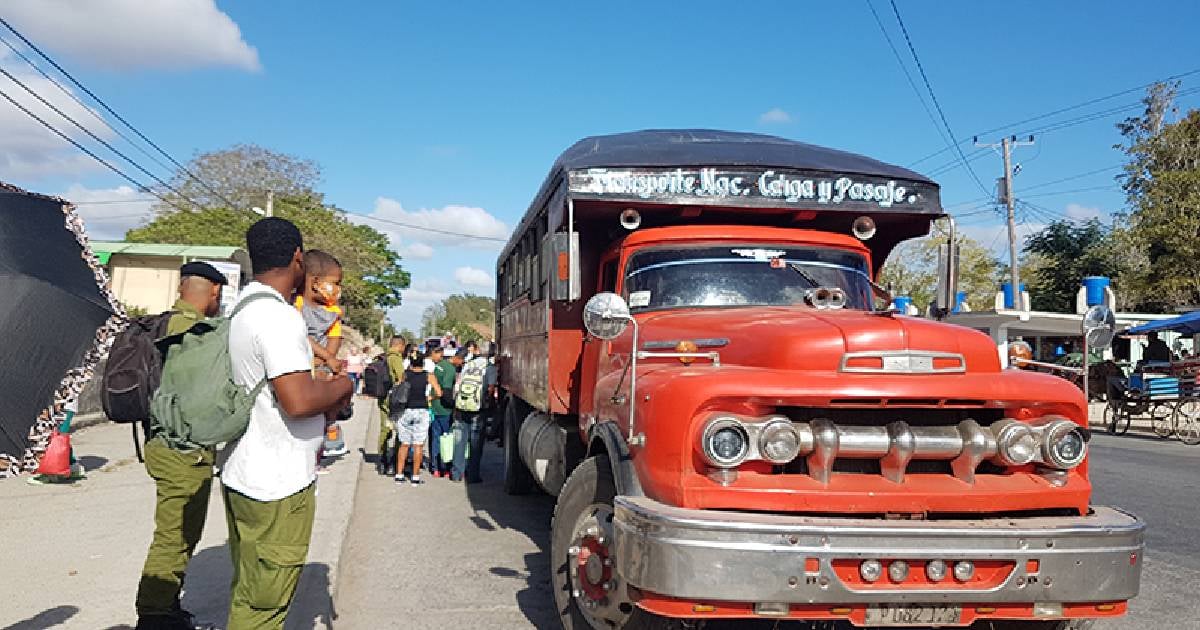
Neither strategies, nor rented buses, nor official speeches have managed to improve intermunicipal transportation in Las Tunas, where people continue to be stranded at terminals, students miss classes, workers arrive late, and prices keep rising uncontrollably.
This is confirmed by the testimony of Leagna Talía, a university student who has been enduring a struggle for three years to travel from Amancio, in the southern part of the eastern province, to the University of Medical Sciences in the capital of the region.
He has lost luggage and time, and relies on a state bus that only departs on Mondays at 12:00 PM, shared among students from two universities, professors, and other residents, if there is space available. The return trip on Friday afternoons follows the same pattern.
"The critical situation with transportation in Tunero soil is a story with many facets... For some, depending on how their day goes, they believe it isn't that bad, while others speak of tragedy; and for the authorities in this sector, it often proves to be a very difficult puzzle to piece together," reflected the official newspaper 26.
According to the Provincial Passenger and General Cargo Transport Company (Cardinal), in 2024 it barely received just over a third of the essential fuel needed to fulfill its mission: 368,000 liters out of 1,038,000 liters required. The reduction in other basic supplies, such as oil, has further increased maintenance costs because the already aging vehicles demand much more.
The sector delegate in the area, Reynaldo Reyes Silva, explained that based on the fuel available in each municipality, a bus should depart for the capital city in the morning and return in the afternoon. However, this arrangement relies more on a miracle than on proper planning.
“The responsibility depends on the decisions made by the Management Councils of the districts. From the province, efforts are made to provide a certain percentage of fuel,” the official emphasized.
He also said that "the only municipality in Tunas that guarantees a percentage of fuel for rentals is the capital. With them, it's important to consider that on weekends they have different schedules, meaning they should not adhere to any specific timetable or route."
Rented buses, private trucks, state-operated buses, varying prices, and changing schedules all add to the complexity. In Jobabo and Manatí, two of the identified critical routes, there are days when transport officials have to send buses at 7:00 p.m. to accommodate the stranded crowd.
Reyes assured that "in the transportation of students, drivers are instructed to charge at the terminals when they are returning, according to the established rate per kilometer." However, in practice, according to testimonies gathered by 26, prices range from 50.00 to 200.00 pesos, depending on the vehicle and the destination. The lack of control has even led to sanctioning contracted transporters for fare violations, as in the case of Amancio.
In Puerto Padre, the situation seems somewhat better, with a more regular frequency of buses. However, the overall balance is concerning: a shortage of transportation options, uncertain schedules, weak control systems, and an absolute dependence on fuel.
Vladimir Téllez Pérez, operations director at Cardinal, does not sugarcoat the reality: without fuel, it is impossible to meet the demands of the population. This is compounded by the informality of private transporters, who, he stated, “can come and go at their own discretion, unlike the contracted ones, who must fulfill their social purpose.”
The situation at the railway terminal of the central municipality reflects the same pattern: temporary improvements, but without any guarantee of stability. According to Edelso Ayala Rosales, a traffic dispatcher, there has been a shift from a “total crisis” to an improvement, yet the constant threat of shortages remains.
Intermunicipal transportation in Las Tunas is a patched-up system, sustained by the will of drivers and local managers. As long as there are insufficient resources and no real willingness for structural change, it will continue to be, as it has been, "the never-ending story."
Nationally, more than half of the provincial routes were paralyzed last year, due to a lack of fuel and spare parts. This situation has led many Cubans to rely on alternative modes of transportation, such as electric bicycles, for their daily commutes.
In Havana, for example, the public transportation crisis has reached a critical point for years, with canceled routes, vehicles out of service, and an increasingly frustrated population facing long waits and overcrowded means of transportation, due to the lack of concrete solutions.
Due to the shortage of public transportation, the government of Guantánamo decided years ago to lease old buses to self-employed workers, so they could address the technical issues and breakdowns of the vehicles. However, this alternative did not solve the problem, and the crisis persists.
Recently, the state media acknowledged that obtaining a ticket to leave Sancti Spíritus has become an odyssey characterized by endless lines, inefficient applications, and a system where bribery is more effective than legality.
Since 2021, the government has implemented ferrobuses to address the transportation shortage that particularly impacts residents in rural areas of the country, often forcing them to use unsafe or excessively slow vehicles, such as carts.
However, while the population faces an eternal ordeal when it comes to transportation, at the beginning of January, new buses for tourism arrived in Cuba, equipped with amenities such as air conditioning, reclining seats, and restrooms, in an effort by the government to raise the standards of tourist transportation.
Frequently Asked Questions about Inter-Municipal Transport in Las Tunas
What is the current situation of intermunicipal transportation in Las Tunas?
Intermunicipal transportation in Las Tunas is facing a severe crisis due to fuel shortages, excessive fares, and poor planning. The population endures long waits and high prices, while students and workers encounter difficulties reaching their destinations.
How does the lack of fuel affect transportation in Las Tunas?
The lack of fuel in Las Tunas has resulted in limited bus operations, with only one third of the necessary fuel available. This causes irregular routes and uncertain schedules, severely impacting the mobility of the population.
What measures has the government taken to improve transportation in Las Tunas?
The government has attempted to lease buses to individuals and manage additional resources, but the lack of control and effective planning has hindered significant improvements. Local authorities acknowledge that they depend on administrative decisions and provincial management to obtain fuel.
What transportation options do citizens have in Las Tunas?
In the face of the public transport crisis, many citizens turn to alternative means such as electric bicycles or informal private transport, although these also face issues of availability and high costs due to demand.
Filed under: