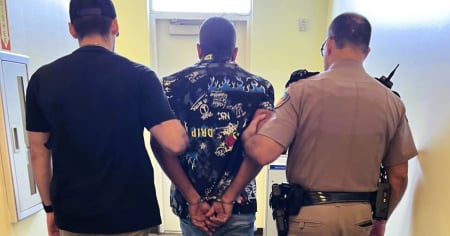
A young Cuban with parole status who recently became a father was detained by immigration authorities in Florida after attending an immigration appointment where he hoped to progress towards legal residency.
The case has sparked a wave of solidarity and raised questions about the treatment of non-criminal migrants in the United States.
A migration appointment that ended in arrest
Ariel Lara González arrived in the United States for the first time in 2018. After being detained for six months, he was deported to Cuba, where he was recognized as a political activist. In 2022, he managed to leave again and entered the country through the Mexican border, where the authorities granted him parole.
Two weeks ago, he attended an immigration hearing hopeful that he would be granted residency, but instead, he was arrested by Immigration and Customs Enforcement (ICE) agents.
The reason cited by the administration is that not five years have passed since their previous deportation, a technical requirement that, according to their defense, does not invalidate their current legal status.
"The fear that is being experienced in the streets is horrible," lamented Elena, his wife and mother of their newborn son, in statements to Univisión. "He is not a criminal, he is not undocumented," she emphasized.
The family drama and a grandmother who pleads
The case gained visibility on social media thanks to an emotional video posted by the user klyndia.elena on Instagram.
In it, Ariel's grandmother pleads with tears for the release of her grandson, whom she describes as a hardworking young man, respectful of the law, and deeply devoted to his family.
"That boy would get up every day at one in the morning to go deliver goods across the keys. He never missed a day. He doesn’t have a set work schedule," the woman said, visibly affected.
The elderly woman, ill, claims she will die of sadness. Her grandson is her only companion, and despite suffering from anxiety, he worries about her health, calling her punctually every morning and night to remind her to take her medication.
"She is fighting for her family and for me, day and night. All I ask is that they don't send him back to a country where he is in danger," the lady pleaded, who has lived in the United States for over two decades and is a U.S. citizen.
The woman said that she agrees with deporting criminals, but not good people who came to work and fight.
"When he arrived, the first thing I did was rush to apply for his asylum so that he could be legal in this country, as the law requires. So why, I can't understand why they deceive me by saying he will be granted residency and then they take him into custody," she detailed.
"He doesn't deserve that, because he's not a criminal, he hasn't hurt anyone. Where are the human rights?" he questioned.
Reports of abuse and legal support
In a phone conversation with his wife, Ariel reported having been mistreated during his detention in Florida, where he was placed in isolation for three days without explanation or interrogation.
He is currently detained in Texas, amidst a process that could return him to a country where he fears for his life.
The attorney Willie Allen argues that he is entitled to residency under the Cuban Adjustment Act, as he entered on parole.
A worrying precedent
The case has raised alarms among human rights advocates and Cuban immigrants in similar situations.
Activists warn of a climate of fear among those who, despite having valid immigration status, face the risk of deportation due to technical reasons or restrictive interpretations of the law.
Ariel's family is calling for justice and asking that their rights be respected.
The story of Ariel Lara González gives a human face to the consequences of an increasingly aggressive immigration policy, raising an urgent question: Is this what those who come to the United States to work, love, and rebuild their lives deserve?
Frequently Asked Questions about the Detention and Deportation of Cuban Migrants in the U.S.
Why was Ariel Lara González detained during his immigration appointment in the U.S.?
Ariel Lara González was arrested because, according to immigration authorities, less than five years had passed since his previous deportation, a technical requirement that, according to his defense, does not invalidate his current legal status of parole in the U.S. This case has sparked criticism regarding the treatment of non-criminal migrants seeking to regularize their situation in the country.
How does the current immigration policy affect Cubans with parole status in the U.S.?
The current immigration policy in the U.S. has tightened conditions for immigrants, including those with parole status. Cubans, even with valid immigration status, face the risk of deportation due to restrictive interpretations of the law, which has created a climate of fear within the Cuban migrant community.
What rights does Ariel Lara González have under the Cuban Adjustment Act?
According to his lawyer, Ariel Lara González is entitled to residency under the Cuban Adjustment Act, as he entered the U.S. with parole status. This law allows Cubans to apply for permanent residency after one year of legal stay in the country, although its application may be impacted by previous legal situations, such as deportations.
What impact does the detention of Ariel Lara González have on his family?
The arrest of Ariel Lara González has caused a deep emotional impact on his family, especially on his wife and grandmother, who have expressed their anguish and desperation. His wife has emphasized that Ariel is neither a criminal nor an undocumented individual, and the grandmother has requested his release to prevent him from being returned to a country where he fears for his life.
Filed under: