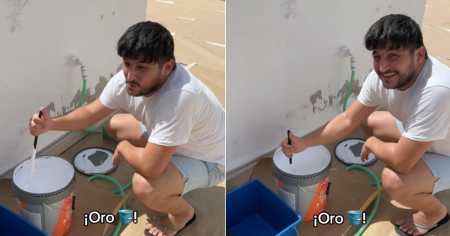
The Cuban content creator known as @el.profesor.cubano, son of the comedian Antolín El Pichón, has once again sparked a wave of reactions on social media after posting a video from Murcia, Spain, in which he compares the abundance of pet products with the food scarcity currently experienced in Cuba.
“Aquí hay comida para gato, para perro, para peces, para pajaritos, para todos los animales que puedas tener. Y mi país, Cuba, sin pan, sin un pan”, denuncia con indignación el joven, mientras recorre un supermercado en España. “El pan yo creo que es el ejemplo de la pobreza más extrema. Una persona que no tenga pan...”, sentencia, visiblemente afectado.
The post, shared on TikTok, also includes images of a line in Cuba to buy imported chicken from the United States. The scene is accompanied by the overlaid message: “Cuba hurts!,” which has become a recurring slogan among many Cuban émigrés.
A shared pain
The video has sparked dozens of supportive comments, both from Cubans and Spaniards. "You can't live in Cuba, it’s simply impossible," expressed one user. Another commented: "There, you don't think about living, you think about how to survive another day." The testimony also elicited responses from abroad: "It hurts me too, being Spanish," wrote a moved follower.
The comparison between life in Cuba and in Spain sparked reactions from those who fear that the situation might repeat itself in other contexts: “At the rate we're going, we could end up in a similar situation here. We'll be back to bread and butter for breakfast and dinner,” a user warned, referring to the economic situation in Spain.
Other voices pointed directly to the prevailing political system on the island. "Communism is the most disastrous thing in the world," wrote one internet user, while another concluded, "My wife is Cuban, and we suffer because of it."
The young Cuban's complaint about the lack of bread in his country occurs within a context marked by a national crisis in wheat flour supply, which has forced restrictions on the production and distribution of regulated bread in several provinces across the country. In Ciego de Ávila, for instance, bread is sold on alternate days and only about 50% of the demand is met, while in Matanzas, the population was completely without basic basket bread for several days. Prices in the non-state market have reached alarming figures, with 200-gram units selling for up to 150 CUP in some areas of the country, according to official data gathered by the National Office of Statistics and Information (ONEI). These conditions highlight a marked regional inequality and a sustained deterioration in access to one of the most basic foods in the Cuban diet.
Pain for the homeland from Spain
This new testimony adds to a series of previous publications by the same author in which he depicts, from a perspective of nostalgia and critique, the contrast between his current life in Spain and the hardships experienced in Cuba.
In April, he posted a video from a bazaar in which he remembered how his grandfather used to pick up screws and nails from the street because in Cuba “there are no hardware stores, there is nothing.”
In another recent post, it highlighted the symbolic value of an empty bucket, "ground gold" on the island, due to its multiple uses in the face of resource scarcity.
A reality that others also make visible
The testimony aligns with similar complaints such as that of Spanish YouTuber Juanjo Dalmau, who recorded a long line in front of a food store from Havana, stating: “Imagine living in a country where your food depends on a ration book that most of the time only distributes emptiness.”
Dalmau has also documented streets filled with accumulated trash, homes on the verge of collapse, and the breakdown of public transportation, reinforcing the notion of an island consumed by daily precariousness.
Between sadness and denunciation
The phrase “Cuba hurts” has resonated deeply among users who view these videos as a way to channel their frustration and sadness about the situation on the island. Among the most repeated messages are expressions like: “Speechless, how long will it last,” “It hurts so much,” “What is happening in Cuba is terrible,” and “Thank you for always keeping Cuba in the forefront.”
In the face of pain, calls for civic awakening also arise: “Homeland and freedom... To achieve this, we must take to the streets and fight every day,” wrote a user.
Frequently Asked Questions about the Food Situation in Cuba and Comparisons with Abroad
Why did the Cuban content creator compare the food situation in Cuba to that of Spain?
The Cuban content creator compared the food situation in Cuba with that of Spain to highlight the scarcity and precariousness experienced on the island, in contrast to the abundance of products found in a supermarket in Spain. In the video, he shows the availability of pet food in Spain as an example of what he considers a more prosperous reality compared to the food crisis in Cuba.
What is the current situation of bread supply in Cuba?
The situation regarding the supply of bread in Cuba is critical due to a national crisis in wheat flour supply. Regulated bread has been limited in distribution, being sold on alternate days in some provinces and does not meet total demand, while in other areas, such as Matanzas, the population has been left completely without bread for several days. The price of bread in the non-state market has reached alarming figures.
What impact have publications by Cubans abroad had on the situation in Cuba?
Cuban posts from abroad have generated a wave of reactions and solidarity on social media, both from emigrated compatriots and from citizens of the host country. These posts highlight the disparities in quality of life and access to basic products between Cuba and other countries, bringing to light the shortages and economic crisis facing the island.
How does food scarcity in Cuba affect the daily life of its citizens?
Food scarcity in Cuba profoundly impacts the daily lives of its citizens, forcing them to stand in long lines to obtain basic products and to seek creative alternatives to compensate for the lack of food. This precarious situation is reflected in their daily diet, which often lacks variety and quality due to the unavailability of essential ingredients such as bread, meat, and vegetables.
Filed under: