
Related videos:
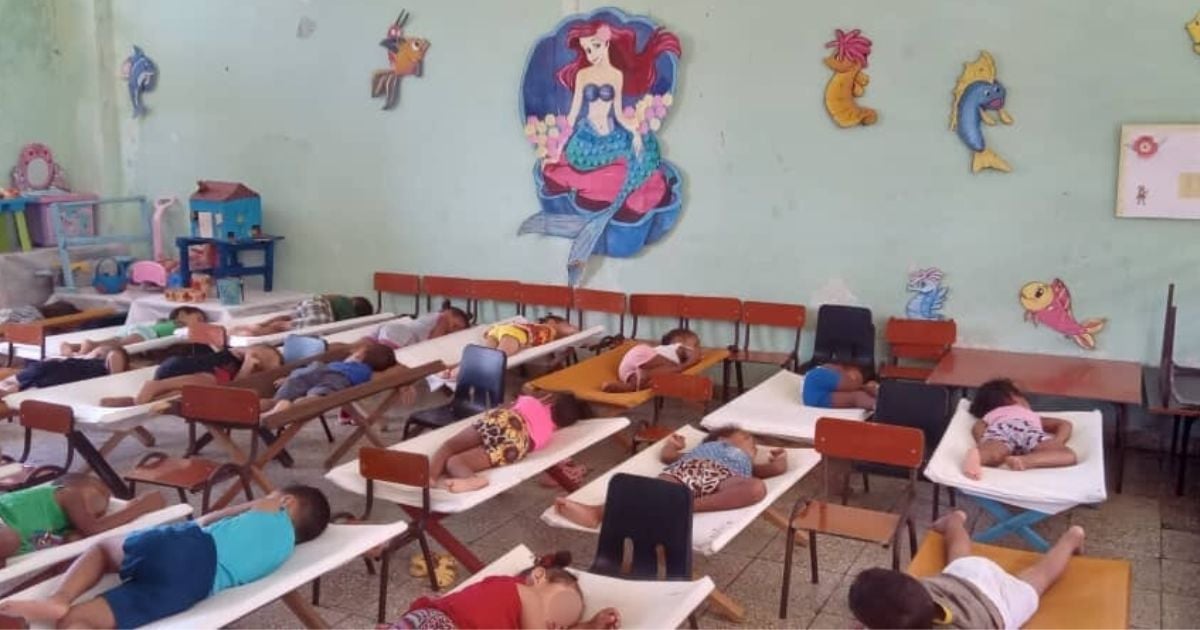
The Conchitas de Mar children's circle, located in the Turey neighborhood of Baracoa, has had to reduce its hours and change its operating conditions due to the severe energy deficit that the country is facing.
According to the state broadcaster Radio Baracoa on its Facebook profile, the center is adopting the alternatives provided by the Education sector to cope with the ongoing blackouts.
The deputy director, Niubis Pérez Navarro, explained that children are accepted until 9:00 a.m., and families can pick them up starting at 12:30 p.m., depending on the reorganization of the municipality's workplaces.
Although it is insisted that educational activities have not been affected, the most alarming fact from the report is that the preparation of food for the 215 children no longer relies solely on liquefied gas: now sawdust ovens, charcoal, and even firewood are being used for cooking in 2025.
Pérez assured that, despite the conditions, the children continue to receive their established diet and that work is already underway on organizing the summer plan.
But the facts speak for themselves: in a country where cooking is done with firewood in children's centers, this is not about adaptation, but regression.
The lack of electricity, the deterioration of the energy system, and the scarcity of viable alternatives turn this supposed “normality” into a stark depiction of the precariousness that affects even the youngest.
In mid-May, the province of Artemisa implemented adjustments in the education system in response to the severe energy crisis.
The authorities relaxed school hours and allowed students to attend without uniforms due to the difficulties in washing and ironing, while reducing class sessions when a school snack could not be guaranteed.
These measures, far from being extraordinary, showcased the normalization of precariousness in Cuban schools.
Few days later, in Guantánamo, the situation repeated itself. Due to the prolonged blackouts, the educational system extended the entrance and pickup times at schools and preschool facilities.
Although the authorities insisted on the continuation of the teaching process, parents expressed their discontent on social media, highlighting the physical and emotional exhaustion of the children, the lack of food and water, and the poor conditions for studying.
Frequently asked questions about the energy crisis and its impact on Cuba
How does the energy crisis affect children's circles in Cuba?
The energy crisis in Cuba has forced early childhood centers like "Conchitas de Mar" in Baracoa to reduce their hours and change their operating conditions. Now, sawdust stoves, charcoal, and even firewood are used to cook the children's meals. Additionally, the arrival and departure times have been adjusted to accommodate the country's energy and labor conditions.
Why is firewood being used for cooking in Cuba in 2025?
The use of firewood for cooking has become a necessity in Cuba due to the energy deficit and the shortage of liquefied gas. Cuban families, faced with the lack of electricity and gas supply, turn to traditional methods like firewood to be able to cook. This situation reflects a significant regression in the living conditions on the island.
What measures has the Cuban government taken in response to the energy crisis in the education system?
The Cuban government has implemented measures such as flexible hours and shorter sessions in the education system to adapt to the energy crisis. Students have been allowed to attend without uniforms due to the difficulties in washing and ironing. However, these measures have not alleviated the negative impact on the daily lives of Cubans.
What is the impact of the energy crisis on the daily lives of Cubans?
The energy crisis has severely impacted the daily lives of Cubans, complicating basic activities such as cooking, preserving food, and accessing essential services. Prolonged blackouts and a lack of water have created growing discontent among the population, which is facing precarious and unsustainable conditions.
Filed under: