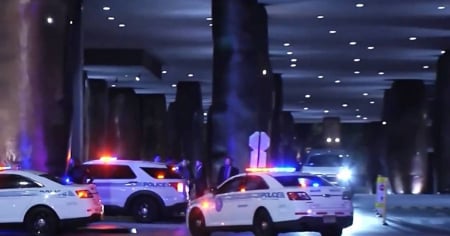
The protests against the immigration raids conducted by the Immigration and Customs Enforcement (ICE) continue to spread across the United States, reaching Florida this Monday with a large demonstration outside the Tampa City Hall.
The mobilization was called in solidarity with the protests in Los Angeles, where the military presence and the use of police force have raised concerns.
In Tampa, protesters from various groups such as Occupy Florida, Resistance Support, and Voices of Florida gathered at 3:00 p.m. with signs demanding the immediate end to mass raids and deportations.
"No more ICE raids. Not in Florida. Not anywhere," was the central message of the event, which remained mostly peaceful, although there were moments of tension between opposing groups and verbal confrontations that required the intervention of local police.
“Families are being torn apart, homes are being raided, and communities are being terrorized. We cannot remain silent,” expressed Karen Chamberlain, one of the participants. Other protesters, including immigrants and local activists, denounced what they consider a “cruel and inhumane” immigration policy driven by the administration of President Donald Trump.
Meanwhile, in Los Angeles, the situation remains tense. More than 1,700 National Guard members and 700 Marines have been deployed to manage the protests that erupted following Friday's raids. Although many of the demonstrations have been peaceful, acts of violence, looting, and clashes with law enforcement have been reported.
California Governor Gavin Newsom harshly criticized President Trump for deploying troops without his consent, calling the measure "illegal" and accusing him of unnecessarily escalating the situation.
"This is not about public safety; it is about feeding the president's dangerous ego," Newsom wrote on social media.
Protests have occurred in at least a dozen cities across the country, including New York, Philadelphia, San Francisco, and Austin, Texas, where arrests and the use of non-lethal ammunition by the police were also reported.
The Secretary of Homeland Security, Kristi Noem, defended the actions of the federal government, arguing that the raids target individuals with serious criminal backgrounds. Among those arrested in Los Angeles is a Vietnamese man convicted of murder, as well as several Mexican citizens with a history of offenses such as sexual assault, possession of weapons, and aggravated theft.
Despite these arguments, the protesters insist that ICE's actions do not discriminate between cases and disproportionately affect working families, many of whom have lived in the United States for years.
The organizers in Florida assured that they will continue the protest actions in the coming days and warned of a possible escalation if the authorities do not stop the raids.
"We are committed to non-violence, but we will not back down," they stated in a press release. "The entire country is watching. We will not allow the existence of our communities to be criminalized."
Frequently Asked Questions about Protests Against ICE Raids in the United States
Why are protests against ICE taking place in Florida?
Protests in Florida, as in other parts of the United States, are due to massive immigration raids conducted by Immigration and Customs Enforcement (ICE), which have raised concerns and fears within immigrant communities. Protesters are demanding an immediate end to the raids and mass deportations, as they view these policies as "cruel and inhumane" and detrimental to working families who have been living in the country for years.
What impact do ICE raids have on the local economy in Florida?
ICE raids in Florida have negatively impacted the local economy. The lack of immigrant workers is causing a decline in economic activity, particularly in sectors such as construction, agriculture, and services, where migrant labor is essential. Additionally, the fear of deportation has led many immigrants to avoid leaving their homes, reducing the customer base for local businesses.
What is the stance of Donald Trump's government regarding ICE raids?
The Donald Trump administration has adopted a strict immigration policy, implementing measures to intensify raids and deportations of undocumented immigrants. The government defends these actions as necessary for national security and argues that they focus on individuals with criminal records. However, these policies have been criticized for their disproportionate impact on working communities and immigrant families.
How have local authorities in California responded to ICE raids?
In California, local authorities, including Governor Gavin Newsom, have criticized the federal government's involvement in ICE raids. Newsom labeled the deployment of federal troops without his consent as "illegal" and accused Trump of unnecessarily escalating the situation. At the local level, the Los Angeles police have stated that they will not participate in the civil enforcement of immigration laws.
Filed under: