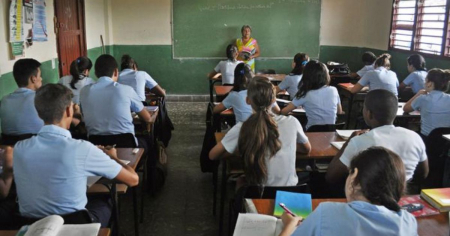
The former State Security agent Raúl Antonio Capote published an article last Sunday in the newspaper Granma titled “The Drama of the Disconnected”, in which he disparages a segment of the Cuban youth, describing them as “superficial,” “convinced that they deserve everything,” and believing that “the rest of the country and the State exist to satisfy their delusions, without them contributing anything or almost nothing.”
Capote argues that for some Cubans, "the economic war of the United States against Cuba is an invention of the country's leadership" and that they respond with mockery at the mention of the blockade. He also references those who, according to him, repeat foreign discourses without foundation and act guided by ego and comfort. He describes them as "the homo frivolus of consumer society" and asserts that "socialism can only be the work of conscious individuals."
The reaction from the independent outlet Árbol Invertido was swift. In a social media post, they labeled Capote as a “coffee-with-milk philosopher” and criticized his attempt to discredit those who think for themselves, do not accept the blockade narrative as the sole cause of the country’s issues, or dream of better living conditions. “If you are bothered by power outages, prices, censorship, repression, or if bread comes every other day as if it were a French luxury… you are a homo frivolus,” they mocked.
The article appears in the context of protests and allegations of harassment by university students across the country, following the imposition of new fees by the state company ETECSA. At the Central University “Marta Abreu” of Las Villas, young people reported threats of expulsion and imprisonment for organizing a university rally. At the CUJAE, students reported interrogations and the removal of messaging groups.
Other reports have come from the Faculty of Medical Sciences of Bayamo and the University of Oriente, where students accused the authorities of silencing their support for the protests. The FEU of UCLV, for its part, has responded with a call to “maintain tranquility.”
Activists like Raymar Aguado also reported pressure for their support of the protests. The playwright Esther Suárez Durán held the government responsible for using ETECSA as a tool for social control and urged support for the student movement.
Capote has held a regular place in the official narrative. In 2021, he signed an article in Granma in which he claimed that the Ministry of the Interior "gathers the admiration and affection of the majority of the people," and in 2024, he was seen in Caracas as an "international guest" at the Venezuelan presidential elections, as part of Cuba's support for Chavismo.
Frequently Asked Questions about Criticisms of Cuban Students and the Current Situation in Universities
Why does the former State Security agent criticize Cuban students?
Raúl Antonio Capote, former State Security agent, criticizes Cuban students, describing them as "superficial" and "convinced that they deserve everything." He argues that some young people do not believe in the narrative of the economic blockade as the cause of the country's problems and labels them as "homo frivolus." This criticism occurs in the context of student protests against ETECSA's fees, where social discontent is evident.
What is causing the university protests in Cuba?
The university protests in Cuba are being driven by the increase in ETECSA's rates, which restrict access to the internet in national currency and favors offers in foreign currencies. Students view these measures as discriminatory and exclusionary, leading to an academic strike at several universities across the country, demanding fairer rates and equitable connectivity.
How has the Cuban government reacted to the student protests?
The Cuban government has reacted to the student protests, describing them as "destabilizing maneuvers." It has called for "solidarity" against what it considers media manipulation. The government has insisted that the protests are promoted by "enemies of the system," and the official response has been to remain steadfast on the new ETECSA rates, refusing to yield to the student demands.
What consequences do students face for participating in protests?
Students participating in the protests face threats from State Security, including the possibility of being expelled from universities or even imprisoned. Furthermore, they have been subjected to pressure to publicly retract their positions and face an environment of repression and censorship within academic institutions.
Filed under: