
Related videos:
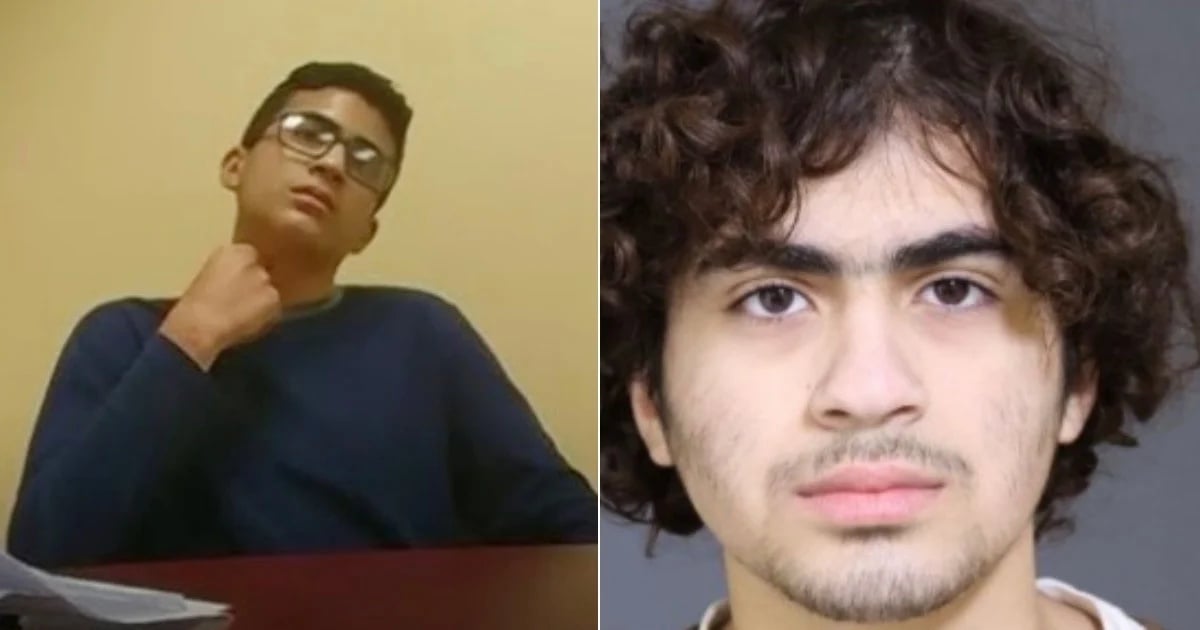
In a legal move that has sparked public reactions, the defense of Derek Rosa, the teenager accused of murdering his mother in Hialeah, has requested the exclusion from the trial of one of the most compelling pieces of evidence in the case: his own confession to the police.
The motion has been deemed by some as a legitimate attempt to ensure due process, while for others it represents an obstacle to uncovering the truth.
During a hearing held this Friday in the Miami-Dade criminal court, the defense attorneys argued that the confession was obtained without Derek, who was only 13 years old at the time of the crime, fully understanding his constitutional rights.
They claim that "he did not understand what it meant to speak to the detectives without the presence of a lawyer," which represents a serious violation of his procedural rights.
According to court documents - cited by the local press - the defense claims that the minor was given an incorrect warning when explaining their rights, which is why they are requesting a formal hearing to discuss the legality of the interrogation.
Other requests and tensions in the room
During the hearing, which featured the virtual participation of Derek Rosa - although he did not appear on camera - other topics that create tension between the defense and prosecution were also discussed.
One of the critical points was the leak of images and videos obtained from a camera installed in the bedroom where Irina García slept with her newborn daughter.
These images, captured on the night of the crime, are believed to have reached media outlets and circulated on social media.
The defense demanded to know "who took the photos and videos on the night of the crime and leaked them", emphasizing that "when the name of the person responsible is known, it will take on significance."
However, Judge Richard Hersch considered, for now, that this matter is "irrelevant" to the judicial process.
Another element that has generated debate is a recorded conversation between Frank Ramos—Irina García's partner and Derek's stepfather—and a woman to whom he allegedly shared details of the crime.
The defense requests that it be included as evidence, but the prosecution insists that it was a "recorded conversation without consent" and does not contain firsthand information.
Mental health in the balance
The defense has also requested to keep Derek Rosa's mental health records private until the time of the trial.
The minor has been diagnosed with autism and attention deficit disorder, conditions that the defense deems crucial for understanding his emotional and cognitive state at the time of the crime.
However, Judge Hersch indicated that the prosecution must have access to this information to ensure a fair process: “it is essential that the prosecution has it, to gain access to the diagnosis and treatment.”
Derek's mental health could be a central focus in the trial. Even a doctor from the correctional system might testify about it, although the prosecution has indicated that it has not yet received formal medical evidence and is considering requesting an independent evaluation.
Alternate theory of crime: A new suspect?
In a turn that could reshape the narrative of the case, a few weeks ago the defense introduced an "alternative theory of the crime."
According to court documents cited by the Univision network, audio recordings and social media messages linked to Frank Ramos could suggest the existence of another possible suspect, different from Derek Rosa.
Defense attorney José Báez has insisted on obtaining more evidence related to the teenager's stepfather, including information about flights allegedly connected to Ramos's legal wife and their daughters, who were in Cuba on the date of the crime.
Although the state provided those documents, the identity of the minors was kept confidential for privacy reasons.
Judgment schedule and upcoming hearing
The judge Richard Hersch set the trial to begin on September 22, 2025.
The jury selection is expected to begin at the end of June.
The next hearing is scheduled for July 9, where key aspects such as the admission of evidence and new defense motions will continue to be discussed.
Derek Rosa, who is now 14 years old, is detained at the Metro West adult facility, awaiting to face a first-degree murder trial.
The case has shocked the Hialeah community and southern Florida since the brutal murder of Irina García, a 39-year-old mother who was caring for her newborn daughter when she was stabbed.
Recent videos obtained by Univision showed Derek Rosa's grandmother and one of his grandchildren arriving at the apartment complex following the crime, as well as the interrogation to which the grandmother was subjected by the police.
Public opinion remains divided. At each court hearing, there are both individuals who support the teenager and others who demand justice for the victim.
Frequently Asked Questions about the Derek Rosa case and the murder of his mother in Hialeah
Why does Derek Rosa's defense want to exclude his confession from the trial?
The defense argues that Derek Rosa, who was 13 years old at the time of the crime, did not fully understand his constitutional rights when he confessed to the police without the presence of a lawyer. Therefore, they contend that his confession was obtained improperly and seek to have it excluded from the trial to ensure due process.
What alternative theory does the defense present regarding the crime?
The defense of Derek Rosa has introduced an alternate theory suggesting that Frank Ramos, Derek's stepfather, could be a possible suspect in the crime. They base this theory on messages and audio recordings from Ramos that describe details of the homicide which, according to the defense, could only be known by someone who was present at the crime scene.
What role does Derek Rosa's mental health play in his defense?
Derek Rosa's defense has requested to keep his mental health records private, as the minor has been diagnosed with autism and attention deficit disorder. They believe that these conditions are crucial for understanding his emotional and cognitive state at the time of the crime and could be a central focus in the trial.
Why is Derek Rosa still detained in an adult jail?
Judge Richard Hersch has repeatedly denied the defense's request to transfer Derek Rosa to a juvenile detention center. Despite his young age, the judge believes he should remain in an adult jail until the trial, which he will face as an adult for the charge of first-degree murder.
Filed under: