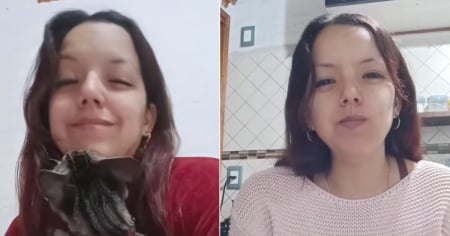
A Cuban doctor residing in Uruguay has stirred up a buzz on social media after sharing her experiences regarding the differences she has encountered while practicing medicine outside the island. Identified as @edenny30 on TikTok, the doctor, who graduated seven years ago and has been practicing in the Uruguayan system for two years, thoughtfully shared the aspects that impacted her the most when she began working in her new professional environment.
In her first testimony, she explained that in Cuba she never treated pediatric patients, as she was focused on the specialty of Internal Medicine. Upon starting her practice in Uruguay, she was forced to study pediatrics from scratch. “After graduating, I never saw children, so when I began to practice in Uruguay, I had to study pediatrics from the ground up,” she recounted. She also emphasized that while in Cuban hospitals specialists are present on duty, in Uruguay they are usually only available on call, which forces general practitioners to handle complex conditions initially. "A patient with a heart attack or an open fracture in Cuba would go directly to the specialist; here, you see them first."
Another significant difference, as he mentioned, is the mobile emergency system. In Cuba, although the SIUM exists, it does not operate like in Uruguay, where doctors can be assigned to ambulances or conduct “sweeps,” meaning visiting patients at home, sometimes without nursing support. “You go alone, with a bag, to make the diagnosis, establish IV access, and administer medication,” he explained.
The video quickly went viral and sparked a flood of comments. Many users praised her honesty, while others reacted with annoyance, accusing her of downplaying the Uruguayan system or idealizing the Cuban one. Responses ranged from expressions of gratitude like “Thank you for sharing this, it’s helpful for those of us revalidating,” to outright rejection with comments such as “Why don’t you go back to Cuba if it’s better there?” Some even questioned her professional training: “I don’t understand how they graduate if there are no materials available there.”
In response to the criticism, the doctor clarified that it was not a comparison to determine which country is better, but rather a personal description. “They didn’t understand the video. I’m not criticizing. I’m happy to work in Uruguay. I’m just sharing what was different for me,” she wrote in the comments.
In the second part of his testimony, published shortly after, he addressed aspects such as the existence of electronic medical records—"something that helps us a lot"—and the abundance of medical supplies. However, he also spoke about the labor situation faced by many doctors in Uruguay. As he explained, most work as sole proprietors, without a fixed salary, or bonuses, or vacation. "If you get sick and can't work for ten days, no one pays you for those days." He recounted that many professionals live in uncertainty, depending on whether they secure shifts that month, and that they must work in multiple places to achieve a stable income.
The salary, he said, varies depending on the shift and the location, with hourly pay ranging from 380 to over 1,000 Uruguayan pesos. He was also struck by the fact that in Uruguay they don't use the classic Cuban white coat, but rather medical scrubs, which are more practical but less representative. “It’s very comfortable, but I miss my gown.”
The second publication continued the debate. Several Uruguayan doctors agreed with his description of the system and emphasized that securing a permanent position is a long and difficult process. "We dream of having a stable job, but it takes years. You will achieve it," wrote a colleague. Another commented, "Yes, we are solo practitioners, but that also gives you independence. Everything has its pros and cons."
There were those who defended the Uruguayan system vigorously. “Here, it works well. There are many options and resources. It's just a matter of getting used to it.” Some users also pointed out that the concept of a doctor as a business has been widespread in Uruguay for years and is not exclusive to foreigners. “This happens to everyone, no matter where you're from,” one person said.
Despite the praise and criticism, the doctor reiterated her gratitude and stood firm in her position. "There are resources here. I feel secure working. But I am not saying that Uruguay is worse or better. I am only sharing what was different for me."
Through her posts, this Cuban has joined a growing wave of testimonies from emigrants who share on social media what it’s like to start from scratch outside the island.
In previous posts, she had detailed the challenges of finding employment in Uruguay and the initial costs faced by migrants. Now, with a critical yet grateful perspective, she has brought to the forefront of public conversation a reality that remains invisible to many: that of the foreign doctor who, amid fluctuating shifts, new medications, and unstable contracts, tries to rebuild their professional life far from home.
Frequently Asked Questions about the Experience of Cuban Doctors Abroad
What are the main differences that the Cuban doctor faced while working in Uruguay?
The Cuban doctor found several significant differences while working in Uruguay. She had to start studying pediatrics from scratch because she had not treated pediatric patients in Cuba. Additionally, in Uruguay, specialists are only available on call, forcing general practitioners to initially handle complex pathologies. She also mentioned the mobile emergency system, where doctors can be assigned to ambulances without nursing support.
What is the employment situation for doctors in Uruguay according to the Cuban doctor?
The doctor pointed out that many doctors in Uruguay work as sole proprietors, without a fixed salary, bonuses, or vacation. This creates job insecurity and forces professionals to rely on shifts to achieve stable income. The salary varies depending on the shift and the location, with hourly rates ranging from 380 to over 1,000 Uruguayan pesos.
What has the doctor's testimony generated on social media?
The testimony of the Cuban doctor has sparked an intense debate on social media, with reactions ranging from support to criticism. While some users appreciated her honesty, others accused her of downplaying the Uruguayan system or idealizing the Cuban one. The doctor clarified that her intention was not to compare countries, but to share her personal experience.
What positive and negative aspects did the Cuban doctor highlight about the Uruguayan healthcare system?
The doctor highlighted positive aspects such as the existence of electronic medical records and the abundance of medical supplies. However, she also pointed out job insecurity and the lack of stability in contracts for doctors. She mentioned that the system provides resources and she feels secure working, but she is not comparing which country is better.
Filed under: