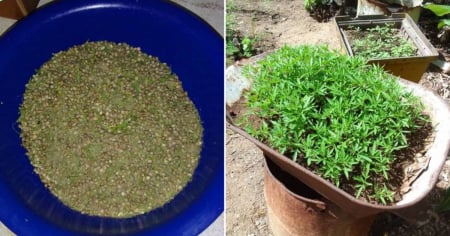
In what Cuban authorities describe as a "exemplary trial," a citizen was sentenced in Cienfuegos to eight years of imprisonment for selling synthetic cannabinoids known as "the chemical."
The decision, applauded by the official broadcaster Radio Ciudad del Mar, is part of a recent government offensive against drug trafficking on the Island, following months - and even years - of official negligence that allowed the uncontrolled expansion of the phenomenon.
According to the report, Noel Bibeaux Muñoz was found guilty of producing between 80 and 100 doses of "chemical" from substances such as Dronabinol and MDMB-4en-PINACA, which he placed on small pieces of paper and sold at his home for 250 Cuban pesos each.
Bibeaux Muñoz traveled to Havana last year to buy a gram of plant material that contained synthetic cannabinoids.
The National Anti-Drug Directorate had been monitoring his activity until he was arrested during a home raid in which drugs, 4,600 pesos in cash, and items related to his alleged illegal activity were seized.
The police were unable to identify who he bought the drugs from or who his clients were in Cienfuegos.
But beyond the specific case, the conviction carries a message of punishment with deterrent purposes, as part of a punitive campaign by the Cuban government to address a problem that it itself allowed to grow in the shadows.
For years, the sale and consumption of drugs, particularly among young people, became normalized in many Cuban cities, with substances like "químico" available on every corner and without any serious institutional response.
The authorities did not act when they should have: while addiction spread and young lives were lost to overdoses, the State looked the other way.
Now, the very government that allowed the phenomenon to spiral out of control is launching "exemplary" trials like the one in Cienfuegos to create the appearance of control.
The penalties are extremely harsh - even with threats of life imprisonment or the death penalty in the most serious cases - but they are not accompanied by a solid preventive strategy or public health campaigns that address the root causes of the problem: hopelessness, poverty, marginalization, and lack of opportunities.
In addition to the eight years in prison, Bibeaux was sentenced to the loss of political rights, a ban on leaving the country, and the confiscation of assets related to the activity. His status as a repeat offender was also highlighted, which further reinforced the severity of the sentence.
While the official discourse insists that "there is zero tolerance for drugs in Cuba," the reality shows a delayed and insufficient response.
Now small distributors are being targeted, while the structural damage is already done, and thousands of Cuban families are dealing with the aftermath of a crisis that could have been avoided.
The regime chooses to punish rather than prevent, and to showcase sentences instead of acknowledging its share of responsibility.
Last week, the Provincial People's Tribunal of Santiago de Cuba sentenced a man to eight years in prison for a drug-related offense.
The accused was arrested on July 2, 2024, while traveling on the Mar Verde highway, at one and a half kilometers from Santiago de Cuba.
She had hidden in her genital area a nylon bag containing two packages of marijuana plant material. In addition, the police seized a Samsung phone and a sum of 2,000 Cuban pesos in cash.
In May of last year, the same court sentenced two citizens aged 25 and 30 to 12 years in prison after finding them guilty of a crime related to illicit drugs or substances with similar effects.
The defendants, whose identities were not disclosed, were arrested while traveling on a Transtur bus headed to Havana.
On the stretch of the Central Highway in the municipality of Contramaestre, during a search of their belongings, authorities found 501 grams of marijuana, a digital scale with traces of the substance, and cash, without specifying the amount.
According to the official statement, the accused "were monitored by the National Anti-Drug Directorate due to their ongoing illegal activities."
Frequently Asked Questions About Drug Convictions in Cuba
Why was Noel Bibeaux Muñoz sentenced to eight years in prison?
Noel Bibeaux Muñoz was sentenced to eight years in prison for selling synthetic cannabinoids, known as "the chemical," in Cienfuegos. The court found him guilty of producing between 80 and 100 doses of this drug, using substances such as Dronabinol and MDMB-4en-PINACA, which he sold from his home. Additionally, he was stripped of his political rights and prohibited from leaving the country.
What measures is the Cuban government taking against drug trafficking?
The Cuban government has intensified its offensive against drug trafficking through a series of "exemplary" trials. These proceedings aim to impose severe penalties, which can reach up to 30 years in prison, life imprisonment, or even the death penalty, depending on the circumstances of the crime. Furthermore, police operations to combat drug trafficking have been intensified in several provinces across the country.
What is the impact of drug use, such as "el químico," on Cuban society?
The consumption of drugs such as "el químico" has had a significant impact on Cuban society, especially among the youth. The use of these substances is associated with devastating effects, including seizures, hallucinations, and permanent neurological damage. Despite the government's efforts to combat the trafficking and consumption of these drugs, their presence remains a growing problem on the island.
What criticisms have been made of the Cuban government's approach to drug trafficking?
The Cuban government's approach to drug trafficking has been criticized for its punitive nature and lack of preventive and public health strategies. It is pointed out that the regime has chosen to punish rather than prevent, without addressing the underlying causes of the problem, such as poverty, marginalization, and lack of opportunities. Many advocate for a more comprehensive policy that includes education and rehabilitation for those affected.
Filed under: