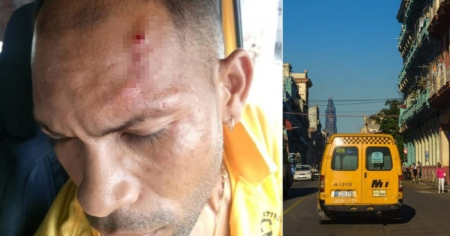
The situation of public transportation in the province of Santiago de Cuba continues to worsen, with an aging vehicle fleet lacking spare parts and fuel, making minimal operation impossible. This has led to the disappearance of routes, while alternative means are being improvised to sustain a system that is failing in every aspect.
Currently, out of the 196 routes in the territory, 102 correspond to the Plan Turquino - rural areas that are difficult to access - and only 89 were providing service, which today are practically inoperative, confirmed in a press conference the provincial delegate of the Ministry of Transportation, Jaime Codorniú, as reported by the official newspaper Sierra Maestra.
The remaining 131 routes do not receive full attention from the State either and rely on private vehicles or companies that have been rented to cover just about 23 routes. Some of these vehicles even serve as ambulances or hearses, clear evidence of the structural deterioration of the system.
According to Codorniú, among the alternatives being sought is “solidarity transport”, a solution that “needs to be continuously organized”, while 18 high-demand boarding points served by state means are being redesigned.
It is about a strategy that is already being implemented in the neighboring province of Guantánamo by taxi drivers, some of whom are self-employed under a contract modality. The initiative promoted by Empresa Cubataxi in that region aims to ease the transport of passengers, particularly in areas with high demand, by offering free rides during the early hours of the day.
Starting in July, Santiago de Cuba is expected to receive 20 new 14-seat microbuses, which will be used to organize four main routes for the provincial capital. Meanwhile, the 20 electric tricycles operating in the southern area, which transport around 1,200 people daily, are also impacted by the energy crisis.
At the same time, rail transport was introduced for some locations, but "most of the routes in the Plan Turquino continue to face serious problems due to a lack of tires and batteries for the vehicles," Codorniú noted.
At the beginning of June, after a tour of the eastern region, the Minister of Transportation, Eduardo Rodríguez Dávila, published a report stating that only 126 out of the 196 routes are operational (64.3%), many with reduced frequencies due to a lack of fuel, lubricants, and the poor condition of the roads.
Connections with municipalities such as Guamá, II Frente, and III Frente "remain critical," and the distribution of tires is still incomplete, it was noted.
According to the head of Transport, "the instability in the supply of fuels and lubricants hinders adequate coverage of state basic services, while non-state services, with a different cost structure, have higher prices that, in many cases, are not affordable."
Furthermore, it was pointed out that in Santiago de Cuba, 4,286 kilometers of the 6,190 kilometers that make up the provincial road network are in fair to poor condition, which represents 69.2% of the total and highlights the neglect and the urgent need for comprehensive repairs.
He announced that the eastern province is preparing for summer with an operation that includes 21 state vehicles, 60 rented ones, and some local initiatives such as three trains, four "guarandingas," and two double-decker buses.
The Ministry of Transport recently announced the arrival in Cuba of 100 air-conditioned microbuses with a capacity for 14 passengers, aimed at strengthening the public transport system in Havana, which has been facing a critical situation for years.
For its part, the company Taxis-Cuba specified on Facebook that these are Foton brand vehicles, manufactured in China, which will be managed by the Metrotaxi subsidiary on the 23 capital routes where the gazelles currently operate.
It was confirmed that these new vehicles will not expand the existing fleet, but will serve to replace inactive units, while the damaged gazelles will be transferred to other provinces with the aim of being repaired with the support of the Public Transport Development Fund.
Frequently Asked Questions about the Transportation Crisis in Santiago de Cuba
What is "solidarity transport" in Santiago de Cuba?
"Solidarity transport" is a strategy to provide free rides during the early hours of the day, driven by taxi drivers and some self-employed workers under contract, in Santiago de Cuba. This measure aims to alleviate the transportation crisis in high-demand areas and is being organized following the model implemented in Guantánamo.
How many transportation routes are currently operational in Santiago de Cuba?
Of the 196 routes in Santiago de Cuba, only 126 are operational, although with reduced frequencies due to a shortage of fuel, spare parts, and the poor condition of the roads. The critical situation of transportation has led to the disappearance of many routes and a dependence on private or rented vehicles.
How does the condition of the roads affect transportation in Santiago de Cuba?
In Santiago de Cuba, almost 70% of the roads are in fair or poor condition, which complicates the already precarious transportation system even further. This situation is due to neglect and a lack of investment in road infrastructure, which directly impacts the ability to operate transportation routes efficiently.
What measures has the government taken to improve transportation in Santiago de Cuba?
The government has announced the arrival of 20 new minibuses with 14 seats to organize four main routes in Santiago de Cuba. Additionally, electric tricycles and railway transport have been introduced in some areas, although they also face challenges due to the energy crisis and the lack of spare parts.
Filed under: