
Related videos:
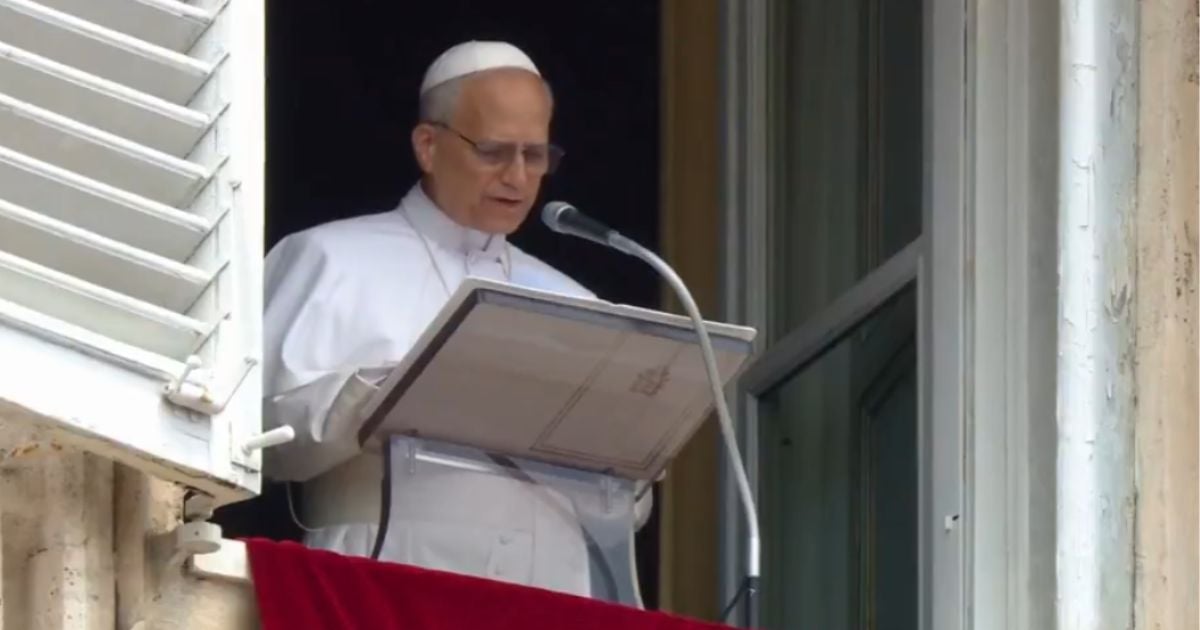
One day after former President Donald Trump confirmed a military attack on nuclear facilities in Iran, Pope Leo XIV condemned the war in unequivocal terms and called on the international community to "silence the weapons."
“None of the armed victories can compensate for the pain of mothers, the fear of children, the stolen future,” the pontiff wrote on his official account on the social network X.
"Warfare does not solve problems; rather, it amplifies them and inflicts deep wounds in the history of nations, which take generations to heal."
The Pope urged that diplomacy prevail over armed conflicts: "Let nations shape their future with acts of peace, not with violence or bloody conflicts!"
These statements come after Trump's announcement, in which he claimed on his Truth Social platform that the United States had launched a "full load of bombs" on three Iranian nuclear facilities: Fordow, Natanz, and Esfahán.
Despite the offensive nature of the attack, the president concluded with the phrase: "Now is the time for peace," a statement that analysts have described as contradictory and concerning.
In a second message, Pope Leo XIV warned that humanity is crying out for peace "more than ever" and criticized the warmongering rhetoric that accompanies current conflicts.
"It is a cry that demands responsibility and reason, and it should not be silenced by the clamor of weapons nor by the rhetorical words that incite conflict," he wrote.
The leader of the Catholic Church insisted that there are no distant wars when human dignity is at stake, and appealed to the moral conscience of all countries in the world: “Every member of the international community has a moral responsibility to stop the tragedy of war before it becomes an irreparable vortex.”
In a third message, he expressed his concern over the worsening situation in the Middle East: “Alarming news continues to emerge from the Middle East, especially from Iran. In this dramatic scenario, which includes Israel and Palestine, the daily suffering of the population, particularly in Gaza and other territories, risks being forgotten, where the need for adequate humanitarian aid is becoming increasingly urgent.”
Last Wednesday, the leader of the Catholic Church made a strong appeal for peace, warning that the wars of today, marked by the use of increasingly powerful and sophisticated weapons, threaten to drag humanity into an even crueler barbarism than that experienced in past times.
Through his profile on X, the Supreme Pontiff expressed the deep concern of the Church regarding the numerous active armed conflicts around the world, particularly those occurring in Ukraine, Iran, Israel, and Gaza.
Frequently Asked Questions about Pope Leo XIV's Condemnation of the War in Iran
What was Pope Leo XIV's reaction to the U.S. military attack on Iran?
Pope Leo XIV firmly condemned the war following the military attack by the United States against nuclear facilities in Iran. He stated that “no armed victory can compensate for the pain of mothers, the fear of children, the stolen future” and urged the international community to “silence the weapons.”
What message did Pope Leo XIV convey regarding current wars?
Pope Leo XIV emphasized that war does not solve problems but rather amplifies them, and warned that powerful weapons today are leading humanity towards a cruelty more barbaric than in times past. He insisted that diplomacy must prevail over armed conflicts and that humanity is crying out for peace more than ever.
What role does Pope Leo XIV seek to play in international conflicts?
Pope Leo XIV seeks to position the Vatican as a key player in peace mediation. He has expressed his willingness to host negotiations to end conflicts such as that between Russia and Ukraine, reaffirming his commitment to dialogue and reconciliation amidst global tensions.
How has Pope Leo XIV's communication on social media regarding the war been?
Pope Leo XIV has actively used social networks such as X (formerly Twitter) to convey messages of peace and condemn bellicose rhetoric. He has emphasized the importance of moral responsibility to halt the tragedy of war and has criticized words that incite conflict.
Filed under: