
Related videos:
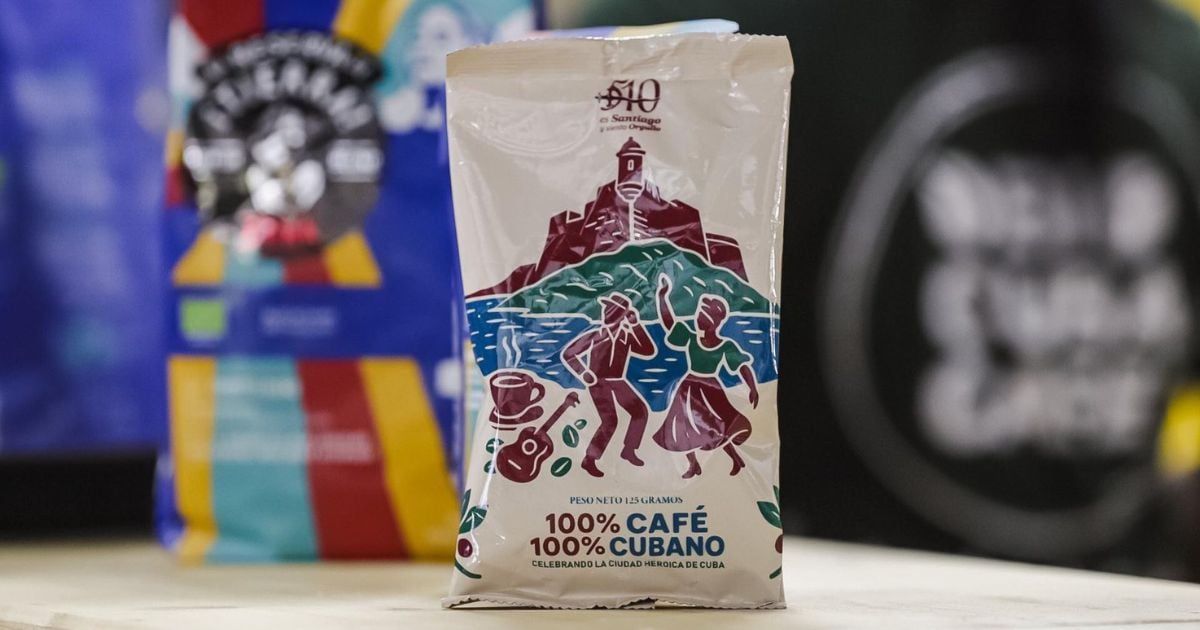
The cynicism of the Cuban regime knows no bounds, and this Wednesday it demonstrated this once again with the launch of a commemorative coffee for the 510th anniversary of the founding of the villa of Santiago de Cuba, while in most homes across the country, the aromatic grain that is an essential part of the Cuban table remains scarce.
According to a post by TV Santiago on their Facebook profile, the Italo-Cuban joint venture BioCubaCafé presented the special edition "510 Anniversary" as a tribute to the coffee-growing heritage of eastern Cuba, coinciding with the 25th anniversary of the declaration of the Southeastern Archaeological Coffee Landscape as a World Heritage site by UNESCO.
The launch event took place in a restored coffee plantation and was attended by Omar López Rodríguez, director of the Office of the Conservator of the City of Santiago de Cuba, who highlighted the Haitian-French influence on the origins of these plantations that, since the late 18th century, transformed the economic and cultural landscape of eastern Cuba.
Michele Curto, president of BioCubaCafé, took the opportunity during the event to reaffirm the company's environmental commitment, highlighting that this coffee—grown on the historic slopes of the region—not only pays tribute to the city but will also be, as he stated, a product "for the people of Santiago before it is for export."
However, the contradiction is evident: while millions of Cubans cannot access even an ounce of coffee in national currency, BioCubaCafé is promoting a special edition as a symbolic "gift," claiming that the product will initially be sold through a digital platform in packages of 125 grams for 300 CUP.
"The marketing will be limited per user, digital, and available for pickup at designated stores. It will start in Santiago de Cuba and will later extend to other cities, including Havana," announced the company on its Facebook page.
The measure comes amid a deep economic crisis where the majority of Cubans cannot afford to buy a coffee, even though private shops are flooded with imported products.
For greater contrast, BioCubaCafé asserts that its coffee is 100% Cuban—unlike the popular Hola coffee, which is mixed with peas—produced in the eastern region, and it maintains a policy of prioritizing the domestic market over the international one, despite currently exporting to more than 40 countries, backed by the Italian group Lavazza.
According to the project leaders, a new roasting facility in Contramaestre will begin operations before the end of the year "with standards similar to those of the best plants in the Lavazza group."
The speech also emphasizes that export revenues are intended to improve the living conditions of coffee farmers. “Export and the national market are not antagonistic. And this is just the beginning,” stated BioCubaCafé.
According to the official journalist José Emilio Oliveros Seisdedos, the coffee launch is a “gift” for Santiago de Cuba, and he emphasized that a commemorative rum, the “510th Anniversary,” produced by the Corporación Cuba Ron, will also be presented—yet another irony of the regime.
In contrast to institutional rhetoric, the reality is that coffee—a staple product in Cuban culture—remains an unattainable luxury for most, beyond symbolic anniversaries or ceremonial events filled with propaganda.
While the regime boasts about its new showcase coffee, the reality of deep Cuba tells a different story. Last May, two Cubans were arrested in Holguín when they were transporting over 1,000 pounds of coffee in a rental car, clear evidence of an informal market thriving amidst scarcity and state control.
The operation took place in the Urbano Noris municipality and, rather than demonstrating government effectiveness in combating crime, it highlights the scale of the internal traffic of a product that should be accessible to everyone.
"The old trick of the rented TUR to move illicit activities, until the police says stop. 'Where were they going that they no longer are?' " mocked the Cazador-Cazado profile on Facebook, linked to the Ministry of the Interior.
That same month, a Cuban resident in the Peralta neighborhood of the city of Holguín shared on social media the arrival of coffee at her store, after five months of the regulated product's absence.
In a video posted on TikTok by user @meli.cubanita0, the young woman stated: "This seems unreal, I mean, so many things have never come to the store one after another like this, but May 1st is coming and we need to be happy, so the coffee arrived, which hadn’t been available since last December, so come with me to get the coffee."
Despite the regime's promises to deliver coffee to households, last April, Santiago de Cuba, one of the most strategically important provinces for coffee production in the country, only managed to fulfill 65% of the planned target agreed upon at the end of February.
This was recognized by the authorities during the Provincial Assembly of the XIII Congress of the ANAP, held last March, according to the report from the state-run newspaper Sierra Maestra in its printed version.
Frequently Asked Questions about Coffee Shortage in Cuba
Why is the launch of the commemorative coffee in Santiago de Cuba ironic?
The launch of the commemorative coffee in Santiago de Cuba is ironic because it occurs amidst a coffee scarcity crisis in the country. While most Cubans cannot easily access this essential product, the government is promoting a special edition, highlighting a disconnection between the regime's priorities and the needs of the population.
What is the current situation of coffee production in Santiago de Cuba?
Coffee production in Santiago de Cuba has only managed to fulfill 65% of the agreed plan. This low performance reflects structural issues in collection and distribution, with a labor force deficit and inadequate infrastructure, which has contributed to the shortage in the local market.
How does the coffee shortage affect the daily lives of Cubans?
The coffee shortage is affecting Cubans by turning this basic product into an unattainable luxury. With pure coffee becoming hard to come by, many are turning to the black market, where prices are exorbitant, or settling for low-quality blends that do not meet the traditional consumption in the country.
What contradictions exist in the coffee policy of the Cuban regime?
The main contradiction is that, although the regime claims to prioritize the domestic market, quality coffee remains a luxury item for ordinary Cubans. Furthermore, while commemorative launches are held, most Cubans cannot afford the price of coffee in national currency, reflecting a disconnection between government policies and the needs of the people.
Filed under: