The Plenary of the Communist Party of Cuba (PCC) Committee in Pinar del Río confirmed that the province has over 19,000 hectares (ha) of idle land, which coexist with empty markets, a population suffering from chronic shortages, and a municipal self-sufficiency that has yet to take off, a diagnosis that is no longer surprising.
Although more than 50,000 hectares were delivered in the last two years, this did not translate into a significant increase in production, due to bureaucratic hurdles and a lack of real incentives, admitted the Agriculture delegate in the territory, Yoel Hernández.
"If we want to encourage people to request land and produce, we need to improve the delays in its delivery, as this can discourage those who are applying for it," Hernández acknowledged in a rare moment of self-criticism reflected in the official newspaper Guerrillero.
According to the report presented, there are still serious deficiencies in the functioning of the grassroots Party organizations in the agricultural sector. There is mention of actions for "political assurance," but this does not translate into food available at sales points.
Yamilé Ramos Cordero, the first secretary of the PCC in the province, acknowledged that several municipalities have untapped reserves and that aquaculture remains an unfinished task in a province that is unable to ensure protein for the basic diet.
Ramos assured that in the municipality of Guane, they "manage to increase the pounds per capita made available to the population, due to a greater presence of food in the markets and sales points."
In this regard, the secretary of the PCC in Guane María Luisa Valdés Malagón referred to the implementation of 32 disciplinary measures related to the production of milk, meat, and beans, as well as the oversight of land and livestock, which seem more like isolated punishments than deep-rooted solutions.
The provincial governor Eumelin González Sánchez tried to downplay the crisis by highlighting "advancements" in hiring, but pointed out another structural problem: more is being hired, but it is not being marketed in equal proportion.
This is compounded by poor relationships with producers, a lack of technical and scientific support, and a disconnect from the true needs of those who produce. Many are still not receiving payment for what they've delivered or face delays in supplies such as beans. With forced banking as a new obstacle, the situation is only worsening.
In this regard, the first secretary of the PCC in the province promised to “seek solutions” to the unpopular mandatory banking system that generates such resistance among farmers.
Ramos mentioned the rice cultivation with Vietnamese specialists and the role of the Tabacuba Business Group in food production. At the end of the meeting, the official congratulations to the producers were not lacking, but there were no concrete measures to activate the thousands of idle hectares or ensure fair prices.
A joint agricultural project between Cuba and Vietnam is progressing in the municipality of Los Palacios, in the province of Pinar del Río, with the goal of planting 1,000 hectares of rice. The initiative, led by the Vietnamese company Agri VMA, aims to transform the region into a high-tech rice production area, marking yet another attempt by the regime to produce food.
Cuba is experiencing one of the worst food crises in decades, marked by chronic shortages, a decline in national agricultural production, and a near absolute dependence on imports that the country can no longer afford.
The shortage of basic goods such as rice, milk, flour, or oil has turned daily meals into a constant struggle for millions of Cubans. Long lines, empty markets, and the disproportionate increase in food prices in the informal sector are part of daily life for a population that survives on wages that barely cover a quarter of the basic basket.
The causes of this emergency are multiple: the structural inefficiency of the state agricultural system, the lack of supplies and fuel, the dollarization of many essential products, and the steep decline in national production.
This is compounded by the impact of U.S. embargo sanctions, natural disasters, and the lack of deep and comprehensive reforms in the agricultural system.
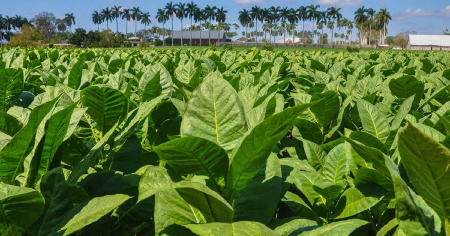
On the other hand, the exacerbation of the energy crisis has left a trail of losses in tobacco-growing areas of Pinar del Río, such as Consolación del Sur, where producers report over 385 hectares of tobacco ruined due to lack of irrigation and a 21% reduction in planned production.
Frequently Asked Questions about the Food and Agricultural Crisis in Pinar del Río
Why are there so many hectares of idle land in Pinar del Río?
There are more than 19,000 hectares of idle land in Pinar del Río due to bureaucratic obstacles, a lack of incentives for farmers, and structural issues in land management by the Cuban government. While many hectares have been handed over, agricultural production has not increased significantly, reflecting inefficiency in the state system and a lack of real support for producers.
How does the idle land crisis affect food shortages in Pinar del Río?
The existence of idle lands contributes to the chronic food shortage in Pinar del Río, as they are not utilized to increase local agricultural production. This exacerbates the scarcity of basic products, forcing the population to rely on expensive imports and informal markets where prices are unattainable for most Cubans. Furthermore, the disconnect between government policies and the actual needs of producers perpetuates the cycle of shortages.
What measures is the Cuban government taking to address the agricultural crisis in Pinar del Río?
The Cuban government has announced several initiatives, such as the joint agricultural project with Vietnam for rice cultivation, but concrete measures to activate idle lands and ensure fair prices for farmers remain limited. The lack of structural solutions and reliance on disciplinary measures instead of real incentives restrict the potential of these actions. The government also faces additional challenges such as forced banking, which generates resistance among farmers, and the energy crisis that impacts agricultural production.
What role do deficiencies in the Cuban agricultural system play in the food crisis?
The structural deficiencies in the state agricultural system are one of the main causes of the food crisis in Cuba. The lack of supplies, inefficiency in land management, excessive state control over food production and marketing, and the absence of incentives for producers have led to the collapse of national agricultural production. These deficiencies, combined with external factors such as natural disasters and the U.S. embargo, have left the population in a state of chronic shortages.
Filed under: