
Related videos:
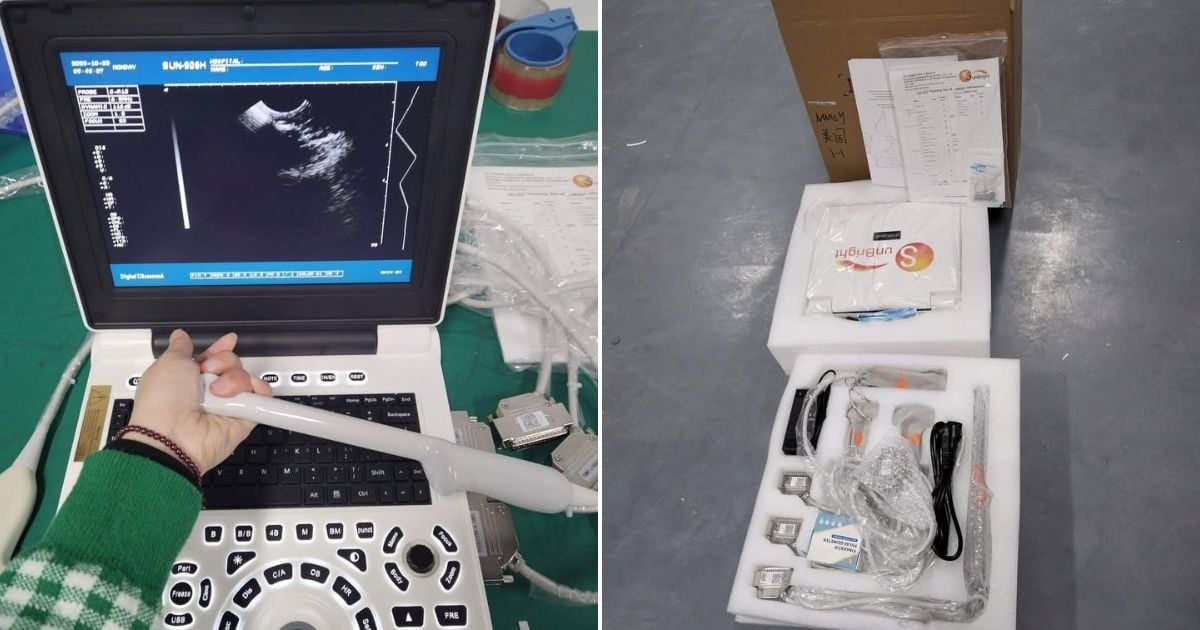
Two rural communities in the Río Cauto municipality, in the province of Granma, improved their access to medical care thanks to the donation of two ultrasound machines made by a Cuban resident abroad, identified on social media as Robert Ayuda.
According to the donor's own account in a recent post on Facebook, the equipment was handed over just over two years ago, but their action was not made public earlier because “we always did it from the heart, in silence and without seeking applause.”
One of the devices was sent to the polyclinic in Vado del Yeso, marking a significant change for hundreds of people who can now access medical tests without leaving the village.
The second team was delivered to the extended clinic of Grito de Yara, where it has also had a direct impact on diagnoses and the quality of life for many families.
While the gesture is deeply valuable and has improved healthcare for these communities, one cannot help but ask: why does an essential service like this depend on the altruism of the Cuban diaspora rather than on a state that claims to have one of the best healthcare systems in the world?
"We must give what we have, not what we have left over," wrote the donor, quoting his late mother Nieves, whose legacy of solidarity inspires the work he describes as a promise fulfilled from the heart.
“She taught me that when help comes from the heart, no stage, fame, or recognition is needed,” emphasized the Cuban, whose solidarity fills the gaps left by the regime.
In his message, he also thanks Dr. Eudecel Vilche, director of the Vado del Yeso clinic, for his dedication and commitment to the community.
"Her intelligence, effort, and love for her people have made it possible for every donated resource to become a true transformation," she stated.
However, on social media, officials like José Manuel Rodríguez Valdivia —who identifies on Facebook as a government worker in Río Cauto— have not hesitated to present this donation as an achievement of the system.
In his post, he talks about medical services "recognized for their excellence" thanks to the commitment of state personnel.
But the truth is that none of this would have been possible without the altruistic gesture of a Cuban émigré who, from abroad, provided concrete resources to address the institutional deficiencies in two forgotten communities.
The precariousness of the healthcare system in Cuba continues to manifest through events that reflect a structural crisis, where the population is forced to compensate for the shortcomings of the State.
In Havana, neighbors organized the purchase of a generator for a polyclinic, due to the frequent blackouts that hindered the execution of basic medical procedures.
This community action, driven by necessity rather than a state strategy, highlights the deterioration of healthcare infrastructure and the institutional indifference towards essential services.
At the same time, in the eastern part of the country, another alarming situation has come to light: the black market has taken over part of the operations of a blood bank, where the diversion of essential resources for life is being reported.
The official press attempted to downplay the situation, but the evidence points to a system that can no longer even ensure the legal and safe supply of blood.
Frequently Asked Questions about Ultrasound Donations in Granma and the Cuban Health System
Who donated the ultrasound equipment to the communities of Granma?
The ultrasound machines were donated by a Cuban resident abroad named Robert Ayuda. This altruistic gesture improved access to healthcare in the communities of Vado del Yeso and Grito de Yara, in the Río Cauto municipality, Granma province.
Why did a Cuban expatriate have to donate this medical equipment?
The donation of medical equipment by a Cuban emigrant highlights the deficiencies of the healthcare system in Cuba, which often relies on the altruism of individuals outside the country to meet its needs. This raises questions about why the State, which claims to have one of the best healthcare systems in the world, cannot provide these essential resources on its own.
How have local authorities reacted to the donation?
Some officials on social media have attempted to present the donation as an achievement of the state health system. However, the reality is that this improvement in medical services was made possible by the contribution of a Cuban expatriate, who from abroad has helped alleviate the institutional shortcomings in two neglected communities.
What is the current state of the healthcare system in Cuba according to the provided context?
The healthcare system in Cuba is facing a severe crisis characterized by a lack of supplies, medications, and adequate medical equipment. The system increasingly relies on external donations and the solidarity of Cubans abroad, which highlights structural problems, poor state management, and an inability to ensure dignified medical care for the population.
Filed under: