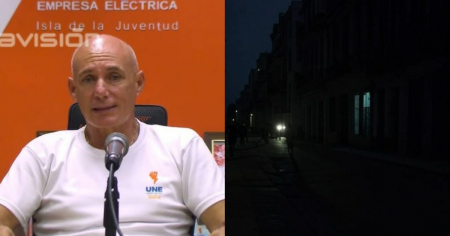
A group of residents from the Eléctrico neighborhood in Havana had to bring a private generator to the local clinic so that a patient could undergo an electrocardiogram, due to the complete lack of electricity, generators, and emergency services.
The unusual event, which reflects the collapse of the Cuban healthcare system amid the growing energy crisis, was documented in a video shared on social media and has caused outrage among users.
In the images, a man is seen pushing a portable generator through the hallways of the health center until he reaches the Guard Corps area, while a voice narrates with frustration: “Neighbors bringing a generator to be able to run an electro in the Reparto Eléctrico polyclinic, because there is neither a generator, nor electricity, nor shame.”
The patient, as detailed in the testimony, displayed "all the symptoms of her issues," referring to potential urgent heart conditions. Due to the inability to perform a basic test because of a lack of electricity and backup resources, the neighbors themselves, in a desperate show of solidarity, set up the equipment in a horse-drawn carriage and transported her from her home to the clinic.
The scene is as symbolic as it is harrowing: a private electric generator being transported through the streets on a cart, escorted by citizens who did not wait for ambulances or institutional responses. "There goes the plant in a horse-drawn cart because there’s no ambulance and because there’s nothing," is heard in the video.
This situation is not an isolated incident. Similar cases have been reported in other provinces, where prolonged blackouts and a lack of maintenance in hospital power plants severely compromise medical care.
In recent months, there have been reports of surgeries performed under flashlights, births in dark rooms, and patients being transported urgently due to the inability to keep vital equipment functioning.
In many health centers across the country, the emergency generators are out of service due to lack of maintenance, batteries, or fuel. This time, there wasn't even a generator available at the so-called Reparto Eléctrico polyclinic, which forced citizens to make do with the little they have.
The incident has raised alarms again about the state of the Cuban healthcare system, which has been severely impacted by a lack of resources, the mass migration of medical personnel, and administrative inefficiency.
Meanwhile, the Cuban people are forced to take on responsibilities that should be guaranteed by the State, even in critical situations that jeopardize patients' lives.
Social media has reacted with outrage. Users are denouncing not only the precariousness of the medical infrastructure but also institutional neglect. "This is what we have come to. That an electrocardiogram depends on whether a neighbor has a generator and is willing to lend it," wrote an internet user.
The phrase that resonates the most from the video is perhaps the one that sums everything up: "Neither power, nor resources, nor shame." This statement illustrates the accumulated frustration of a population that continues to face the collapse of basic services, even in the most critical area: health care.
A crisis that repeats itself: Hospitals in darkness across Cuba
What happened in the Eléctrico neighborhood is not an isolated incident. In recent years, the combination of prolonged blackouts, fuel shortages, and equipment deterioration has turned healthcare facilities in Cuba into high-risk environments.
In March 2025, a massive blackout forced the urgent transfer of critically ill patients from the Hospital de Cárdenas in Matanzas, due to the inability to keep vital equipment running. Among them, pregnant women, children, and adults on ventilation were urgently relocated to other facilities with electricity supply.
In Cienfuegos, that same month, a sudden power outage caught the medical staff off guard while treating patients during the night shift. The doctors had to improvise once again, using flashlights and mobile phones, due to the lack of a reliable backup system.
In September 2024, a Cuban woman shared on social media the interior of the maternity hospital in Matanzas completely in the dark, in a video that sparked outrage and concern for the lives of the hospitalized newborns.
The scene repeats with different nuances but the same root: in May 2024, another blackout affected the Maternal Hospital in Havana, and in Santiago de Cuba, the Oncology Hospital was without electricity for hours because its power plant was out of oil. In both cases, healthcare staff had to assist patients without minimum safety conditions.
Even operating rooms have been affected by this precarious situation. In June 2023, a video went viral showing Cuban doctors operating in the midst of a blackout, using a cellphone flashlight to illuminate the surgical field. What should be an exception caused by an occasional emergency has become the norm.
The situation has also impacted institutions such as the General Hospital of Camagüey, where in September 2024 a power outage directly endangered the lives of patients connected to life support equipment.
In many cases, the generators do not activate, either due to lack of maintenance or because there is no oil to make them operate, as happened in November at a polyclinic in that same province.
In 2022, CiberCuba reported the collapse of the hospital in Trinidad, in Sancti Spíritus, and the complaints from nurses at the provincial hospital in the same province, who warned about the danger that constant power outages posed to hospitalized patients.
Since then, rather than improving, the situation has worsened. The failures affect not only provincial hospitals but also facilities in the capital. In June 2023, a fire in the electrical system of the Joaquín Albarrán Clinical Surgical Hospital in Havana, forced the evacuation of critically ill patients.
The recurrence of these events highlights an unsustainable reality: the Cuban public health system, once a source of national pride, now operates under extreme conditions. Each blackout not only extinguishes the lights in an operating room or an emergency room but also jeopardizes the lives of those who urgently need medical care.
Filed under: