
Related videos:
The World Food Programme (WFP) implemented projects supporting Food and Nutritional Security in Cuba valued at $57.9 million during the 2021-2025 cooperation cycle.
"With these funds, rice, grains, and oil have been purchased for the benefit of the most vulnerable individuals and aimed at addressing food emergencies in the country,” reported the Communication area of this United Nations institution to the Cuban News Agency.
According to the information, five million dollars have been allocated to ensure “a varied and nutritious diet” for primary school children in the eastern provinces, through the project “Support for sustainable school feeding by strengthening local food production systems in Cuba.” However, these efforts remain limited to “selected municipalities,” with no widespread impact or guarantee of real sustainability.
On the other hand, 32% of the 57.9 million dollars were contributed by the Russian Federation, through the Ministry for Civil Protection, Emergencies, and Disaster Consequences Mitigation (EMERCOM)
This year, with Russian funds, 844 metric tons of vegetable oil have been acquired, of which 656 tons have already arrived in the country. On June 18, 470 tons were delivered, during a ceremonial event that included Cuban officials and the Russian ambassador.
This is complemented by the project Actúa diferente, driven by the PMA, the Cuban government, and the Korea International Cooperation Agency (KOICA), which entered its second phase and will extend until 2029. It aims to reach approximately 26,000 vulnerable individuals, of which 54% includes schoolchildren from rural and semi-rural areas, infants in nurseries, pregnant women, and elderly people who receive food through community kitchens and nursing homes.
The Actúa diferente project aims to expand and consolidate the objectives of the first phase, focused on promoting sustainable agricultural practices, increasing and diversifying production, developing local inputs, and directly connecting productive entities with the centers of social protection networks.
According to Etienne Labande, representative of the WFP in Cuba, the initiative has enabled local producers to “better adapt to climate challenges, reduce losses, and ensure a stable food supply to communities, thereby fostering food security and nutrition in an increasingly challenging environment.”
Initially, the project covered one municipality in each of the five eastern provinces, during the period of 2021-2024. “Its implementation allowed for an increase in the volumes of food supplied by productive entities to social protection networks from 22.8 metric tons to over 310 tons in the last year,” Labande noted.
The second phase of the project will extend until 2029, doubling the municipalities assisted in the eastern region: Jiguaní and Río Cauto (Granma); Urbano Noris and Rafael Freyre (Holguín); Manatí and Jesús Menéndez (Las Tunas); Guamá and Songo La Maya (Santiago de Cuba); Niceto Pérez and Yateras (Guantánamo).
Cooperation, while welcome, exposes the prolonged inability of the Cuban state to ensure the most basic need: the efficient and sufficient production of food. Aid is distributed during official events, but everything continues to rely on imported resources and technology, rather than a coherent and self-sustaining national plan.
The lack of structural solutions keeps Cuba in the same cycle: receiving aid to survive. Food security continues to be built from the outside, without clear responses from within.
In 2024, the Cuban government was forced to request support from the WFP for the supply of powdered milk for children under seven years old, in light of the critical economic and food situation that Cuba is experiencing, which was confirmed with the country.
The Cuban agricultural sector has faced multiple challenges in recent years, such as the aging of machinery, the shortage of fertilizers and supplies, as well as the restrictions imposed on small private producers. This is compounded by soaring inflation and the logistical difficulties stemming from the economic crisis the country is experiencing.
The most recent official data reflects significant declines in the production of essential foods such as pork, rice, root vegetables, eggs, cow's milk, beans, and vegetables, a situation that confirms a major food crisis in Cuba.
Neither the minimum wage, nor the average salary, nor the meager pensions received by most retirees are enough to meet even the most basic food needs today in Cuba, where an hour of work would barely buy a handful of rice or less than one egg.
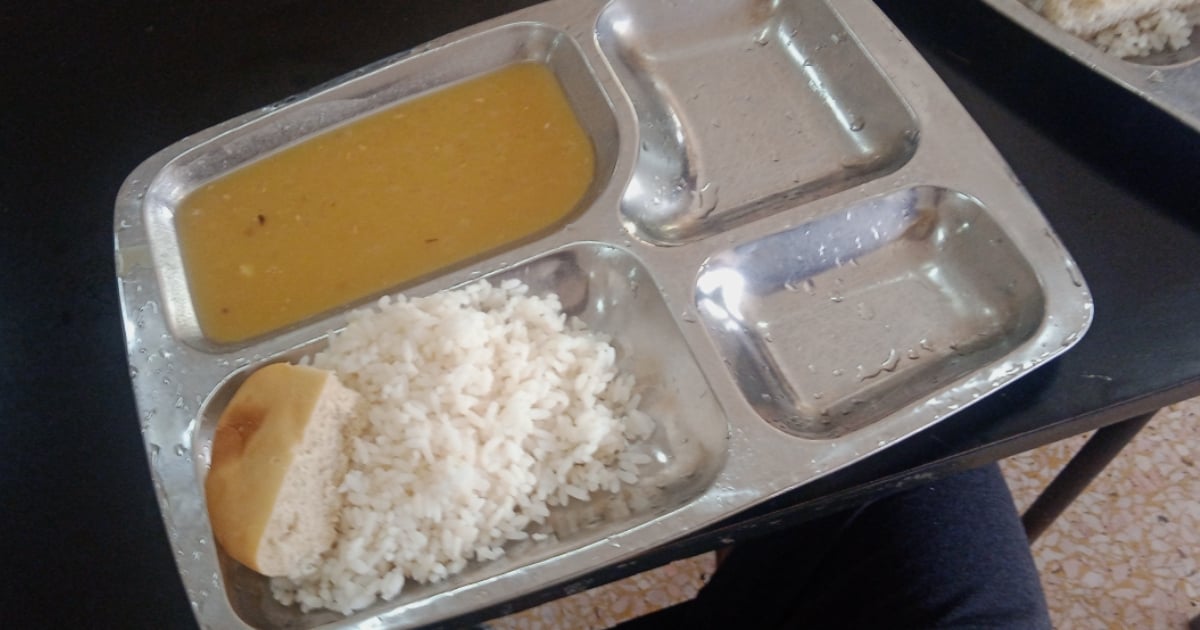
In the midst of blackouts lasting over 24 hours, stagnant kitchens, and food spoiling without refrigeration, access to food in Cuba has become a privilege. Many families in Cuba are forced to eat only once a day, and in schools and universities, food is increasingly scarce and of poor quality, various organizations report.
According to official data, 39% of Cuban retirees receive the minimum monthly pension equivalent to 1,528 CUP and are highly likely to be added to the list of individuals at risk of extreme poverty.
Especially complicated is the situation of those who do not have family abroad to send them dollars in order to access a balanced diet in the final stage of their lives. They rely solely on what arrives at the stores, characterized by extreme rationing, scarcity, and delays in the distribution of basic food items such as rice and sugar.
The uncontrolled inflation resulting from the failed Ordering task has driven up the prices of essential goods while the wages remain stagnant, deteriorating the purchasing power of Cubans, who are exhausted from queues, blackouts, hunger, and despair.
In the first semester of 2025, the food crisis in Cuba has ceased to be a temporary consequence to establish itself as a chronic humanitarian emergency, recently reported the Food Monitor Program (FMP), an independent organization that monitors food (in)security on the island.
Frequently Asked Questions about the Food Crisis in Cuba and International Aid
How much money has the World Food Programme allocated to Cuba in recent years?
The World Food Programme (WFP) has allocated $57.9 million to Cuba from 2021 to 2025, in order to support food and nutritional security in the country. These funds have been used for the procurement of staple foods such as rice, grains, and oil, primarily aimed at the most vulnerable populations.
What impact has international aid had on food security in Cuba?
Despite international assistance, food security in Cuba remains a critical concern, as external support has not fully alleviated the food crisis. Projects funded by international organizations such as the WFP and FAO are often limited to specific areas and do not ensure long-term sustainability, highlighting the country's dependence on imported resources and technology.
What is the current situation of food distribution in Cuba?
The distribution of food in Cuba faces serious issues of scarcity and delays, particularly affecting basic staple products such as rice, sugar, and powdered milk. The situation is especially critical in the eastern and central provinces, where emergency logistics and transportation problems worsen the shortages.
What does the project "Actúa diferente" consist of in Cuba?
The "Actúa diferente" project, implemented by the PMA, the Cuban government, and the Korea International Cooperation Agency, aims to promote sustainable agricultural practices and improve food security in the eastern provinces of Cuba. The initiative seeks to increase and diversify local food production, although its reach is still limited and relies on international cooperation.
Filed under: