
Related videos:
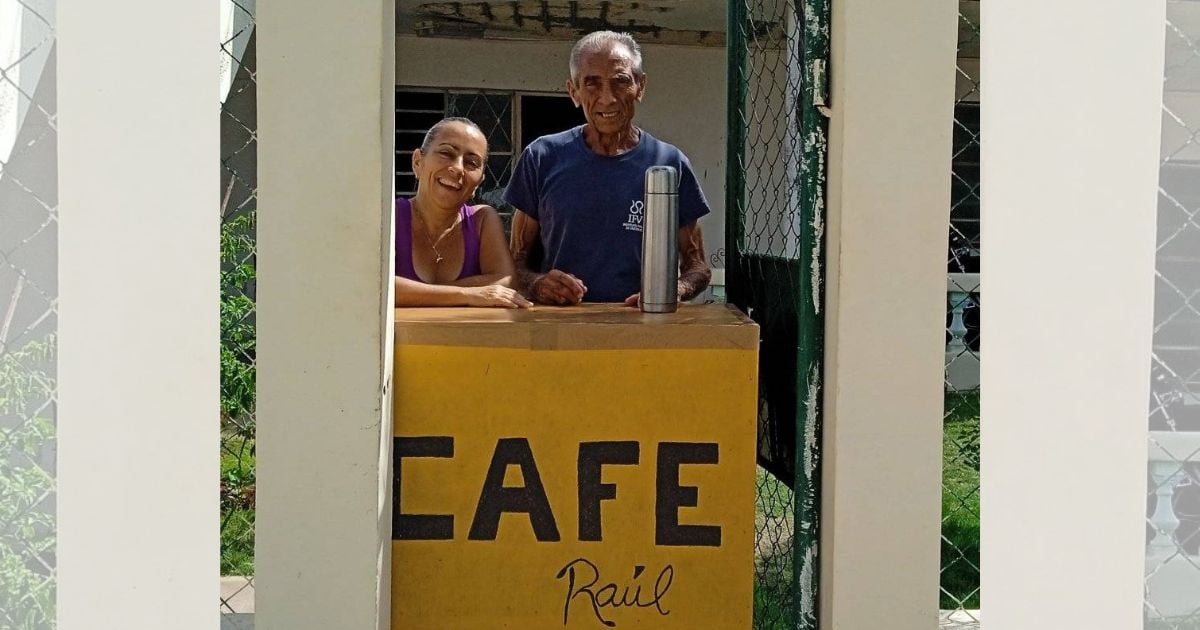
His daughter shared a beautiful message on social media, filled with admiration, respect, and also sadness: at 80 years old, Dr. Raúl González Hernández, a Cuban scientist, doctor of sciences, and senior researcher, survives by selling coffee at a stand, after having dedicated his life to research and being the creator of the well-known nutritional supplement Trofin.
“Last Sunday we celebrated your 80th birthday,” wrote Elizabeth González Aznar on Facebook, adding: “I confess that, amidst all the joy of having you alive and fighting, I felt a hint of sadness over how you manage it.”
Her post is moving as it recounts how her father, far from institutional recognition, survives through his efforts as an entrepreneur.
The story of both is a reflection of a harsh reality in Cuba: trained professionals, with valuable contributions to the country, marginalized for political reasons or due to the precariousness of the system.
Elizabeth was also part of the scientific sector, but she left her job at the Finlay Institute due to health issues exacerbated by stress and ideological pressures, and when she tried to return to Biocubafarma, the doors were closed.
"The news had already spread along with the story of Trofin," he explained, referring to the product developed by his father.
In the face of a difficult economic outlook, he was already selling wine, but as the family situation worsened, he made a decision that his daughter will never forget: “I am going to sell coffee.”
"I swear my heart was squeezed," he confessed. "A retired scientist, creator of a product and its line, selling coffee..."
Far from giving up, González built a small sales cart with his daughter and, without a shred of shame, went out to seek a livelihood.
"You are the oldest of eight siblings from the countryside, you started by milking cows and became a scientist. At 80, you sell coffee with dignity, because the one who is wrong is not you, it is them," Elizabeth wrote.
This story is a testament to family love, but it is also a profound condemnation: the neglect to which many who once gave everything for the country are condemned.
A daughter's admiration for her father becomes a chronicle of resistance, dignity, and truth here.
It is not the first time that Elizabeth has publicly expressed the great admiration and respect she feels for her father, in addition to demanding the recognition that the Cuban scientist deserves for his contributions.
In 2024, he stated on Facebook that his father, despite being the main architect of Trofin, does not appear as the owner or creator of the medication due to the policies governing intellectual property in Cuba, where scientific works are legally owned by institutions rather than individuals.
El Trofin, registered as a medication in 1992 and patented two years later, has made a significant contribution to health in Cuba; however, its creator, upon retiring, has faced the humiliating need to beg for some bottles of the product when he has needed them for his family, despite being the architect of its development.
According to González, the current system in Cuba does not allow researchers to register their discoveries in their own name, limiting their recognition to the role of "author or principal investigator" within an institution.
He believed that this legal framework has left many Cuban scientists in anonymity, even those whose developments have had a significant impact, such as his own father.
Frequently Asked Questions about the Situation of Scientists in Cuba and the Economic Crisis
Why is Dr. Raúl González Hernández, the creator of Trofin, compelled to sell coffee in Cuba?
Dr. Raúl González Hernández, despite being a prominent Cuban scientist and the creator of the nutritional supplement Trofin, is compelled to sell coffee due to a lack of recognition and institutional support. The economic precariousness in Cuba and the lack of opportunities for scientists have driven many professionals to seek alternative means of livelihood. In Dr. González's case, his situation has worsened due to institutional neglect and the lack of response to his requests for assistance, such as the repair of his car.
What is Elizabeth González Aznar's criticism of the Cuban government regarding the situation of scientists?
Elizabeth González Aznar has openly criticized the Cuban government for prioritizing benefits for athletes loyal to the regime while ignoring key figures in science and health. She denounces that while some receive cars, her father, a prominent scientist, has not received the necessary support to repair his vehicle for decades. Furthermore, she questions the lack of recognition and the low salaries that scientists, doctors, and educators receive in Cuba, despite their significant contributions to the country.
How does the Cuban economic crisis affect the daily lives of its citizens?
The economic crisis in Cuba has resulted in a dramatic increase in food prices and a lack of access to basic necessities such as food and medicine. Citizens face daily challenges to survive, with exorbitant prices for basic products and shortages in pharmacies. Additionally, the energy crisis leads to blackouts and a shortage of gas, further complicating living conditions. The situation has forced many Cubans to rely on the informal market to obtain what is necessary for survival.
What does the story of Dr. Raúl González Hernández represent in the current Cuban context?
The story of Dr. Raúl González Hernández is a testament to resilience and dignity in the face of adversity. His situation represents the struggle of many Cuban professionals who, despite their contributions to the country, face marginalization and institutional neglect. The narrative of his efforts to survive as an entrepreneur also serves as a condemnation of a system that neither recognizes nor supports those who have dedicated their lives to improving the health and well-being of the Cuban population.
Filed under: