A Cuban living in the United States under the I-220A immigration form shared a video on TikTok celebrating his three years in the country and advocating for his family's right to remain here legally. In his message, he emphasizes that they did not emigrate for economic reasons, but rather "seeking freedom, seeking independence, seeking sovereignty, and working."
"We want to have our papers, we want to have our residency, to be legal," expressed the user @jorgerodriguez1324. He explained that both he, his wife, and his son have been under the I-220A for three years and have fulfilled all their tax obligations: "We have been paying taxes for three years, paying everything, doing things the right way."
One of the most significant moments of the testimony was when he spoke about his son's future: "My son just finished 10th grade and is already receiving offers from universities, and he's only in 10th grade receiving offers from universities, and if he doesn't have residency, he can't go to any university."
Rodríguez insisted that they are not migrants who came for comfort: "Many say that we are here for convenience, that we are this or that... no, we are here seeking freedom, seeking independence, seeking sovereignty, and working."
He compared what he has achieved in these three years in the United States with his previous life in Cuba: “I lived 47 years in Cuba, and all I had were some Russian engines that didn’t work, which needed more cranking than a locomotive… and in just three years, look at what I’ve accomplished… working here, me, my wife, my son, my family.” He showcased his family’s cars and stated: “Those cars are paid off, everything here is paid for, I don’t owe anything to any bank.”
He also rejected recent statements by Miguel Díaz-Canel regarding Cuban emigrants: “Our son of a bitch Díaz-Canel says that all Cubans who left Cuba, all those who emigrated, are failures... and those words have been the truest he has ever said in his life. It's true that we were failures... in Cuba, yes, we were failures in Cuba. Not here. Here we have managed to find freedom, to find independence.”
The Cuban also expressed his support for the Cuban Nationalist Party and offered words of gratitude to Congresswoman María Elvira Salazar: “Thank you very much for what you are doing for us, thank you for keeping us in mind, and always know that we are not just a meal; we are Cubans who came to seek freedom, to seek independence, to seek sovereignty.”
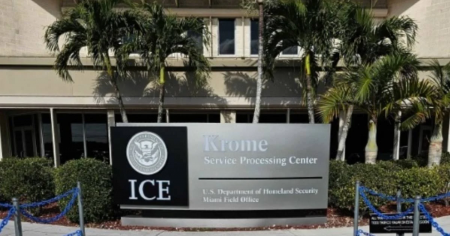
The post received expressions of support from other Cubans on social media, with messages of encouragement, respect for their work, and criticism of the Immigration and Customs Enforcement (ICE), which they accuse of targeting hardworking individuals instead of those who pose a real threat.
Cases like this occur frequently. Several Cubans with I-220A have shared their experiences on social media after opening small businesses, such as a barbershop in Houston or a beauty salon in Miami, despite facing unstable legal conditions. Testimonies have also emerged recounting family separation, such as a letter addressed to a mother from exile.
The political debate surrounding this situation remains active. Congresswoman María Elvira Salazar has reiterated her support for these migrants and has argued that they should not be deported if they have no criminal record. Furthermore, she has proposed a legal path for those who have been living and working in the country for years. Her stance has gained significance following the announcement of a meeting with the Secretary of Homeland Security to discuss the immigration status of Cubans with I-220A.
Experts in immigration, such as attorney Liudmila Marcelo, have warned about the risks of accepting case closure before judges without a formal ruling, as it may leave these individuals exposed to immediate deportation. Legal uncertainty continues to shape the daily lives of thousands of Cubans who, like Jorge Rodríguez, are demanding order, stability, and the right to remain in the country they already consider their home.
Frequently Asked Questions about the I-220A Immigration Status of Cubans in the U.S.
What is the I-220A form and what does it imply for Cubans in the U.S.?
The I-220A form is a parole document issued by the Immigration and Customs Enforcement (ICE) to immigrants in the process of deportation, but who have been released under supervision while their case is being resolved. For many Cubans, this form represents a legal limbo, as it allows them to temporarily reside in the country without definitive immigration status.
Why do many Cubans with I-220A seek permanent residency in the U.S.?
Cubans like Jorge Rodríguez seek permanent residency to ensure stability and a legal future in the United States. Without residency, they face significant limitations, such as the inability to access universities for their children or the legal uncertainty that could lead to deportations. Many have managed to settle and contribute to American society, but remain in a state of insecurity until they obtain residency.
What challenges do Cubans with I-220A face in their daily lives?
Cubans with I-220A face legal uncertainties that can impact their employment, access to education, and the possibility of family reunification. Despite working and contributing economically, they live with the constant fear of potential deportation if their cases are not resolved. Furthermore, the opinions of politicians such as Donald Trump have further polarized the debate surrounding their situation.
Filed under: