
Related videos:
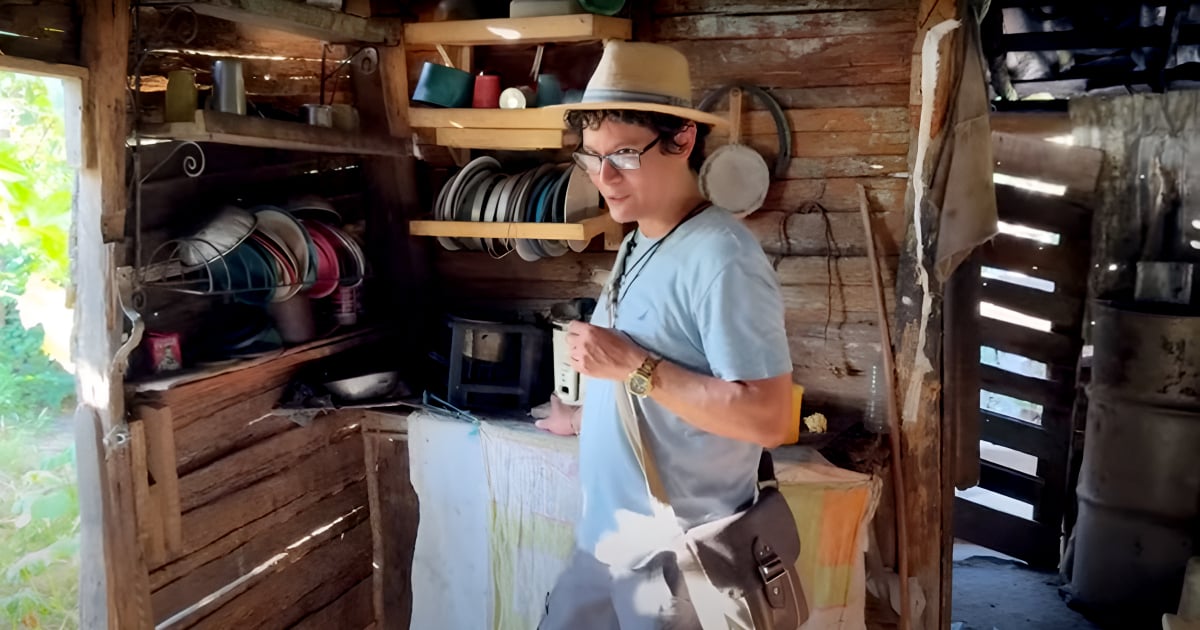
The Catholic priest Leandro NaunHung reported on the deep effects of poverty in Cuba after traveling to the rural community of Los Pinos, in Candelaria, Santiago de Cuba.
"The habit of continuously surviving becomes a repetitive act that dulls thought, stifles rebellion, and makes life a heavy burden to carry each day," affirmed the Santiago parish priest on his social media.
Los Pinos, a settlement made up of makeshift houses constructed from recycled materials, lacks basic services such as transportation, electricity, running water, or medical care, as the priest demonstrated in a video published on his YouTube channel, through which he documents his community and evangelical work.
In the recording, Leandro showed local residents expressing their dissatisfaction with the precariousness of their lives: insufficient salaries and pensions, lack of medications, and persistent hunger. The images serve as a testimony to the structural abandonment experienced by thousands of rural Cuban communities, where daily life unfolds amid extreme shortages.
The visit of the priest is part of his constant journeys through rural areas of eastern Cuba, where he not only provides spiritual assistance but also delivers food, listens to the community, and brings to light issues that often remain outside the public debate.
The phrase that accompanied the video highlights not only material scarcity but also the silent damage caused by living in a constant state of survival: resignation, the loss of critical thinking, and apathy towards change.
In a country where millions of people face difficulties in meeting basic needs, the words of Leandro NaunHung appeal to a dormant conscience, a victim of the physical and emotional exhaustion of living without expectations.
The regime acknowledges the misery, but does not act with urgency
In February 2024, the Cuban regime officially recognized that there are more than 1,200 communities in extreme vulnerability throughout the country.
According to the Ministry of Labor and Social Security, many of these areas lack basic living conditions, access to food, potable water, sanitation services, and sources of employment.
This recognition, far from representing progress in concrete solutions, confirmed what citizens like Father Leandro NaunHung have been denouncing for years: poverty is not an exception or a management error, but a structural and persistent reality.
Despite the data, state responses have been scattered, assistance-oriented, and lacking a comprehensive local development plan.
In communities like Los Pinos, where Leandro recorded his testimony, the situation described by the government is palpable: isolation, misery, neglect, and despair. However, while the State acknowledges the crisis, those who face it daily see neither real changes nor lasting relief.
Poverty as a tool of control
For decades, the Cuban regime has utilized food rationing, socialized poverty, and widespread misery as mechanisms to maintain political and social control over the population.
Depriving people of basic resources generates dependency on the State and diminishes the capacity for autonomous organization. When most of daily energy is spent on survival, the ability to think critically, question the system, or demand changes is limited. Thus, hunger and scarcity are not only a result of economic inefficiency but also part of a deliberate strategy of subjugation.
As the priest himself warned, the habit of surviving "castrates rebellion." This phrase encapsulates a painful truth: poverty in Cuba is not only a social tragedy but also a form of political control that has silenced the impulse for change for generations.
Filed under: