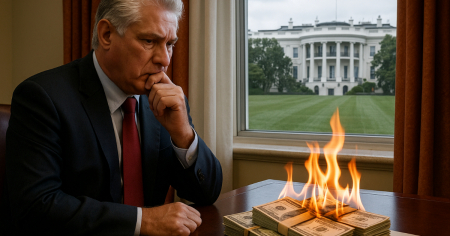
The President of the United States, Donald Trump, signed a presidential memorandum on Monday that toughens U.S. policy towards Cuba and reverses the approach previously taken by the administration of Joe Biden.
The information was confirmed by Reuters, citing a White House official who spoke on the condition of anonymity.
The new memorandum prohibits tourism by United States citizens to the island and strengthens the existing economic embargo, thereby reaffirming the restrictions on transactions with Cuba.
According to the source cited by the agency, the decision aims to align U.S. foreign policy with a firmer stance towards the Cuban regime, in contrast to the more flexible approach promoted during the Biden administration.
What does the new memorandum signed by Trump propose?
The text, published on the White House website, states that the goal of the new policy is to restore the firm approach that characterized Donald Trump's first term and to undo the relaxations introduced by the Biden administration.
The memorandum states that it is necessary to end economic practices that disproportionately benefit the Cuban regime—particularly the military, intelligence, and security institutions—at the expense of the Cuban people.
To this end, a prohibition is established on all financial transactions, direct or indirect, with entities controlled by the military apparatus, such as the powerful GAESA conglomerate and its subsidiaries, except for those operations deemed compatible with the strategic interests of the United States or that contribute directly to the well-being of the island's people.
The document also prohibits U.S. tourism to Cuba and mandates strict compliance with this measure through regular audits and the mandatory maintenance of detailed records of all travel-related transactions for a minimum of five years.
The White House claims that tourism not only represents a source of income for the regime but has also been used to circumvent previous restrictions.
Furthermore, the memorandum reinforces the existing economic embargo, expressing a clear stance against any attempt, by the United Nations or other international organizations, to demand its removal.
The Trump administration maintains that the embargo remains a legitimate tool to pressure the regime to implement real political reforms and respect the fundamental rights of its citizens.
As part of its policy to support civil society, the text emphasizes the need to promote free access to the internet, strengthen press freedom, encourage private enterprise independent of state control, and ensure freedom of association within the country.
It also demands a continuous review of human rights violations, including arbitrary detentions, inhumane treatment of political prisoners, reprisals against the families of dissenters, harassment of religious figures, and repression of social organizations.
The memorandum keeps the policy of "Wet feet, dry feet" eliminated, considering that it encouraged illegal migration and endangered the lives of those attempting to reach the United States by sea.
Finally, it orders the preparation of an updated report on American citizens wanted by justice who reside in Cuba or are protected by the regime, citing Havana's lack of cooperation in judicial and security matters.
With this directive, the Trump administration states that all bilateral interactions should aim to promote a free, prosperous, and democratic Cuba, and that the commitment of the United States will be to the Cuban people, not to those who oppress them.
Frequently Asked Questions about Trump's New Restrictions on Cuba
What measures has Trump taken to strengthen the embargo on Cuba?
Donald Trump signed a presidential memorandum that prohibits American tourism to Cuba and reinforces the existing economic embargo. The measure also requires individuals and entities involved in authorized travel to maintain detailed records of their transactions for at least five years.
Why did Trump once again include Cuba on the list of state sponsors of terrorism?
The Trump administration reinstated Cuba on the list of state sponsors of terrorism to financially sanction the Cuban regime and further isolate it within the global banking system. This decision aims to pressure the Cuban government to implement structural changes and cease its support for international terrorist activities.
How does Trump's policy affect remittances sent to Cuba?
Trump reestablished sanctions against Orbit S.A., a company controlled by GAESA, which manages remittances to Cuba. This measure prohibits U.S. companies from conducting transactions with Orbit S.A., complicating the sending of remittances to the island and affecting the inflow of foreign currency to the Cuban regime.
What impact do these measures have on the Cuban people?
Trump's measures aim to pressure the Cuban regime, but they also have a negative impact on the population. The restriction of remittances and the tightening of the economic embargo make access to basic resources more difficult and exacerbate the economic hardships on the island.
Filed under: