
Related videos:
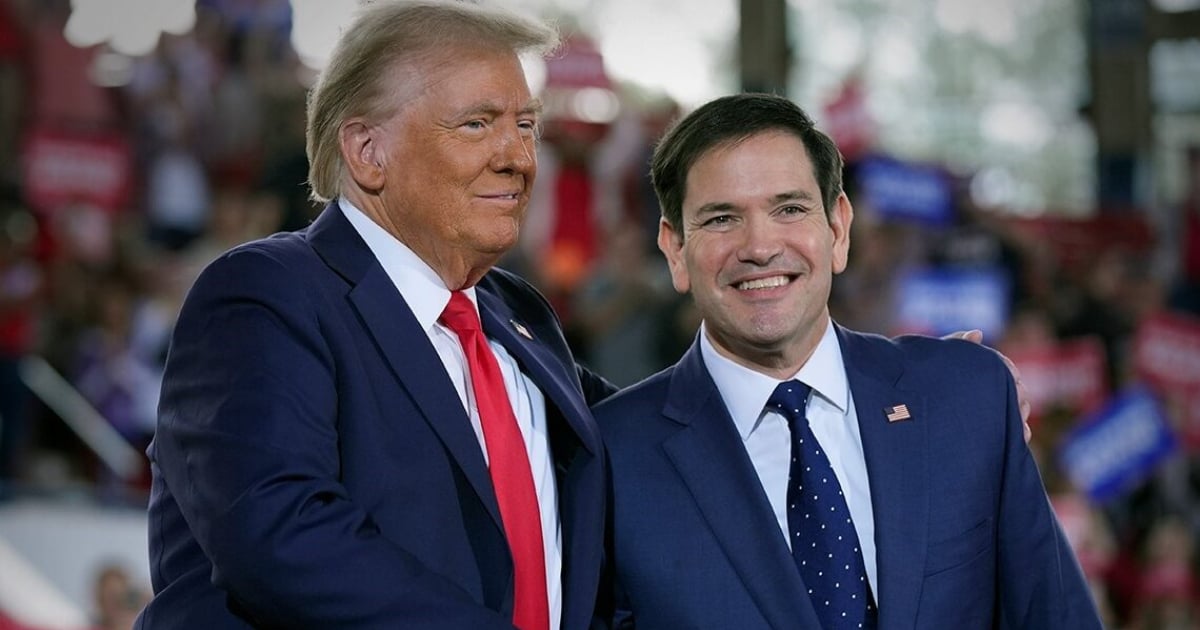
The U.S. Secretary of State, Marco Rubio, affirmed on Monday the U.S. government's commitment to the freedom and prosperity of the Cuban people, following President Donald Trump's signing of a new National Security Presidential Memorandum (NSPM) that reinstates a firm and restrictive policy towards the Havana regime, reversing the easing measures adopted by the Biden administration.
Rubio wrote on social media X: “Thanks to President Trump's leadership, the United States is committed to fostering freedom and prosperity in Cuba. Let there be no doubt: under his leadership, we will hold the Cuban regime accountable and support the Cuban people in their quest for freedom and justice.”
The measure, announced by the White House and confirmed by Reuters, prohibits all financial transactions—direct or indirect—with entities controlled by the Cuban armed forces, such as the GAESA conglomerate, except for operations that directly benefit the people of the island or the strategic interests of the U.S.
It also maintains the elimination of the "Wet Foot, Dry Foot" policy to curb irregular migration and prohibits U.S. tourism in Cuba, reinforcing compliance through regular audits and mandatory records for at least five years.
The memorandum also orders a systematic review of human rights violations in Cuba, including arbitrary detentions, repression of activists, harassment of religious figures, and family members of dissenters, and demands an updated report on U.S. fugitives sheltered by the Cuban regime.
Among the priorities are initiatives to expand internet access, strengthen press freedom, promote private enterprise independent of state control, and guarantee the freedom of association, with the aim of supporting Cuban civil society.
The new directive was praised by Congressman Mario Díaz-Balart, who thanked Trump and Rubio for "their commitment to a free Cuba" and for placing "the national security of the U.S. first."
Similarly, the activist Rosa María Payá, who officially assumed her position as commissioner for the Inter-American Commission on Human Rights (CIDH), highlighted that the memorandum "prohibits transactions that strengthen the oppressors" and expressed gratitude for the support for the cause of freedom on the island.
The Republican congressman Carlos Giménez also celebrated the news and reaffirmed his support for the measures.
With this new policy, the Trump administration claims to fulfill its electoral promise of "supporting the Cuban people in their long quest for justice, freedom, and democracy," marking a clear departure from the conciliatory approach that characterized Barack Obama and Joe Biden's era toward Havana.
Responses from the regime in Havana
The Cuban leader Miguel Díaz-Canel reacted to the new memorandum: "The impact will be felt, but they will not break us," he warned, trying to convey strength while his words betrayed the nervousness of someone witnessing the fracturing of the web of interests that supports his power.
Meanwhile, Foreign Minister Bruno Rodríguez Parrilla described it as “criminal behavior” and a violation of human rights the new policy announced by the U.S. government.
Frequently Asked Questions about U.S. Policy Toward Cuba and the Impact of Sanctions
What is the objective of the new Presidential Memorandum on National Security signed by Trump regarding Cuba?
The aim of the new Presidential Memorandum on National Security is to reverse the relaxations introduced during the Biden administration and to reinstate a tougher stance against the Cuban regime. This includes the prohibition of all financial transactions with entities controlled by the Cuban military apparatus, the strengthening of the economic embargo, and the ban on American tourism in Cuba. Furthermore, it seeks to promote press freedom, internet access, and support for Cuban civil society.
How does Trump's policy affect remittances sent to Cuba?
Trump's policy affects remittances to Cuba by prohibiting transactions with companies linked to the military conglomerate GAESA, such as Orbit S.A. This company, responsible for processing remittances, has been sanctioned, which restricts the flow of money to Cuba and impacts both the regime and the population that relies on these remittances for their basic needs.
What does Cuba's inclusion on the list of state sponsors of terrorism imply?
Cuba's inclusion on the list of state sponsors of terrorism entails additional financial sanctions and greater international isolation. This complicates the Cuban regime's access to credit and international transactions, further exacerbating the country's economic situation and limiting its ability to establish trade relationships and receive external funding.
What measures has the Trump administration taken to strengthen human rights in Cuba?
The Trump administration has taken steps to systematically review human rights violations in Cuba. These include demanding reports on political prisoners, arbitrary detentions, and repression of activists. There is also an effort to expand internet access, strengthen press freedom, and promote private enterprise to support Cuban civil society.
Filed under: