
Related videos:
The Cuban regime continues its punitive offensive against the use of the drug known as “el químico” and requested 8 to 9 years of imprisonment in Matanzas for two young people accused of its use and transportation.
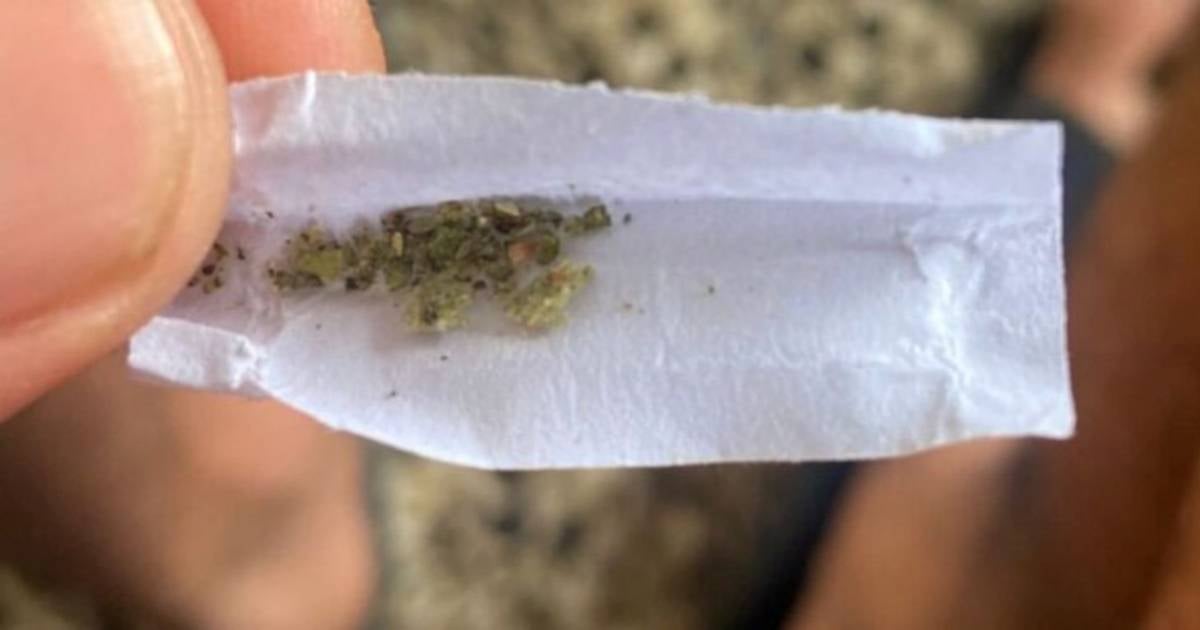
The accused YGR, 22 years old, for whom the highest penalty is sought, originally from San Miguel del Padrón and residing in the capital, acquired the chemical in Havana, rolled cigarettes ("bates"), and sold them to the accused AVU, known as "El Abuelito," 24 years old and residing in Cárdenas, this was reported on Monday by the local state press.
The trial for the crime of drug trafficking took place at the Provincial People's Court of Matanzas and is, according to the report, another example of the state's policy of "zero tolerance for drugs."
The accused YGR was arrested at the Bacunayagua checkpoint where "10.10 grams of synthetic drugs were seized from him, which he was carrying in a backpack, equivalent to more than 1000 cigarettes, considering that one gram produces between 100 and 120 doses," the report states.
The other accused, AVU, was selling the chemical cigarettes for $300 CUP each.
The judgment will be issued on July 17th, it adds.
Last week, Noel Bibeaux Muñoz was found guilty of producing between 80 and 100 doses of "chemical" and sentenced to 8 years in prison in Cienfuegos.
Additionally, the Provincial People's Court of Santiago de Cuba sentenced a man to eight years in prison for a drug-related crime.
Punitive strategy
For years, the sale and consumption of drugs, particularly among youth, became normalized in many Cuban cities, with substances like "químico" readily available on every corner and without a serious institutional response.
The authorities did not act when they should have: while addiction spread and young lives were lost to overdoses, the State turned a blind eye.
Now, the very government that allowed the phenomenon to spiral out of control is issuing "exemplary" trials like the one in Cienfuegos to create the illusion of control.
The penalties are extremely harsh - even with threats of life imprisonment or the death penalty in the most severe cases - but they are not accompanied by a solid preventive strategy or public health campaigns that address the root causes of the problem: hopelessness, poverty, marginalization, and lack of opportunities.
Frequently Asked Questions About the Offensive Against Drug Trafficking in Cuba
Why is the Cuban government conducting "exemplary" trials against drug trafficking?
The Cuban government claims that these trials aim to deter drug trafficking and demonstrate a stance of "zero tolerance" toward the issue. However, this strategy has been criticized for being a delayed reaction and for not addressing the root causes of the problem, such as the lack of opportunities and marginalization.
What are the penalties faced by those accused of drug trafficking in Cuba?
The penalties for those accused of drug trafficking in Cuba are severe. Convicted individuals can face up to 30 years in prison, life imprisonment, or even the death penalty, depending on aggravating factors such as the amount of drugs, the involvement of minors, or connections to international networks.
What is the "chemical" and why is its consumption in Cuba so concerning?
The "chemical" is a synthetic cannabinoid designed to mimic the effects of marijuana, but with significantly greater potency and danger. Its use has risen among young Cubans, and it is associated with devastating effects and a high risk of dependence from the very first dose.
How does the government's punitive strategy affect the situation of drug trafficking in Cuba?
The punitive strategy of the Cuban government focuses on severe punishments for those involved in drug trafficking and consumption. However, this approach has been criticized because it does not include effective preventive strategies or public health campaigns, which limits its effectiveness in addressing the problem at its root.
Filed under: