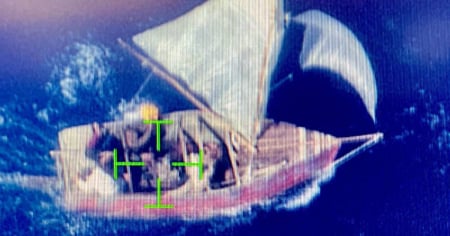
Five Cubans were rescued on an uninhabited islet in the Bahamas, where they were stranded for 17 days after their vessel sank, the United States Coast Guard (USCG) reported on Tuesday.
During a patrol of the area, a crew from the U.S. Coast Guard spotted the Cubans on Anguilla Cay, where they had been stranded for more than two weeks since the shipwreck.
The group of immigrants from Cuba was handed over to the Bahamian authorities this Tuesday by the crew of the coast guard vessel Robert Yered, the USCG reported in a brief update on social media X.
The note did not specify the health conditions of the rescued individuals or how they survived for so long on an uninhabited cay.
The Coast Guard protocols stipulate that once immigrants are located by the agency's crews, they are provided with water, food, and medical attention before being processed and handed over to the appropriate authorities. The statement released this Tuesday did not provide any details regarding this.
Cuban migrants who are transferred to the Bahamas remain detained there for some time before being returned to their country.
Due to the economic and social crisis that Cuba is experiencing, many people are leaving the island and embarking on dangerous maritime journeys to reach the shores of the U.S., despite the aggressive immigration policies implemented by the government of President Donald Trump since his return to the White House in January.
The USCG intercepted six Cuban rafters in Bahamian waters last week, during ongoing patrol and immigration control operations in the Florida Straits and the Caribbean. The immigrants were transferred to Bahamian authorities.
On June 6, the Coast Guard rescued another group of 20 abandoned Cuban immigrants at Anguilla Cay, who were also placed under the custody of the Bahamas.
U.S. authorities have repeatedly stated that the individuals intercepted at sea are not eligible to enter or remain in the United States and are returned to their home country or transferred to the authorities of the countries where they are found, as in these recent cases to the Bahamas.
The migration flow from Cuba through the Florida Straits in fiscal year 2025, compared to previous periods, shows a significant reduction, judging by the number of repatriated Cuban rafters in the last eight months.
According to official data released by the Customs and Border Protection (CBP), in May, only 44 Cubans were detected attempting to enter the U.S. illegally by sea, while 97 did so via the southern border (Mexico) and nine via the northern border (Canada).
The numbers are remarkably low and reveal the impact that the inflexible immigration policies of the Trump administration are having on the behavior of those who are seeking to leave Cuba due to the ongoing economic and social crisis.
The causes of Cuban migration, such as the economic recession—characterized by the scarcity of essential goods, the ineffectiveness of basic services, and inflation—along with repression, a lack of freedoms, and social insecurity, have not disappeared, but the routes to the United States have become increasingly inaccessible.
Frequently Asked Questions about the Rescue of Cuban Migrants in the Bahamas
How were the five Cubans rescued in the Bahamas cays?
The five Cubans were rescued by an aircrew from the U.S. Coast Guard who spotted them on Anguilla Cay, an uninhabited islet in the Bahamas, after being stranded for 17 days due to the shipwreck of their vessel. The crew of the Coast Guard Robert Yered transported them to the Bahamian authorities.
What procedures does the U.S. Coast Guard follow when rescuing migrants?
The Coast Guard protocols stipulate that rescued migrants receive water, food, and medical attention before being processed and handed over to the appropriate authorities. They are then transferred to the authorities of the country where they were found, such as those of the Bahamas in this case.
Why has the flow of migration from Cuba to the U.S. decreased?
The migration flow from Cuba to the U.S. has drastically reduced due to the stricter immigration policies implemented by the Donald Trump administration since its return to power. These policies have made the routes to the United States more inaccessible, although the causes of migration, such as the economic and social crisis in Cuba, persist.
What happens to Cuban migrants intercepted at sea?
Cuban migrants intercepted at sea are generally repatriated to their country of origin or to the country where they were found. In the case of the five Cubans rescued at Anguilla Cay, they were handed over to the authorities in the Bahamas. Current U.S. policies do not allow intercepted migrants to enter or remain in the country.
Filed under: