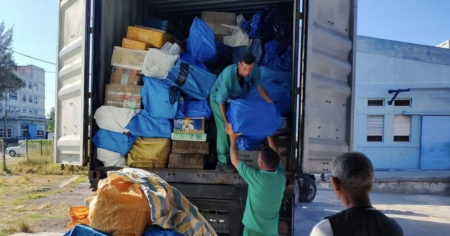
The Cuban Postal Business Group (GECC) has publicly acknowledged the collapse of its system for receiving, processing, and delivering international packages, directly attributing it to the "record-high" increase in imported combustion-engine motorcycles, which are overwhelming its already fragile logistical capacity.
In Facebook, the International Messaging and Exchange Company (EMCI) justified this situation by stating that they are navigating a "critical route" similar to that of the years 2020 and 2021, during the pandemic, when millions of international shipments were processed.
However, unlike before, fewer packages are being received now, but they are larger in volume and weight, which complicates operations even further.
Correos also argues that the current context is more adverse than that experienced during COVID: there is a severe fuel deficit, issues affecting the national electrical system, and a structural logistics crisis, worsened by delays in customs clearances, which halt the official entry of shipments into the postal system until they are released.
Furthermore, they emphasize that the airport and port authorities at Mariel prioritize other goods deemed strategic for the country, such as raw materials and industrial supplies, which further delays delivery times for personal shipments.
The state entity reports that the average delivery time for international parcels now exceeds 60 days, and in the case of motorcycles, the delay can extend for months.
EMCI is still processing containers received at the end of April, as the entity publicly acknowledged.
Despite the promises of the marketing agencies, which assure deliveries in 15 days, the motorcycles are only being distributed from three locations: Havana, Santa Clara, and Holguín, depending on the recipient's geographic area.
This forces many Cubans to travel long distances to pick up their vehicles, resulting in additional costs and inconveniences.
Correos stated that the decision was not made by them, but acknowledged that it has caused "dissatisfaction and complaints".
In addition, the automated plant of EMCI has not been able to start due to the lack of an imported electrical component, further delaying the promised modernization of the service.
In recent months, the official press has attempted to show improvements in delivery services, but reports of over 4,000 accumulated shipments, complaints of losses, and the saturation due to new imports such as motorcycles demonstrate the opposite.
With a system that remains collapsed, Correos de Cuba attempts to justify the slowness of its services by citing a mix of structural obstacles, an overload of goods, external delays, and a lack of basic resources.
Furthermore, in a country where social media has become an almost obligatory channel for reporting daily irregularities, complaints about thefts or losses in international shipments managed by Correos de Cuba have not gone unnoticed.
Despite this, the Cuban Postal Business Group published an extensive statement on Facebook titled "Correos de Cuba: Speaking Clearly," where they attempt to discredit the reports and downplay their impact.
Frequently asked questions about the collapse of Correos de Cuba and the importation of motorcycles
Why does Correos de Cuba blame the importation of motorcycles for the collapse of its services?
Correos de Cuba argues that the record increase in imported motorcycles with combustion engines has overwhelmed its logistical capacity. This adds to an unfavorable context with fuel shortages, electrical outages, and customs delays, complicating the receipt, processing, and delivery of international packages.
What are the main complaints from users regarding the services of Correos de Cuba?
The most common complaints include delays of more than 60 days in the delivery of international packages, losses or alterations of shipment contents, and the requirement for recipients to travel long distances to collect their packages. Additionally, there are reports of thefts in shipments and deficiencies in communication with customers regarding the status of their packages.
How does the lack of resources affect the postal services in Cuba?
The lack of basic resources, such as fuel and electrical components, severely impacts the operational capacity of Correos de Cuba. This situation has hindered the modernization of its automated facility and has contributed to the saturation and sluggishness in the processing of shipments, adding to the structural logistical problems that the postal system currently faces.
What measures has Correos de Cuba taken to improve its services?
Correos de Cuba has attempted to improve its services by diversifying offerings, such as selling basic products in some offices and collaborating with small and medium-sized enterprises (mipymes) for package delivery. However, the promised improvements have yet to be reflected in user satisfaction, as they continue to report significant issues with the reception and condition of their shipments.
Filed under: