
Related videos:
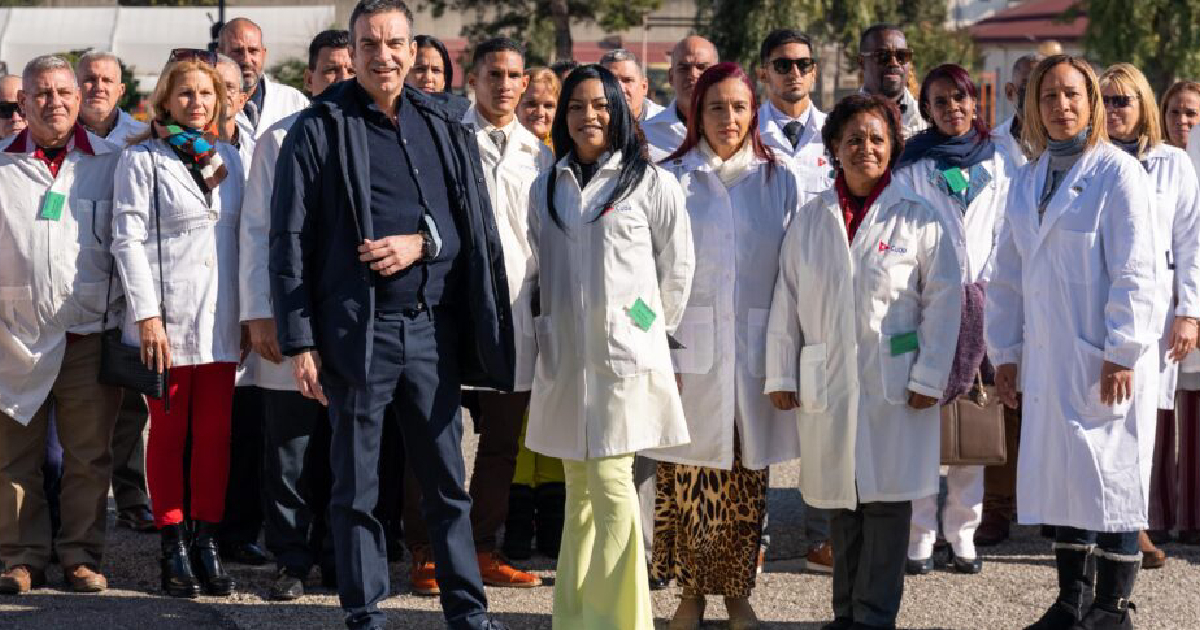
The Health and Wellness Department of the Italian region of Calabria officially denied that Cuban doctors providing services there are legally required to transfer part of their salaries to Cuban Medical Services Marketing S.A. (CSMC), the state company of the regime that acts as an intermediary between Havana and the countries receiving healthcare personnel.
In an institutional response dated July 4, signed by Doctors Teresa Celestino and Francesco Lucia, Calabrian authorities assured CubaNet that the doctors hired from the island sign individual contracts directly with the regional healthcare system, and that salaries are fully and directly deposited into Italian bank accounts in the name of the professionals themselves, as required by the labor legislation of the European country.
The statement, issued in response to a request for information from the media CubaNet, dismantles the supposed legal power that the CSMC claims to have to require Cuban professionals to hand over the majority of their salary.
It also leaves the frequent threat from mission heads without legal support, as they assure doctors that they cannot work in Italy without the consent of the Cuban state company.
This collaboration has been widely criticized because Cuban professionals are providing services in the European nation at a time when the island is facing a severe health crisis.
A dual contract system and arbitrary deductions
However, a journalistic investigation conducted by CubaNet based on testimonies, internal documents, and legal analyses, reveals that in practice, Havana has implemented a dual hiring system to maintain control over the doctors and take a significant portion of their earnings.
While Italy signs contracts with professionals as fixed-term freelancers, the CSMC requires them to also enter into a second, internal contract, which establishes lower payment amounts and restrictive conditions.
According to the collected data that evidence the slave regime to which Cuban professionals are subjected, doctors in Calabria receive between 22% and 46% of the salary paid by Italy.
The remainder must be forwarded to the CSMC through mandatory bank transfers, justified by tax deductions supposedly required by the Italian tax authorities, but which in reality have no legal backing.
Only in the case of overtime, the regime retains up to 71.5% of the additional payment, according to payrolls reviewed by CubaNet.
Salary appropriation also affects the "13th month," an annual bonus paid in December, of which, in some cases, doctors only receive 19%, well below the 50% promised by the Cuban company.
Restrictions, surveillance, and extraterritorial control
Despite working in European territory, Cuban doctors remain subject to severe restrictions. They are not allowed to join Italian unions or engage in political or civic activities that have not been approved by the Cuban mission.
Their movements are controlled: they need permission to leave the province, even for personal matters.
Romantic relationships with nationals or residents must also be reported, and all professionals are required to sign a "confidentiality agreement" that prohibits them from disclosing the actual working conditions, even for up to two years after the contract ends.
Testimonies collected in the research reveal the climate of fear that prevails among professionals.
The possibility of being reported by their own colleagues or sent back to Cuba with sanctions and immigration regulations is a constant threat.
Some doctors report that they have even avoided working overtime because the pay they receive does not justify the effort, which harms the already weakened healthcare in the region.
Italy accepts direct payments, but does not monitor the final destination
Although the authorities in Calabria claim that they comply with the law by paying doctors directly, they admit that they do not supervise what happens to those funds once deposited.
This omission allows for the continuation of a system that, according to consulted experts, undermines Italian, European, and international legislation on labor and human rights.
Organizations like Cubalex have warned that the extraterritorial application of Cuban regulations to impose salary withholding lacks legal legitimacy and violates international conventions of the ILO and the Charter of Fundamental Rights of the European Union.
Since the arrival of the first doctors in Calabria in December 2022, Italy has allocated no less than 27.5 million euros in salaries for Cuban doctors, of which only 6.2 million (22.6%) reached the hands of the professionals.
The rest was absorbed by the CSMC, whose operations in Italy are led by Luis Enrique Pérez Ulloa, head of the medical mission.
Calabria's response comes amid growing questions regarding the Cuban hiring model. Italian lawmakers, human rights organizations, and unions have demanded transparency regarding the agreements signed with Havana.
Deputy Anna Laura Orrico went so far as to describe the situation as "exploitation" and formally requested the regional president, Roberto Occhiuto, to ensure fair working conditions for Cuban doctors.
The former president of the Calabria Regional Council, Domenico Tallini, has also called for a financial audit to determine the fate of public funds allocated for these contracts.
Frequently Asked Questions about Cuban Doctors in Italy and the Medical Mission System
Are Cuban doctors in Italy required to hand over part of their salary to the Cuban government?
Despite the fact that the Calabria Department of Health claims that Cuban doctors receive their salaries directly in Italian accounts, testimonies and documents investigated indicate that Cuban doctors are subjected to a dual contract system that forces them to transfer a large portion of their income to the Cuban government.
What percentage of the salary do Cuban doctors really receive on international missions?
Cuban doctors on international missions typically receive between 22% and 46% of the salary paid by the host country, while the remainder is retained by the Cuban regime. In some cases, like with overtime, the retention can be as high as 71.5%.
What restrictions do Cuban doctors face in international missions?
Cuban doctors face severe restrictions, such as the prohibition of joining local unions, the need for authorization to leave the province, and the obligation to report romantic relationships. Additionally, they must sign confidentiality agreements that prevent them from disclosing the conditions of their work.
Why are Cuban medical missions criticized by international organizations?
Cuban medical missions have been described as forms of "modern slavery" and "forced labor" due to abusive working conditions such as wage withholding, excessive surveillance, and mobility restrictions, violating international human and labor rights.
Filed under: