
Related videos:
Amid the profound deterioration of the Cuban sports system, the regime in Havana is pulling its strings and once again betting on the discourse of international cooperation.
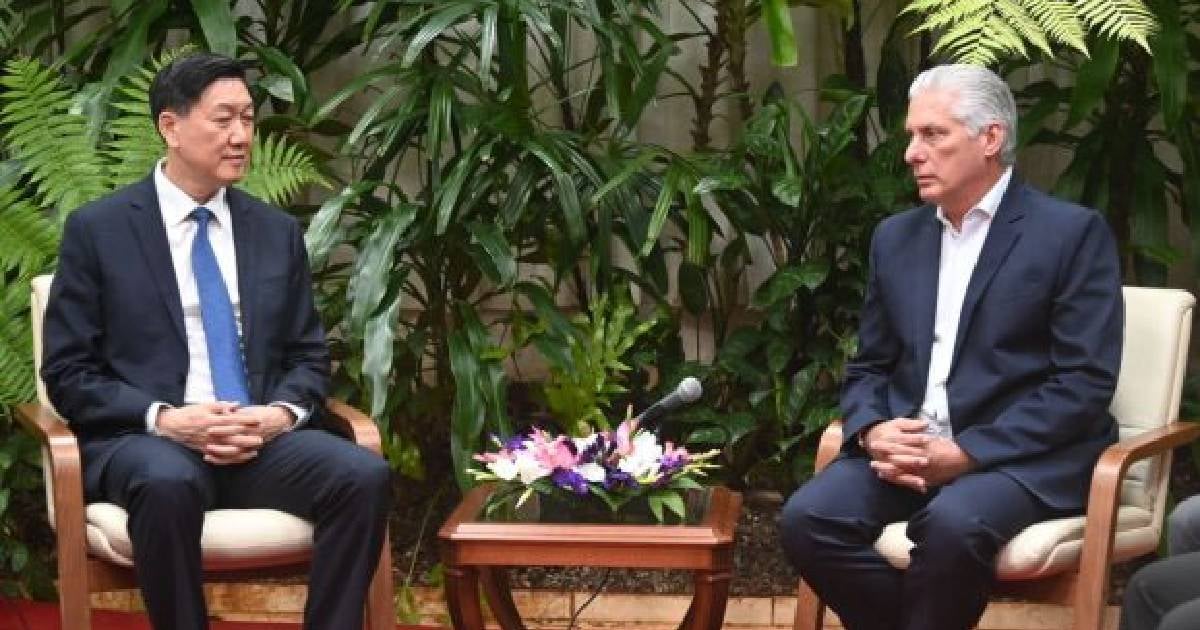
This Monday, the leader Miguel Díaz-Canel welcomed Gao Zhidan, a senior official from the Communist Party of China and president of the Olympic Committee of the Asian giant, with the aim of strengthening sports exchanges between the two countries, according to Cubadebate.
Díaz-Canel described the visit as "very significant" and expressed his intention to promote joint training, shared methodologies, and bilateral events.
However, beyond diplomatic words, the truth is that Cuba has very little to offer today to a power like China in terms of sports.
A collapsed sports system
For decades, Cuban sports served as a showcase for the regime. However, that glorious past is now a thing of the past. The lack of investment, the constant exodus of athletes and coaches, the obsolescence of its infrastructure, and extreme politicization have brought national sports to the brink of collapse. Results in international competitions are increasingly rare, and the training processes lack sustainability.
In contrast, China is now the second largest sports power on the planet, with a highly professionalized model, unlimited resources, scientific and technological development, and a system that supports its athletes from the grassroots level.
If it comes to exchange, the balance is completely skewed: Cuba could receive much more than it can offer.
Unbalanced exchange and internal consequences
If Havana proposes to send Cuban coaches— for example, in disciplines like boxing— this would mean depriving its own athletes of the few qualified specialists that still remain in the country.
The pattern of forced exportation that occurs in the healthcare system would repeat itself, where thousands of doctors are sent abroad while communities within Cuba face a critical shortage of care.
This type of exchange, presented as gestures of cooperative solidarity, actually conceals a depletion of essential human resources for the country's own internal survival.
In an unprecedented context of systemic crisis, where basic services are collapsing, food is scarce, and young people are fleeing, discussing the strengthening of sports as a "bilateral exchange" with a superpower like China seems unrealistic and even counterproductive.
A partnership more political than athletic
The visit of Gao Zhidan is part of a more geopolitical than athletic agenda. Shortly before, another Chinese official, Qiu Xiaoqi, was received by Cuban Foreign Minister Bruno Rodríguez to reaffirm the intention of developing a "community of shared future," as he stated on the social network X.
Behind the rhetoric of friendship and cooperation, China consolidates its diplomatic and strategic influence in Latin America, while the Cuban regime seeks to secure international support in the face of its regional isolation and internal crisis.
In short, the sports alliance announced between Cuba and China does not arise from equitable conditions, and in practice, it only serves to reinforce the propaganda narrative of the Cuban Government.
Meanwhile, the national sport, once a symbol of pride, is crumbling due to a lack of resources, governmental indifference, and the mass abandonment of its most promising talents.
Frequently Asked Questions about the Cuba-China Sports Exchange
What is the objective of the sports exchange between Cuba and China?
The objective of the sports exchange between Cuba and China is to strengthen cooperation in the sports field through joint training, shared methodologies, and bilateral events. However, this exchange seems more symbolic than effective, given the deep deterioration of the Cuban sports system and the imbalance between both nations in terms of infrastructure and resources.
What is the current state of the sports system in Cuba?
The sports system in Cuba is in a state of profound deterioration, on the brink of collapse. The lack of investment, the exodus of athletes and coaches, the obsolescence of infrastructure, and extreme politicization have significantly weakened national sports, resulting in increasingly scarce outcomes in international competitions.
How does the Cuban sports system compare to the Chinese one?
The Cuban sports system, in decline, stands in stark contrast to that of China, which is today the second sports power in the world. China has a highly professionalized model, unlimited resources, scientific and technological development, and a system that supports its athletes from the grassroots level, placing Cuba at a disadvantage in any bilateral exchanges.
What implications does sports exchange have for Cuban coaches?
The sports exchange could imply that Cuba sends qualified coaches abroad, which would deprive its own athletes of the few specialists that remain in the country. This pattern of exporting essential human resources has already been observed in the health sector and could further exacerbate the internal sports situation.
Filed under: