
Related videos:
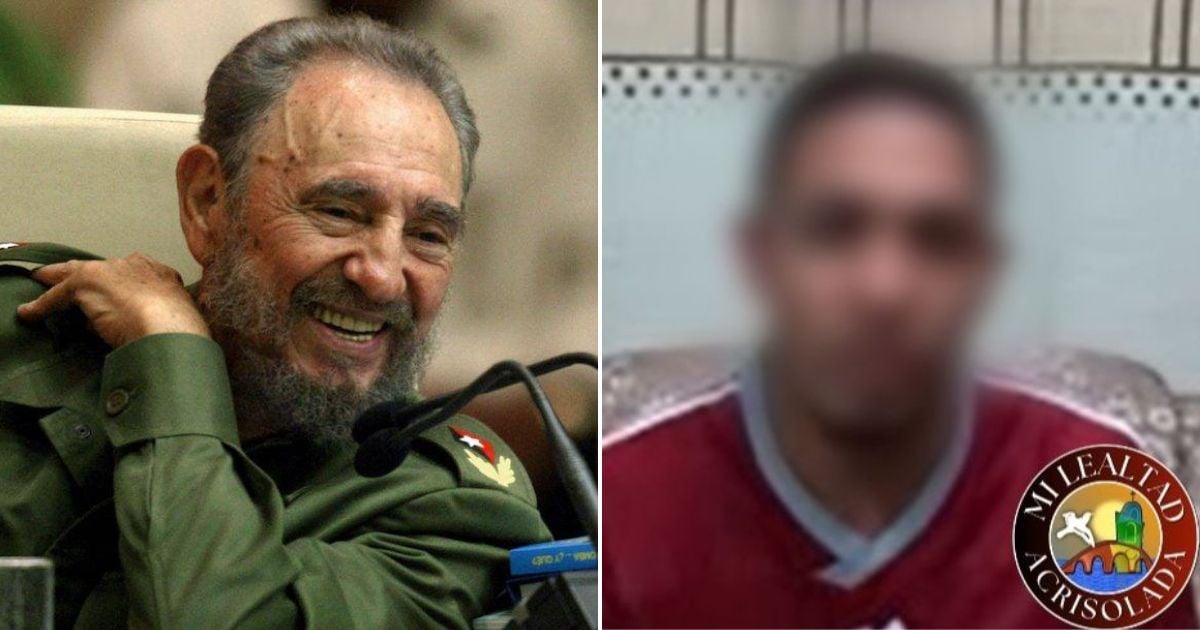
The Cuban Prosecutor's Office has requested a sentence of 15 years of imprisonment against a young man accused of "outraging" an image of Fidel Castro near the Intermunicipal Bus Terminal in Sancti Spíritus.
In a post on Facebook, the official profile Mi lealtad acrisolada reported that the accused is also charged with vandalizing a medical office, which occurred days before the incident involving the image of the Cuban dictator.
"The revolutionary justice has provided a strong response: the Prosecutor's Office requested 15 years of imprisonment for the responsible party," stated the message from the regime's spokesperson profile, which does not provide details about the identity of the young man or the evidence presented at the trial.
In addition, he accompanied the post with a censored image of the alleged perpetrator of the “serious outrage” against the image of the dictator.
The official profile described the events as “acts promoted and financed from abroad” and reiterated that in Cuba “vandalism and aggression against our symbols have severe legal consequences.”
The request for a sentence of up to 15 years for vandalism and "serious outrage" against the image of the dictator seems more motivated by a purpose of political punishment than by the actual seriousness of the events.
"Let there be no doubt: there will be no impunity for those, in the service of the enemy, who attempt to destroy the unity of the Homeland," the text warned, in a tone that reflects the repressive narrative typically employed by the regime to justify disproportionate punishments against dissenting voices or acts of social discontent.
This case adds to a long list of harsh sentences imposed by Cuban authorities on citizens accused of expressing discontent against figures or symbols of the regime, in a context of increasing repression and criminalization of dissent.
Although the "Cuban justice" system is exaggerated, this is not the first time the regime has resorted to this type of punitive measure. In January, Cuban youths Félix Daniel Pérez Ruiz and Cristhian de Jesús Peña Aguilera were sentenced to five and four years in prison, respectively, for a Facebook post in which they expressed their disagreement with Miguel Díaz-Canel's regime.
In June of last year, the Cuban prosecutor's office requested a 10-year prison sentence for Alexander Verdecia Rodríguez, an activist and coordinator of the Patriotic Union of Cuba (Unpacu) in the municipality of Río Cauto, Granma province, for posting criticisms of the Cuban government on social media.
Frequently asked questions about convictions in Cuba for outrage and dissent
Why has a sentence of 15 years been requested for a young Cuban for "outraging" an image of Fidel Castro?
The Cuban prosecutor's office has requested a 15-year prison sentence for a young man for "desecrating" an image of Fidel Castro in Sancti Spíritus. Such severe sentences often reflect an attempt by the regime to deter dissent and punish expressions of political discontent. This case is set against a backdrop of increasing repression against those who criticize the Cuban regime.
What other similar sentences have been imposed in Cuba for expressing opinions against the government?
In Cuba, multiple severe sentences have been recorded for political reasons, such as the case of Alexander Mario Fábregas Milanez, sentenced to seven years in prison for criticizing the government on social media. These sentences reflect the use of the Cuban judicial system to silence critical voices. Other cases include sentences of 5 and 4 years in prison for young people who expressed their disagreement on Facebook.
How does the Cuban government justify this type of sentencing?
The Cuban government justifies these convictions by claiming that acts of vandalism or criticisms of the regime are promoted and financed from abroad, which they consider a threat to the stability of the country. It is argued that these actions are attempts to destroy the unity of the homeland, using a narrative of national defense to legitimize the repression of dissent.
What impact do these convictions have on the Cuban population?
Severe sentences for those who express critical opinions of the Cuban regime create an atmosphere of fear and repression among the population. This reinforces self-censorship and limits freedom of expression, as people fear facing disproportionate legal consequences for voicing their discontent with the political and economic situation in the country.
Filed under: