
Related videos:
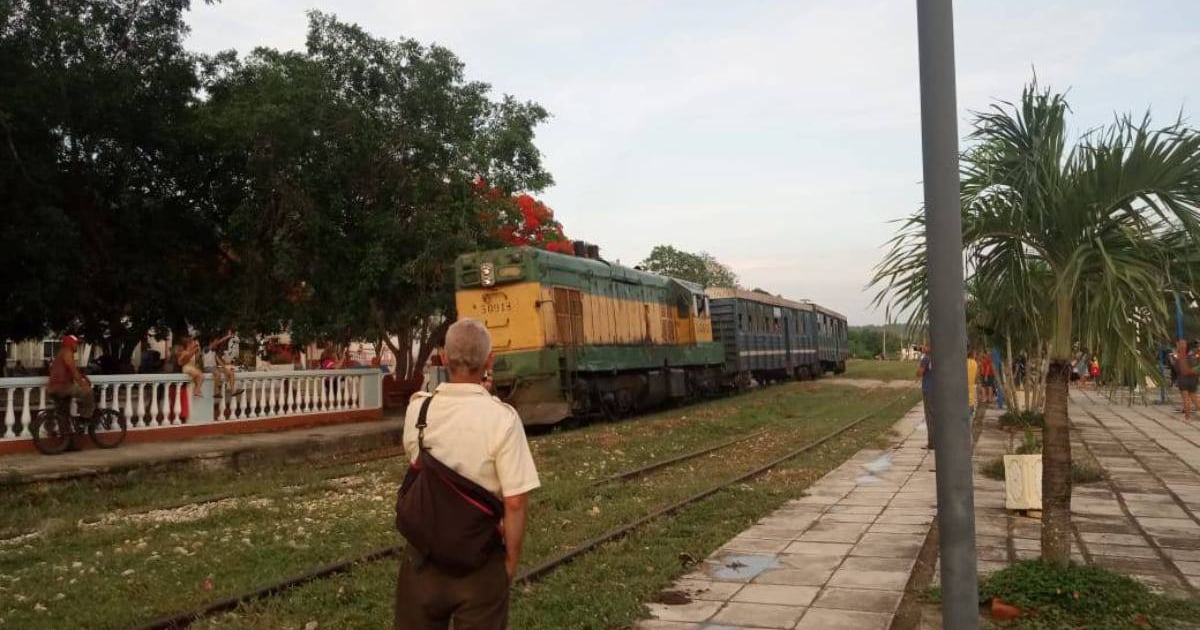
An old and deteriorated train resumed service this Monday in the province of Ciego de Ávila after being inactive for seven years. The route covers the Morón-Perea-Venegas line, with intermediate stops in Chambas and Florencia, areas that are hard to access located in the hills of the Plan Turquino Bamburanao.
Far from being a railway renovation, the restoration of service was achieved with the partial recovery of three passenger cars and an old locomotive, according to reports from Invasor.
None of the carriages have been visibly renewed or refurbished; they have only been patched up to get them running again, a clear indication of the level of deterioration facing the public transportation system on the island.
In a context of extreme precariousness, the mere operation of an old train is presented as a symbol of "progress" in the state-run media.
The Cuban regime is trying to politically capitalize on this reactivation as part of the celebrations for the 72nd anniversary of the assault on the Moncada and Carlos Manuel de Céspedes barracks, and the decision to grant Ciego de Ávila the national headquarters for July 26th.
The train is a source of joy for the neighbors, official media point out, overlooking the fact that access to dignified public transportation should not be a reason for celebration, but rather a right guaranteed by the State.
The news contrasts with the daily reality of millions of Cubans, for whom traveling within the country is an odyssey due to the lack of options, the scarcity of fuel, and the dilapidated state of the railway, bus, and other vehicle infrastructure.
In addition to the Morón-Perea-Venegas train, the authorities mention the reactivation of other routes such as Morón-Esmeralda and the Morón-Ciego de Ávila route with frequency on Mondays and Fridays, which continues to Camagüey. However, the conditions of these services are far from optimal.
The launch of this old train does not represent a real advance or a policy for sustainable transportation, but rather a cosmetic operation aimed at masking the chronic underinvestment and neglect of a railway system that was once a source of national pride.
Instead of modernizing the railway network or investing in new cars, the government merely paints over the past and sells it as a promise for the future.
Frequently asked questions about the restoration of the train service in Ciego de Ávila and the transportation situation in Cuba
Why is the return of an old train in Cuba considered a symbol of progress?
The return of the vintage train in Ciego de Ávila is presented as a symbol of "progress" by the official Cuban press, despite the fact that its operation was achieved through the partial recovery of cars and locomotives without significant renewal. In a context of extreme precariousness in public transportation, the government seeks to politically capitalize on the reactivation of this service amid the official celebrations of July 26.
What are the main criticisms of the transportation system in Cuba?
The transportation system in Cuba faces severe criticism due to its ruinous state and lack of adequate options for the population. The scarcity of fuel, the deterioration of the railway infrastructure, and the lack of investment are recurring problems. Government initiatives, such as the reactivation of old trains without substantial improvements, are perceived more as cosmetic measures than as real long-term solutions.
What is the impact of the transportation crisis on the daily lives of Cubans?
The transportation crisis in Cuba severely impacts the daily life of Cubans. Mobility within the country turns into an odyssey, forcing the population to face long waits and limited transportation alternatives. The lack of viable options not only makes it difficult to access essential services but also negatively affects the overall quality of life, especially in the more remote regions.
What actions has the Cuban government taken to improve rail transport?
The Cuban government has announced several projects to improve rail transport, such as the restoration of old trains and the rehabilitation of railways. However, these actions tend to be partial and do not address the underlying structural issues. The lack of investment in new infrastructure and the reliance on temporary solutions limit the positive impact of these measures.
Filed under: