
Related videos:
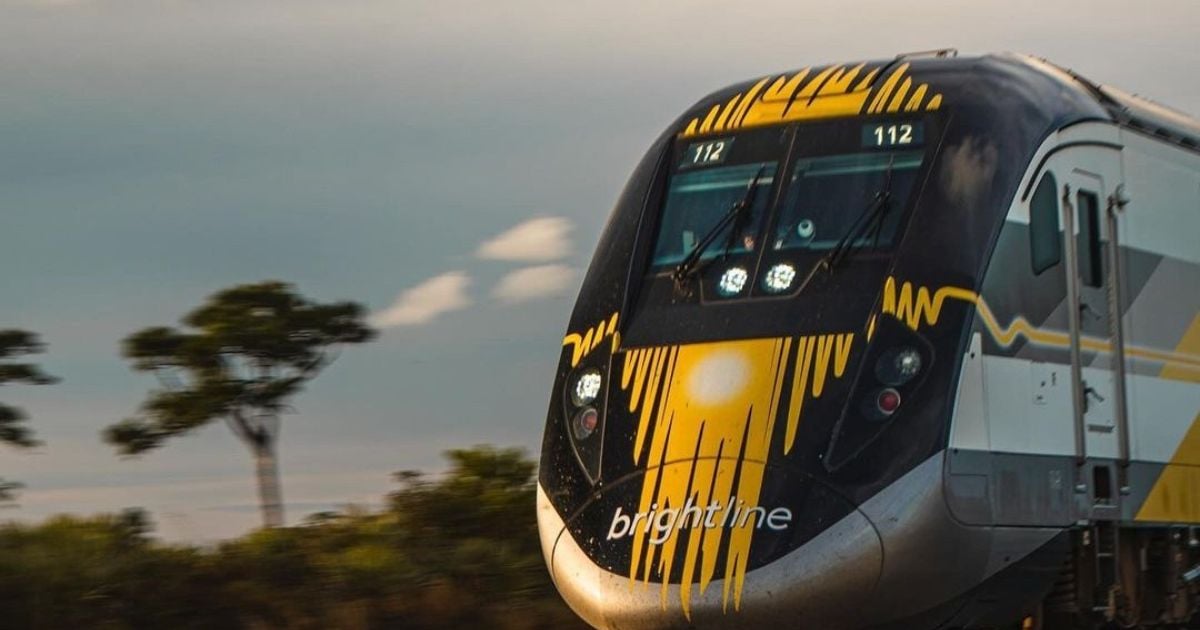
Florida has approved a new law that redefines how insurance and responsibilities are handled in the commuter train services operated jointly by Brightline and Florida East Coast Railway (FECR).
The legal change comes after a series of accidents, some of which were fatal, that have raised growing concern among residents, safety advocates, and communities such as the Cuban community, which has a significant presence in the counties of Miami-Dade, Broward, and Palm Beach. This was highlighted by the specialized magazine Insurance Business Magazine, an international authority on insurance and risk issues, and the first to underscore the importance of this legislation.
Starting from July 1, the Coastal Link Commuter Train Service Act (CS/HB 867) allows public agencies to assume part of the responsibility in the event of rail accidents affecting their passengers or visitors to the rail corridor. This means that, in certain cases, the State and local governments could pay millions in compensation, even if Brightline or FECR share some of the blame.
What changes with the new law?
The regulation establishes that state and local agencies that reach agreements with Brightline will be able to procure insurance and cover damages from accidents, “even if the liability is wholly or partially that of the private operator”.
Only in collisions caused by intentional misconduct and that exceed 5 million dollars in damages, Brightline will also have to contribute up to that same amount, a key point aimed at ensuring that the financial burden does not fall solely on public funds.
The law establishes a strict limit for liability coverage: "it must not exceed 323 million dollars per incident", in accordance with the federal liability limit set forth in Title 49 of the United States Code, section 28103. This limit includes claims for punitive damages.
While these provisions allow for a broader distribution of risks in public-private railway partnerships, the legislation clarifies that none of them constitute a waiver of sovereign immunity or an increase in the legal limits of liability established in article 768.28.
It is important to highlight that Brightline and FECR are not explicitly “officials, agents, employees, or subdivisions of the state” and, therefore, do not receive sovereign immunity protections.
More security... or more legal coverage?
Although the legislation aims to pave the way for the expansion of commuter services, especially in the East Coast corridor, the underlying concern remains the same: who is truly protecting passengers and the communities near the tracks?
For Cuban families using Brightline to travel between cities in South Florida, this measure raises more questions than answers. Brightline's accident record, being one of the fastest trains in the country, has left a trail of victims, mourning, and legal proceedings.
Now, with this new law, the State could end up paying the bill for future tragedies, which could mean less pressure for private operators to strengthen their safety measures.
Recent accidents involving Brightline trains in Florida
In September 2024, a Brightline train collided with a vehicle that was stuck between the crossing barriers in Broward County.
The driver managed to escape unharmed just seconds before the crash, but the images of the incident, released by the outlet Only in Dade, revealed the violent nature of the impact and sparked a wave of criticism regarding road recklessness and the lack of effective signage at some railroad crossings in South Florida.
This incident was not isolated. Just a few days earlier, a pedestrian was struck by a Brightline train in Delray Beach, at the intersection of Atlantic Avenue and Railroad Avenue, as confirmed by 12 News. And in June of the same year, also in Broward, there was a collision between a train and a car stuck on the tracks in the Hollywood area.
These events have fueled the debate about the effectiveness of current security measures regarding rail services. Although some accidents have been caused by human errors, such as ignoring signals or experiencing panic attacks while driving, the frequency of collisions has raised concerns among users and residents of the affected communities, who are now closely watching any changes in the distribution of responsibilities between private operators and public entities.
Filed under: