
Related videos:
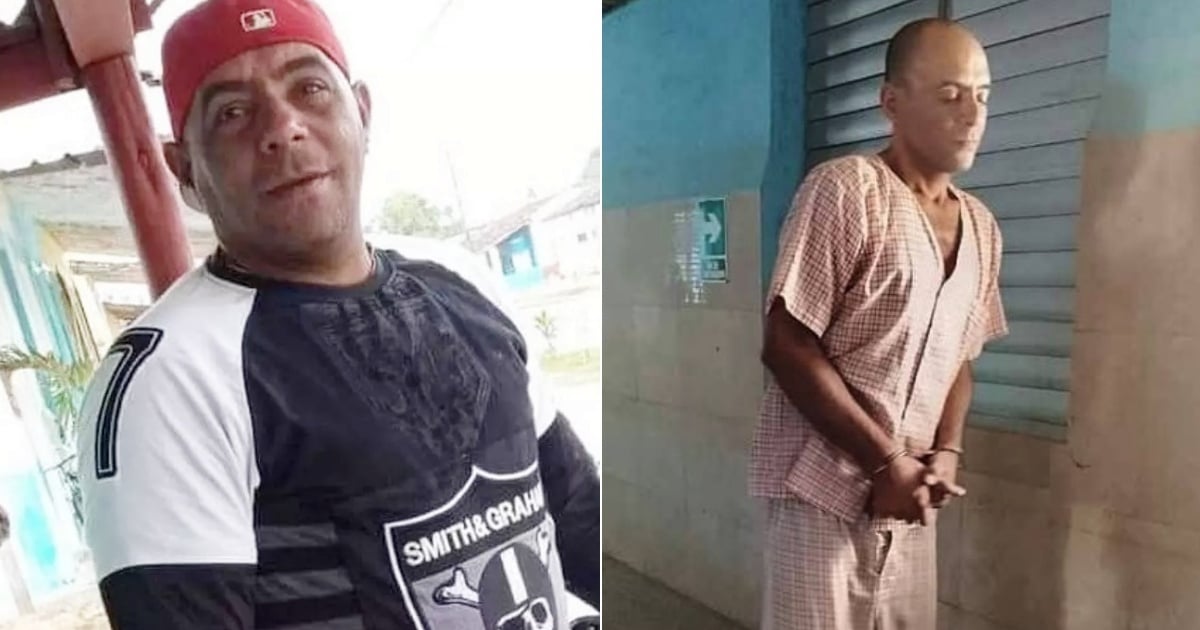
The Cuban political prisoner Yan Carlos González González, 44 years old and hailing from Manacas (Villa Clara), passed away on Monday, July 7, at the Arnaldo Milián Provincial Hospital, after more than 40 days on a hunger strike in protest of a 20-year prison sentence that he and his family considered unjust.
Her death was publicly confirmed by the human rights organization Cubalex, which had been warning for weeks about the extreme deterioration of her health and the neglect of medical care in Cuban prison facilities.
Cubalex reported that González had begun his protest in April 2025, after learning of the prosecutor's request for two decades of imprisonment for the alleged burning of several sugarcane fields in the municipality of Santo Domingo.
According to the organization, he was "accused without evidence" and had been held at La Pendiente prison before being transferred to the hospital with a "reserved prognosis."
"The Cuban state does not guarantee adequate medical care nor does it investigate the reasons behind the demands of these individuals, perpetuating indifference and impunity," denounced Cubalex on its profile on X.
A conviction without evidence, according to his family
The case of Yan Carlos González has provoked outrage among family members and human rights advocates.
According to his wife, Elena Pérez Uz, her husband's civic activism is what drew the attention of the system.
“The system turned him into a political prisoner because by judging him without evidence, he was made a political prisoner, and there [during the trial], the lawyer stated this,” affirmed Pérez Uz to Martí Noticias.
Pérez reported that the process began after a sugarcane field caught fire on May 16, 2024.
The next day, her husband was arrested based solely on the testimony that he had threatened to set sugarcane fields on fire if the blackouts continued.
“The police never brought the witness to trial, there was no scent trace […] they did not present evidence, only assumptions,” stated Pérez UZ to the aforementioned media outlet.
The statement, released by the family and consulted by Martí Noticias, indicates that González allegedly acted with the intention of "hindering the smooth progression of the sugar harvest" in Villa Clara, although it does not provide any material evidence or eyewitnesses.
In the words of his wife, the authorities used his conviction as a "quick closure" to a case lacking evidence.
The strike, the protest, and the death
The reports vary regarding the duration of the hunger strike.
Cubanet and 14ymedio report more than 40 days, while Martí Noticias documents 51 days without solid food intake.
According to his wife, he began to reduce his food intake on April 4th and stopped eating completely on May 17th, coinciding with the anniversary of his arrest.
During this time, González stitched his lips and eyelids shut as a form of extreme protest, as confirmed by Cubalex.
Pérez Uz clarified that this measure lasted two days, but it reflects the level of desperation and the seriousness of their situation.
The lack of medical attention has been reported repeatedly.
According to his wife, "he arrived with a very high level of dehydration and his kidneys already compromised." He was also suffering from severe pneumonia, kidney failure, and liver bleeding.
"He never admitted to being given IV fluids because he always said that it was an injustice being done to him," he added.
“Seeing him on his deathbed, they released him, but it was already too late”, denounced the activist Isis Ro.
The activist and former political prisoner Ángel Moya also reported the death.
Beyond the case: A pattern of systematic repression
The death of González is not an isolated incident. According to data collected by Cubalex, in the first six months of 2025, at least 37 people have died in custody in Cuba, 23 of them in detention centers.
The organization documents a pattern of "deliberate medical negligence, institutional violence, and total lack of protection."
In the same hospital where González passed away, another political prisoner, Miguel Alfonso Jiménez Martínez, has been on hunger strike for over two months. He was accused of throwing stones at a store.
Also joining them is Alexander Díaz Rodríguez, convicted for the protests of July 11, who is being denied medical care in Kilo 5 and a Half prison, according to a report from Cubalex.
“Freedom is often granted only when health is severely deteriorated, as a strategy to evade responsibility for deaths in custody”, warns Cubalex.
Reactions from civil society
The death of González has sparked reactions of outrage both within and outside of Cuba. The organization Council for Democratic Transition in Cuba (CTDC), chaired by José Daniel Ferrer and Félix Navarro, issued a statement urging the international community to take urgent action regarding the inhumane conditions faced by political prisoners.
"Both stand firm, even in the face of barbarism, and represent the best of Cuba's civic spirit [...] A coordinated action can save lives."
Additionally, the organization Initiative for Research and Advocacy, formerly known as Justicia 11J, reported at least 24 deaths in custody between January and June 2025, eight of which were attributed to denial of medical care. These figures are in addition to 160 reports of torture or cruel treatment.
Frequently asked questions about the case of Yan Carlos González González and the situation of political prisoners in Cuba
Who was Yan Carlos González González and why was he in prison?
Yan Carlos González González was a Cuban political prisoner who passed away after a prolonged hunger strike in protest of a 20-year sentence that he and his family deemed unjust. He was accused without evidence of setting fire to several sugarcane fields in Villa Clara, which sparked outrage among his family members and human rights advocates.
What motivated Yan Carlos González's hunger strike?
Yan Carlos González's hunger strike was a protest against what he deemed an unjust sentence lacking evidence. It began in April 2025 after he learned of the prosecutor's request for 20 years in prison. During his protest, he sewed his lips and eyelids shut as an extreme measure to highlight his situation and the lack of medical attention.
What is the current situation of political prisoners in Cuba?
The situation of political prisoners in Cuba is alarming, with reports of medical negligence, institutional violence, and complete neglect. In 2025, at least 37 individuals have died in custody, and organizations like Cubalex document a pattern of systematic repression. These inhumane conditions have led to multiple hunger strikes as a form of protest.
What actions are being taken at the international level regarding the situation in Cuban prisons?
Human rights organizations and activists are calling on the international community to urgently intervene in response to the inhuman conditions of political prisoners in Cuba. Statements have been issued, and there is a demand for international oversight in detention centers to ensure the protection of human rights.
Filed under: