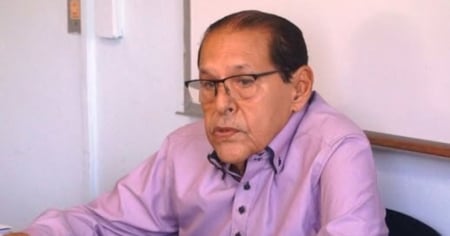
Family, friends, and neighbors of political prisoner Yan Carlos González bid farewell to his mortal remains in Manacas, in the Villa Clara municipality of Santo Domingo. González passed away after enduring a hunger strike of more than 50 days as a form of protest against what he considered an unjust sentence.
The wake and subsequent burial took place in a tense atmosphere, according to eyewitness accounts.
During the farewell at the cemetery, a person close to the deceased shared some words in front of those present, which, as they stated, were expressed by González himself before he passed away:
"I don't answer to anyone... If I did it, I'll die standing by what I did, because I know I did it and I'll keep my mouth shut because I did it, but if I didn't do it, I'll leave this prison feet first."
Another witness confirmed that during a visit she made to the prison, he told her something similar:
"He told us that he was leaving there free, feet first, because he wasn’t going to turn 20 for something he didn’t do. And the one who did it is out on the street, but they blamed him."
The funeral concluded with shouts of "Long live Yan Carlos!" as an expression of grief and tribute to someone who, according to his loved ones, died defending his innocence.
Yan Carlos González González, 44 years old, died on Monday, July 7, at the Arnaldo Milián Provincial Hospital.
Her death was publicly confirmed by the human rights organization Cubalex, which had been warning for weeks about the extreme deterioration of her health and the lack of medical care in Cuban penitentiary facilities.
Cubalex reported that González began his protest in April 2025, after learning about the prosecutor's request for a twenty-year prison sentence for the alleged burning of several sugarcane fields in the municipality of Santo Domingo.
According to the organization, he was “accused without proof” and was held in La Pendiente prison before being transferred to the hospital with a “reserved prognosis.”
A conviction without evidence, according to his family
The case of Yan Carlos González has sparked outrage among family members and human rights advocates.
According to his wife, Elena Pérez Uz, her husband's civic activism is what drew the attention of the system.
“The system turned him into a political prisoner because by judging him without evidence, it made him a political prisoner, and there [in the trial], the lawyer said so,” stated Pérez Uz to Martí Noticias.
Pérez described that the process began after a sugar cane field caught fire on May 16, 2024. The following day, her husband was arrested solely based on testimony that he had threatened to set fire to cane fields if the blackouts continued.
According to his wife, he began to reduce his food intake on April 4 and completely stopped eating on May 17, coinciding with the anniversary of his arrest.
During this time, González sewed his lips and eyelids shut as a form of extreme protest, as confirmed by Cubalex.
The lack of medical attention has been repeatedly reported.
According to his wife, he arrived at the hospital with a severe level of dehydration and his kidneys were already compromised. He was also suffering from severe pneumonia, kidney failure, and hepatic bleeding.
“Seeing him on the brink of death, they released him, but it was already too late”, denounced the activist Isis Ro.
The death of González is not an isolated incident. According to data collected by Cubalex, in the first six months of 2025, at least 37 people have died in custody in Cuba, 23 of them in penitentiary facilities.
Frequently Asked Questions about the Situation of Political Prisoners in Cuba
Who was Yan Carlos González and why was he on a hunger strike?
Yan Carlos González was a Cuban political prisoner who died after more than 50 days on a hunger strike in protest of a sentence that he and his family considered unjust. He was accused without evidence of setting fire to sugarcane fields, which led to his 20-year prison sentence.
What reports exist regarding the conditions in Cuban prisons?
Cuban prisons are denounced for medical negligence, institutional violence, and complete neglect. Organizations such as Cubalex have documented a pattern of medical neglect and systematic abuse that endangers the lives of inmates.
How many deaths have occurred in Cuban prisons so far in 2025?
In the first six months of 2025, at least 37 people have died in custody in Cuba, 23 of them in penitentiary facilities, according to data collected by the organization Cubalex.
How has the international community reacted to the situation of political prisoners in Cuba?
The international community has expressed concern and called for urgent action regarding the inhumane conditions of political prisoners in Cuba, as stated by the Council for Democratic Transition in Cuba and other human rights organizations.
Filed under: