
Related videos:
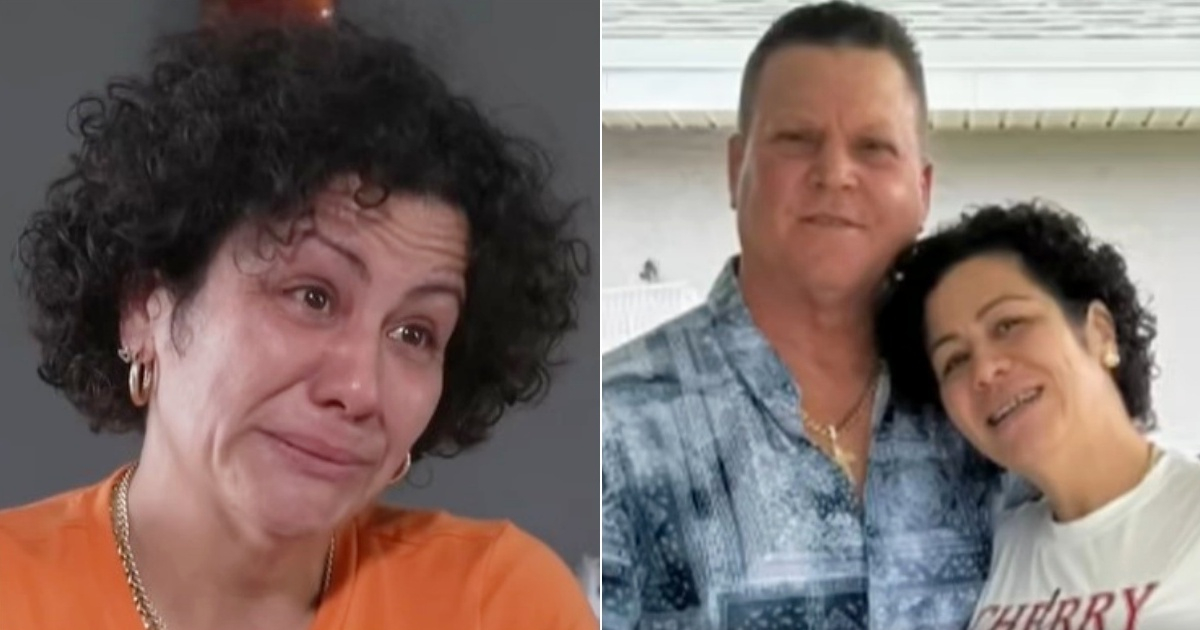
Yaris is a Cuban who has formed a support team of mothers, wives, and children of those detained at the Alligator Alcatraz center, where her husband Reinaldo was recently incarcerated.
“They destroyed our family, they broke it apart. I am trying to do everything possible to raise my voice, so that someone listens and helps us, because it is not true that they are criminals”, Yaris said in heartbreaking statements to Univision.
“Did he make a mistake when he was young? Yes, he did, and that's not being hidden from anyone, but the punishment he received, he fulfilled it,” he added.
Yaris mentioned that Reinaldo served a sentence and was on probation for a drug trafficking offense.
The detainee himself made statements via telephone in which he said that he must be strong to face the current situation.
When asked what he was thinking while in the detention center, he replied:
"In my family, my children, my grandchildren, my wife, but as I say, we must be strong, because as long as I am strong here, I know they will be strong out there."
"I love you all, you know that wherever I am, I will love you," he said at another moment.
Reports of alleged inhumane conditions that inmates are reportedly facing have been revealed by several detainees.
Yaris reported that they are going to the bathroom in latrines, that the latrines are overflowing, and that the dirty water is reaching where the beds are.
The Florida Division of Emergency Management, for its part, stated that the allegations are false.
The mayor of Miami-Dade, Daniella Levine Cava, demanded that the State of Florida allow the county to oversee the Alligator Alcatraz detention center, built on county land in the Everglades.
"Regardless of whether the State has taken control of the site through emergency powers, the taxpayers of Miami-Dade are the owners of that property," he stated.
In a video posted on the social network X, the mayor expressed her concern about the lack of transparency, the conditions reported by the detainees, and the environmental implications of the project, requesting that access to the site be allowed and real-time remote monitoring be implemented.
Levine Cava formalized her claim through two letters sent to high-ranking officials.
In a letter addressed to the state attorney, James Uthmeier, he requested "monitoring access to the state facility known as 'Alligator Alcatraz'," as well as the right to send county teams to verify the conditions of the center and its environmental impact.
"Given the environmental importance of the Everglades and the growing concerns about unsafe conditions in these facilities, transparency is essential with our community," he emphasized.
He also demanded weekly reports on the situation at the detention center.
In another letter addressed to the Secretary of Homeland Security, Kristi Noem, she requested a detailed report on the deaths in ICE custody in Florida this year.
The center was inaugurated on July 2nd, following just over a week of construction on an abandoned airstrip within the Big Cypress National Preserve, 40 miles west of Miami.
Its design, resembling a pop-up camp with climate-controlled tents, can accommodate up to 3,000 people under the supervision of 400 guards and 200 cameras.
The project has an estimated cost of 450 million dollars annually.
Although access to the press has been restricted and there are no official figures, testimonies indicate that at least 400 people have already been moved to the facility.
A delegation of democratic state legislators attempted to visit the site but was denied entry on security grounds.
Frequently Asked Questions about the Alligator Alcatraz Detention Center and the Situation of Cuban Immigrants
What is the Alligator Alcatraz detention center?
Alligator Alcatraz is an immigration detention center located in the Everglades of Florida. It was inaugurated on July 2, 2025, on an old airstrip within the Big Cypress National Preserve. Its tent-style design with climate-controlled tents can accommodate up to 3,000 people. It has faced criticism for its environmental impact and the inhumane conditions reported inside.
What are the conditions of the detainees in Alligator Alcatraz?
According to reports, the detainees at Alligator Alcatraz face inhumane conditions, such as having to use overflowing latrines and dirty water near their beds. There have also been reports of insufficient access to basic services like bathrooms and personal hygiene. However, the Florida Division of Emergency Management has stated that these allegations are false.
What actions has the mayor of Miami-Dade taken regarding Alligator Alcatraz?
The mayor of Miami-Dade, Daniella Levine Cava, has demanded that the State of Florida allow the county to oversee the detention center. She has expressed her concern about the lack of transparency, the conditions reported by detainees, and the environmental implications of the project. She has sent letters to senior officials requesting access to monitor the center and its environmental impact.
Why has the immigration policy in Florida been criticized?
The immigration policy in Florida has been criticized for prioritizing fear and coercion over compassion and justice. Mayor Levine Cava and other critics argue that the actions of immigration authorities are dehumanizing and criminalizing immigrants. Furthermore, it has been pointed out that the conditions in centers like Alligator Alcatraz violate human rights.
How does the situation in Alligator Alcatraz affect the Cuban community in the U.S.?
The situation at Alligator Alcatraz has raised great concern among the Cuban community in the U.S., due to reports of inhumane conditions and fear of deportations. Many Cubans with precarious immigration status are afraid of being detained and sent to the center, which has heightened distress and uncertainty among immigrant families.
Filed under: