
Related videos:
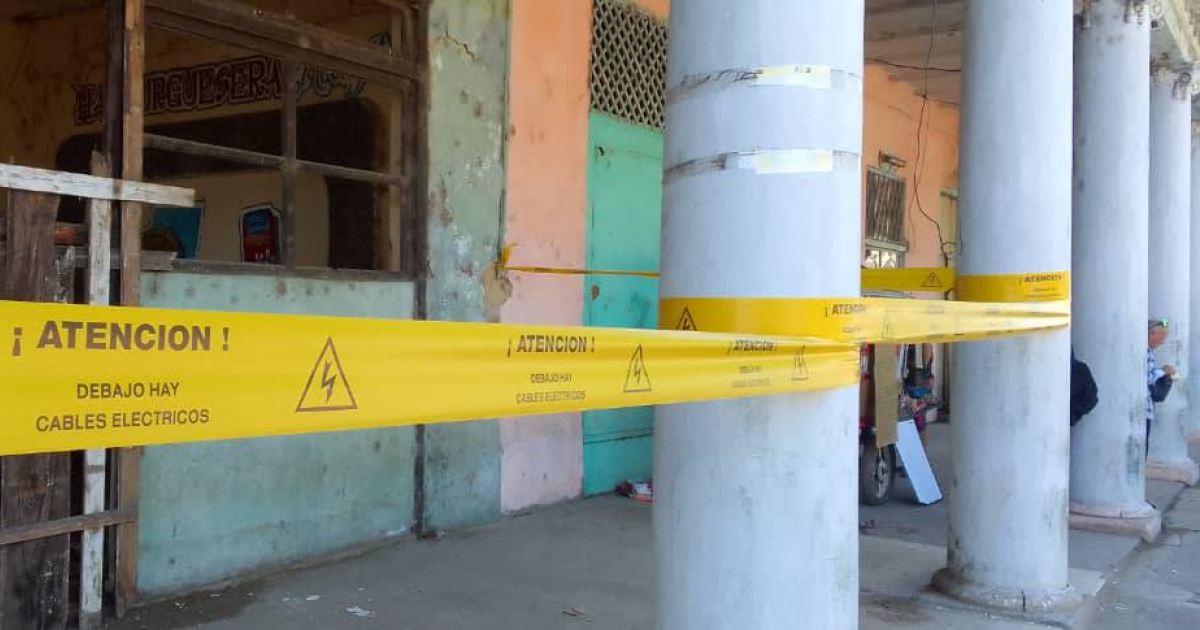
The Center for Risk and Disaster Reduction Management (CGRRD) of the municipality of Colón, in the province of Matanzas, announced through a Facebook post that it has proceeded to limit access to several buildings at risk of collapse, following the growing concerns of residents about the extreme deterioration of some structures.
Among the properties designated as hazardous are cafetería El Confite, bodega La Mariposa, and oficina de la Granja Urbana, all located in busy areas of the municipality.
According to the statement signed by Raisdel Naya, head of the CGRRD-Colón, these premises show an "advanced level of deterioration and lack of maintenance," which poses a direct threat to the population.
The measures adopted consist of placing tape and makeshift barriers to prevent pedestrian access, as a temporary solution in response to the lack of action from the responsible entities.
The CGRRD itself acknowledged that, for more than four years, the executives of the Commerce Company and the Agriculture Delegation in Colón were informed of the need to take action, but no effective measures have been implemented to prevent accidents.
Authorities are calling for respect for the imposed restrictions and for the protective tape to be honored, but residents criticize the ineffectiveness of this measure, which does not eliminate the danger and, instead, forces pedestrians to step off the sidewalks and walk in the street, increasing the risk of accidents.
"People continue to enter places like El Confite, which is now being used as a public restroom, unaware that it could collapse at any moment," alerted a citizen in the comments. Other testimonies indicate that motorcyclists and pedestrians ignore the warnings, putting themselves at risk of a tragedy.
In addition to the structural threat, these abandoned buildings have become breeding grounds for disease vectors such as dengue and leptospirosis, which are already on the rise in several areas of the country. The unsanitary conditions and prolonged neglect exacerbate the health situation.
The problem is not exclusive to Colón. Similar cases are being reported in numerous locations across the island, reflecting a widespread structural crisis caused by institutional neglect, a lack of state management, and a shortage of resources. The absence of a comprehensive urban maintenance plan has left many Cuban cities on the brink of physical collapse.
Although local authorities believe that limiting risk areas is a preventive measure, citizens are calling for real solutions, such as the controlled demolition of dilapidated buildings and the relocation of essential services that still operate in compromised structures.
The improvisation of barriers does not replace the necessary state action to prevent human losses and ensure safe spaces. Meanwhile, urban decay continues to progress, and dangers lurk around every corner, under the silence or inaction of those who should be looking out for the safety of the population.
Frequently asked questions about the condition of buildings in Cuba
What measures has the Cuban government taken to mitigate the risk of collapses in Colón?
The Risk and Disaster Reduction Group (CGRRD) of Colón has restricted access to several buildings at risk of collapse, such as the El Confite cafeteria, La Mariposa store, and the Urban Farm office, by placing improvised tape and barriers. However, these measures are temporary and have been criticized for their ineffectiveness.
What is the general situation of the housing stock in Cuba?
The housing situation in Cuba is critical, with more than 37% of homes in "fair or poor" condition. The lack of investment, maintenance, and effective policies has turned the right to safe housing into a silenced national emergency. This crisis is reflected in the frequent partial or total collapses of buildings across the country.
What additional risks do poorly maintained buildings pose in Cuba?
In addition to the structural threat, buildings in poor condition have become breeding grounds for disease vectors such as dengue and leptospirosis, worsening the health situation in several areas of the country. Unsanitary conditions and prolonged neglect increase these risks.
How does the infrastructure crisis in Cuba manifest in other areas, such as sports facilities?
The infrastructure crisis also affects sports facilities, such as the Sports City of Havana, which shows visible signs of neglect, with neglected or unused areas. This situation reflects a lack of maintenance and proper management by the authorities.
Filed under: